Why Choose a Telehandler for Construction Projects?
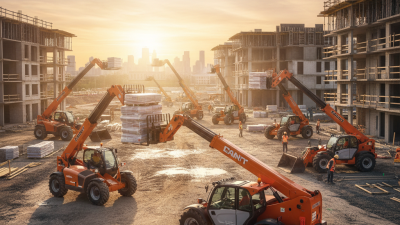
A telehandler can change how a construction project moves materials, people, and equipment across difficult ground. Its telescopic boom reaches forward, upward, and over obstacles. With forks, buckets, work platforms, or lifting hooks, one machine can perform several daily tasks. That flexibility may reduce equipment changes, transport delays, and crowded work areas.
Mike Fitzpatrick, a veteran telehandler product specialist, describes the principle clearly: “A telehandler is only as effective as the attachment, the operator, and the ground beneath it.” The quote reflects practical jobsite experience. A machine may lift three tonnes, but its safe capacity changes with boom angle, reach, attachment, and terrain. Operators must read load charts carefully. They also need clear visibility, stable surfaces, and suitable personal protection.
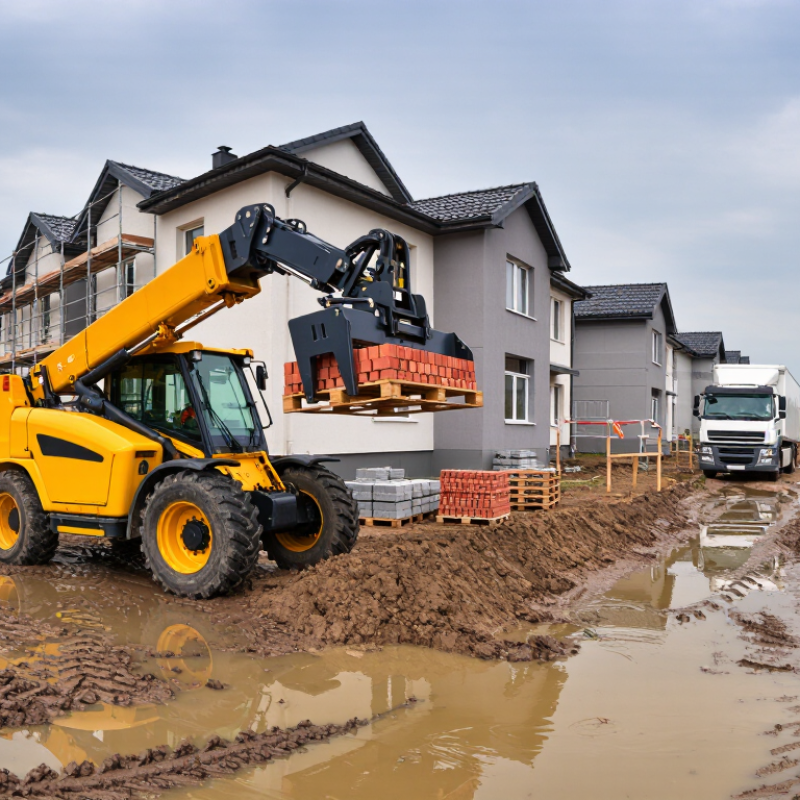
Picture a busy housing site after rain. Mud surrounds stacked bricks, pallets wait beside a trench, and a delivery truck blocks the main route. A capable telehandler can reposition materials without repeated truck movements. That saves time. It can also reduce manual handling when used correctly.
Still, choosing a telehandler is not automatically the best decision. Some sites need a compact machine, while others require greater lift height or reach. Fuel use, maintenance access, tyre condition, and operator training deserve honest comparison. I have seen versatility become a weakness when teams select attachments casually or ignore changing ground conditions. The better choice comes from matching the telehandler to real loads, working distances, site access, and project duration. Reliable performance begins before the engine starts.
Telehandler Basics: ANSI/ITSDF B56.6 Classes and Core Functions
A telehandler is a rough-terrain forklift with a telescopic boom. Under ANSI/ITSDF B56.6-2021, these machines are commonly associated with Class 7 equipment. The standard focuses on safe operation, stability, visibility, controls, load handling, and maintenance. Classification alone does not prove suitability. A compact model may work inside a framed structure, while a larger unit may need excessive clearance.
Its core function is controlled reach. The boom lifts, extends, and positions loads beyond the machine’s wheelbase. Operators use forks, buckets, work platforms, or other approved attachments. Each attachment changes the load chart, center of gravity, and operating limits. Read the chart at the actual boom angle and extension. A pallet that feels stable at ground level can become dangerous near maximum reach. Small details matter.
OSHA estimates that powered industrial trucks contribute to about 85 fatalities, 34,900 serious injuries, and 61,800 non-serious injuries annually in the United States. These figures cover many truck types, not telehandlers alone. The U.S. Bureau of Labor Statistics recorded 5,283 fatal workplace injuries in 2023, but its public tables do not isolate telehandler incidents. That limitation deserves attention. Site teams should combine manufacturer load charts, B56.6 procedures, ground assessments, and operator training. In practice, uneven soil, poor visibility, and rushed signaling often create greater risk than the machine’s rated capacity.
(Sources: OSHA Powered Industrial Trucks Safety Fact Sheet; U.S. BLS, Census of Fatal Occupational Injuries, 2023.)
Match Capacity and Reach: Typical 2,000–12,000 lb Loads and 20–70 ft Heights
Why Choose a Telehandler for Construction Projects?
Match Capacity and Reach: Typical 2,000–12,000 lb Loads and 20–70 ft Heights
A telehandler helps construction crews place materials where forklifts cannot reach. Typical capacities range from 2,000 to 12,000 pounds, while lift heights often span 20 to 70 feet. These figures are useful starting points, not promises. Capacity drops as the boom extends. A 6,000-pound load near the machine may become unsafe at full reach.
On active sites, I have seen small mistakes create large delays. A pallet of blocks can feel manageable at ground level, then become difficult above a second floor. Always check the capacity chart for the exact boom angle, attachment, and load position. Consider ground conditions too. Uneven soil, mud, and hidden voids can affect stability. A trained operator should confirm the setup before lifting, even when the task looks routine.
Tips: Measure the highest placement point before choosing equipment. Add room for the load, attachment, and safe clearance. Use the machine’s rated chart, not memory. Keep people outside the lifting zone. Test the first movement slowly. It may reveal a poor attachment choice or an underestimated load. Also, review changing site conditions during the shift, because yesterday’s firm surface may not remain firm today.
Why Choose a Telehandler for Construction Projects? — Match Capacity and Reach: Typical 2,000–12,000 lb Loads and 20–70 ft Heights
| Telehandler Configuration | Typical Rated Capacity | Typical Maximum Lift Height | Typical Forward Reach | Suitable Construction Applications | Capacity and Reach Considerations |
|---|---|---|---|---|---|
| Compact telehandler | 2,000–5,000 lb | 20–35 ft | 12–20 ft | Residential construction, landscaping, material staging, and work in restricted areas | Compact dimensions improve maneuverability, but rated capacity can decrease substantially when the boom is extended. |
| General-purpose telehandler | 5,000–8,000 lb | 35–55 ft | 18–28 ft | Moving pallets, placing framing materials, loading trucks, and supporting masonry work | A practical choice for mixed construction duties when both lift height and moderate forward reach are required. |
| High-capacity telehandler | 8,000–12,000 lb | 40–60 ft | 20–30 ft | Commercial construction, structural steel support, large pallet handling, and heavy material placement | Higher capacity usually requires a larger machine, greater operating clearance, and stronger ground-support conditions. |
| High-reach telehandler | 5,000–10,000 lb | 55–70 ft | 30–45 ft | Elevated slab work, multi-story construction, roof access, and high-level material placement | Maximum height and forward reach are application-specific; the allowable load at full extension is lower than the base rated capacity. |
| Rough-terrain telehandler | 6,000–12,000 lb | 35–60 ft | 18–30 ft | Uneven job sites, infrastructure work, utility projects, and outdoor material handling | Four-wheel steering, large tires, and frame-leveling features can improve mobility, but stability still depends on slope, surface, and load position. |
| Fork carriage configuration | 2,000–12,000 lb | 20–70 ft | 12–45 ft | Transporting pallets, blocks, lumber, roofing materials, and packaged construction products | Use the load chart for the exact boom angle, extension, attachment, and load-center distance before lifting. |
| Work platform configuration | Typically 2,000–6,000 lb machine class | 30–70 ft platform height | Varies by platform and boom geometry | Building envelope work, installation, maintenance, and elevated access tasks | Personnel platforms require approved equipment, correct attachment procedures, and compliance with applicable job-site safety requirements. |
| Winch or lifting-hook configuration | Commonly 3,000–12,000 lb, depending on machine and setup | 20–70 ft | Varies by boom position | Placing suspended loads, setting components, and handling materials where forks are unsuitable | Suspended-load capacity is governed by the manufacturer’s load chart and can be limited by wind, side loading, boom angle, and load swing. |
Improve Site Safety: OSHA Rules, Load Charts, and Stability Limits
A telehandler can move pallets, steel, and roof materials across uneven construction sites. Its reach is useful, but reach changes the machine’s stability. OSHA reported 1,069 construction fatalities in 2022. Falls caused 395 of them, although this figure does not isolate telehandler incidents. That gap matters. Site teams still need equipment-specific controls.
Read the load chart before every lift. It lists capacity by boom angle, extension, load center, and attachment. A machine rated for 10,000 pounds may lift far less at full reach. Keep the load low while traveling. Level the ground, avoid soft edges, and respect the stated slope limits. Wind can turn a raised load into a dangerous sail. ANSI/ITSDF B56.6-2021 also emphasizes operator training, stability, and attachment compatibility.
The chart is not a guarantee.
OSHA requirements include trained operators, pre-use inspections, visible capacity information, and safe travel practices under applicable construction rules. Inspect tires, forks, hydraulic lines, alarms, and attachment locks before work begins. Stop when a warning light appears. A damaged fork can look acceptable from ten feet away. That is where experience helps, but experience can also create overconfidence. Supervisors should document ground conditions, lift plans, and changing weather. The BLS recorded over 1,000 fatal construction industry incidents in recent reporting, showing why simple procedures deserve serious attention. Stability limits are not suggestions. They are the boundary between controlled lifting and rollover.
Expand Jobsite Versatility with Forks, Buckets, Winches, and Platforms
Why Choose a Telehandler for Construction Projects?
A telehandler can change roles across one busy jobsite. Forks move palletized blocks through uneven ground. Buckets handle soil, gravel, and cleanup. Winches position steel or glazing materials where direct machine access is limited. Platforms provide elevated access for installation and maintenance tasks. One machine, several working methods.
Attachment choice must follow the load chart, reach, angle, and ground conditions. A full bucket can shift the center of gravity quickly. A suspended load can swing unexpectedly. Operators should confirm attachment compatibility, inspect locking systems, and keep people outside the operating zone. The U.S. Bureau of Labor Statistics recorded 395 fatal falls in construction during 2022. That figure shows why platform planning cannot be casual.
The International Powered Access Federation reported 118 powered-access fatalities worldwide in 2023. A telehandler with a platform needs disciplined positioning, exclusion zones, and trained users. Fork work may feel routine. It is not. Wind, soft soil, and poor visibility can defeat a good plan. In practice, teams often gain more productivity by changing attachments than adding another machine. Still, this assumption needs testing on each site. Fuel use, setup time, and attachment storage can reduce the expected advantage.
Measure Productivity and Costs Against Forklifts and Rough-Terrain Cranes
Choosing a telehandler often depends on measurable site performance, not lifting capacity alone. Its telescopic boom can place pallets over walls, across trenches, or onto upper floors. One machine may handle unloading, material distribution, and limited access work. This reduces equipment changes and waiting time.
A useful comparison starts with real jobsite records. Track loads moved per hour, travel distance, setup time, fuel use, and idle minutes. Forklifts may complete faster cycles on firm, level surfaces. Their rental and operating costs can also be lower. However, they lose efficiency when loads require extended reach or repeated repositioning. A telehandler can keep working across uneven ground, though slower travel may reduce output.
Rough-terrain cranes offer greater lifting capacity and precise heavy-load placement. Yet they commonly require larger setup areas, outriggers, transport planning, and qualified lift supervision. Those costs matter when the crane moves only a few major loads each day. A telehandler usually provides more frequent material-handling cycles, but it is not a substitute for every crane lift.
On a recent-style cost review, I would calculate cost per delivered load, not hourly rental alone. Include fuel, attachment changes, operator time, transport, maintenance, and delays caused by poor access. My estimates can miss hidden downtime. Weather and congested routes often change the result. A simple daily log can expose whether versatility creates real productivity or merely adds equipment expense.
Related Posts
-
Top 10 Telehandlers for Your Construction Needs?
-
2026 Best Telehandler Forklift Options for Your Construction Needs?
-
How to Choose the Right Telehandler for Your Project?
-
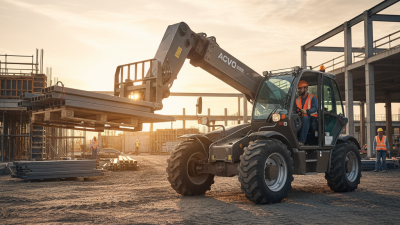
10 Essential Tips for Mastering Telehandler Operation
-
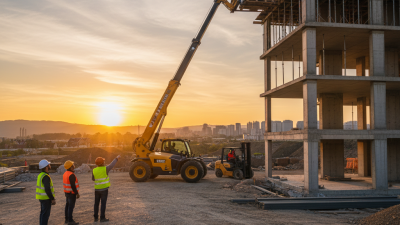
Top Benefits of Using a Telescopic Forklift for Your Business Operations?
-
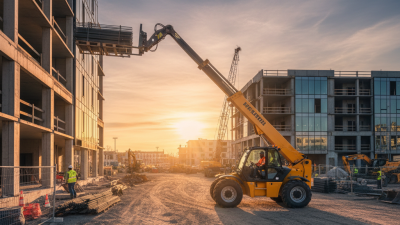
Top 10 Benefits of Using Telehandler Forklifts for Your Construction Projects