10 Essential Tips for Mastering Telehandler Operation
In the world of construction, the telehandler stands out for its versatility and efficiency. Renowned expert John Smith, a leading authority in heavy machinery operation, emphasizes that “Mastering telehandler operation is crucial for safety and productivity.” His insights underline the importance of skilled handling in various job sites.
Telehandlers combine the features of a forklift and a crane, enabling operators to maneuver heavy loads easily. However, despite their capabilities, many operators struggle with optimal control and safety practices. Every maneuver requires precision and awareness of surroundings. Mistakes can lead to accidents, emphasizing the need for continuous learning and improvement.
Training and experience are essential to becoming proficient. Each telehandler presents unique features and challenges. Operators must be adaptable, ready to address unexpected situations. As Smith suggests, reflecting on past operations can foster growth and enhance skills, ultimately leading to safer and more efficient telehandler use.
Understanding Telehandler Basics and Components
Telehandlers, critical in construction and agriculture, combine features of a forklift and a crane. Understanding their basics and components is vital for safe operation. A telehandler's boom extends and contracts for versatile lifting. Operators should know the difference between fixed and rotating booms. Each type serves distinct purposes, impacting load capacity and reach. Industry studies indicate that improper handling can lead to accidents. According to a 2022 safety report, telehandler-related incidents account for nearly 25% of construction site injuries.
Telehandlers come with several components like stabilizers, forks, and attachments. Stabilizers are essential for maintaining balance when lifting heavy loads. Operators must check these before use. Misjudging load weight, often by less than 10%, frequently results in tipping. Further, attachments such as buckets or winches affect the machine’s control. Inadequate knowledge about these components can lead to operational errors. Research highlights that accidents often stem from neglecting equipment checks. Understanding these elements deeply is crucial for effective performance and safety.
Safety Protocols for Telehandler Operation
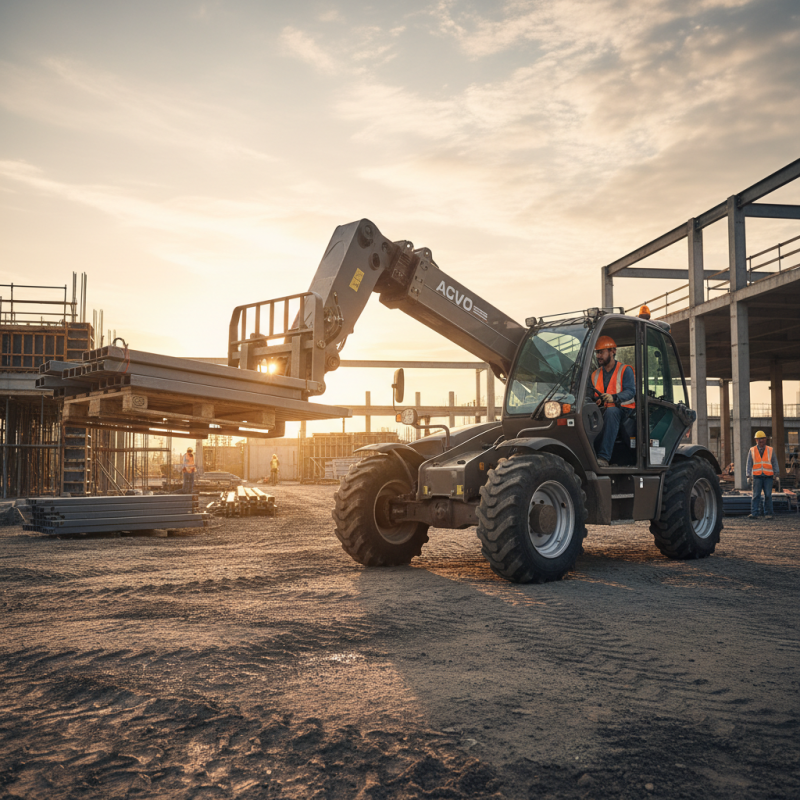
Operating a telehandler can be a complex task. Prioritizing safety protocols is crucial for preventing accidents and ensuring smooth operation. A reliable operator should always wear appropriate personal protective equipment (PPE). This includes hard hats, gloves, and safety shoes. Visibility is vital, so ensure your PPE does not obstruct your view. Regularly inspect your equipment before starting. Look for any signs of wear or damage. A small issue can escalate if not addressed promptly.
Understanding your surroundings is another key aspect. Always be aware of overhead hazards like power lines and beams. Scanning the job site helps identify potential risks. Communicating with ground personnel is essential. Use clear signals or two-way radios to stay connected. Miscommunication can lead to severe accidents. Operators sometimes assume everything is safe, leading to oversight. This mindset needs to be challenged and improved continuously.
Training is an ongoing process. Keep your operator skills updated through refresher courses. Telehandler technology is ever-evolving. New features can add complexity. It’s easy to overlook new safety features or operational guidelines. Furthermore, remember that every site poses unique challenges. Reflect on past experiences for learning opportunities. Assess what worked and what didn’t during previous operations. This can greatly enhance safety awareness in future tasks.
Essential Driving Techniques for Telehandlers
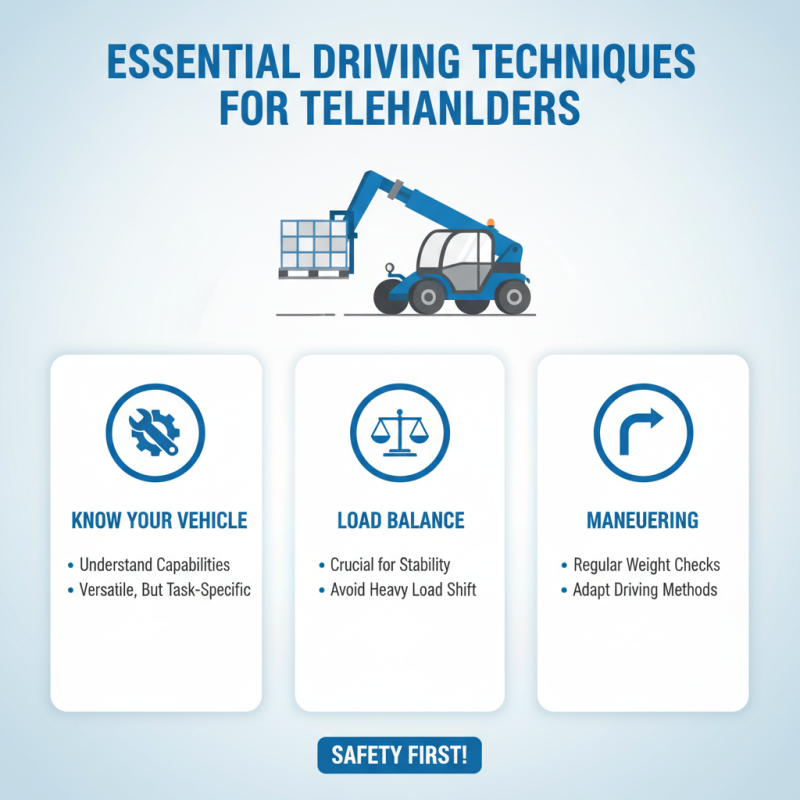
Operating a telehandler requires a mix of skill and technique. Understanding your vehicle's capabilities is crucial. The telehandler is versatile, but each task demands specific driving methods. For instance, always be aware of load balance. A heavy load shifted too far can reduce stability. Regularly check weight distribution while maneuvering.
Visibility is another key factor. Operators often overlook blind spots. Utilize mirrors effectively, or have a spotter when necessary. Slow and smooth movements will enhance control. Rapid maneuvers can lead to tipping. Practice makes perfect; frequent operation can highlight areas for improvement. Reflect on past experiences and adjust accordingly.
Finally, understand the terrain. Soft or uneven ground can impact telehandler performance. Always assess the site before operating. Driving on slopes needs caution. Control your speed and stay alert to changes in ground conditions. Regularly evaluating your skills and seeking feedback can help refine your technique. Each operation is an opportunity to learn and grow.
Load Management and Stability Considerations
Effective load management is crucial for telehandler operation. Operators must understand the weight limit of their machine. Exceeding this limit can lead to tipping hazards. Always check the load chart before lifting. Awareness of weight distribution is key. Imbalanced loads can cause instability. Place heavier items on the bottom and center them.
Stability should never be overlooked. Operators need to assess the ground conditions. Uneven surfaces can compromise safety. Use outriggers if available, but ensure they’re deployed correctly. A telehandler’s center of gravity shifts with every load. Operators should conduct stability tests when in doubt. Small mistakes can lead to accidents.
Training and practice are vital for improving skills. Real-life scenarios help reinforce knowledge. Operators need to reflect on their experiences. Consider what went well and what didn’t. This self-assessment fosters growth. Embrace the learning curve; even small improvements can enhance safety and efficiency. Balancing load management and stability often requires patience and diligence.
10 Essential Tips for Mastering Telehandler Operation - Load Management and Stability Considerations
| Tip Number | Tip Description | Load Capacity (lbs) | Stability Rating (1-10) | Recommended Load Height (ft) |
|---|---|---|---|---|
| 1 | Understand the telehandler’s load chart. | 8000 | 8 | 20 |
| 2 | Ensure proper attachment of loads. | 7500 | 9 | 18 |
| 3 | Maintain a low center of gravity. | 7000 | 10 | 15 |
| 4 | Adjust the boom to maintain stability. | 9000 | 7 | 22 |
| 5 | Use proper driving techniques. | 8500 | 8 | 20 |
| 6 | Conduct regular equipment inspections. | 8000 | 9 | 18 |
| 7 | Recognize environmental impacts on stability. | 7500 | 6 | 16 |
| 8 | Plan your load path in advance. | 9000 | 7 | 21 |
| 9 | Avoid sudden movements to prevent tipping. | 8500 | 8 | 19 |
| 10 | Follow safety protocols at all times. | 8000 | 10 | 20 |
Training and Certification Requirements for Operators
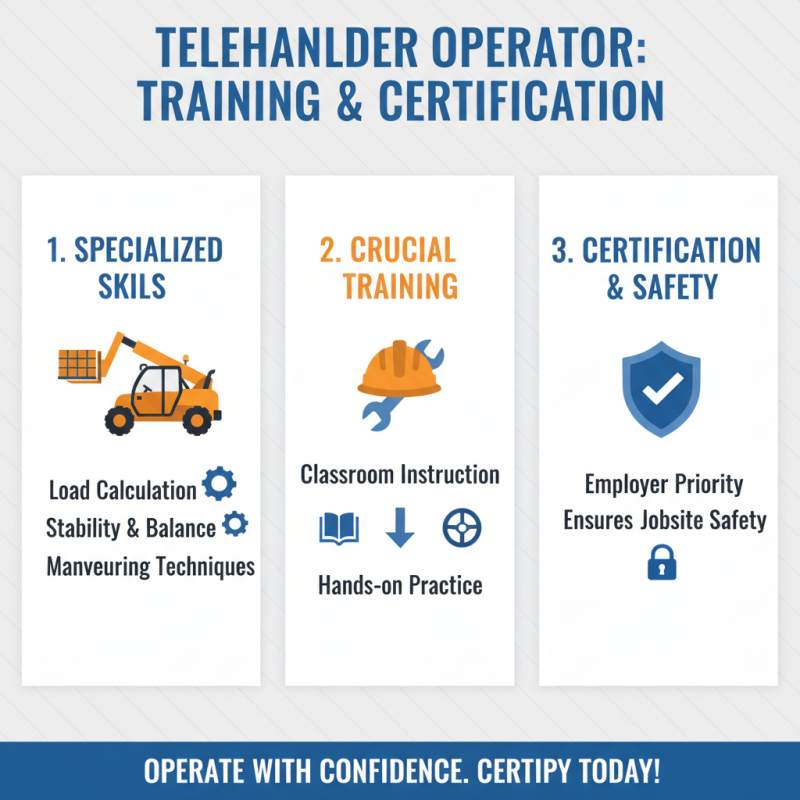
Operating a telehandler requires specialized skills and knowledge. Proper training is crucial for all operators. Many employers prioritize certification to ensure safety on the job. Certification programs often involve both classroom instruction and hands-on training. Operators learn about load calculations, stability, and maneuvering techniques.
Accredited training centers provide comprehensive courses. These centers help build a strong foundation for aspiring operators. After training, candidates undergo assessments to demonstrate their skills. It’s vital to understand that not all training programs are the same. Some may lack essential components, leading to gaps in knowledge.
Continuous education is important too. Many operators realize they need refresher courses over time. The telehandler's technology is evolving rapidly, and staying updated is necessary. Learning from past experiences and mistakes can enhance proficiency. An experienced operator knows how to handle unexpected situations. Emphasizing safety and responsibility helps ensure a secure work environment.
Related Posts
-
2026 Best Telehandler Forklift Options for Your Construction Needs?
-
How to Choose the Right Telehandler for Your Project?
-
Top 10 Benefits of Using Telehandler Forklifts for Your Construction Projects
-
Top 10 Benefits of Telescopic Forklift Rental for Your Business?
-
Top 10 Telehandlers for Your Construction Needs?
-
How to Choose the Best Construction Lift Rental Options?