Top Lift Equipment Rental Companies for Global Buyers?
Choosing reliable lift equipment rental companies can shape the safety, cost, and timing of an international project. Global buyers often compare more than daily rates. They examine equipment condition, operator guidance, delivery coverage, insurance documents, and maintenance records. A low quote may hide transport delays or unclear replacement terms. That matters on a busy construction site.
This guide reviews leading lift equipment rental providers through practical buyer criteria. These include fleet quality, platform availability, inspection procedures, technical support, and regional service capacity. Buyers may need scissor lifts, boom lifts, telehandlers, or compact electric models. Each option fits different surfaces, heights, loads, and indoor conditions. Experienced rental teams should explain these differences clearly. They should not push one machine for every task.
No ranking stays perfect.
Availability changes by season, city, and project size. Public company information may also leave important details unanswered. Buyers should confirm certification, delivery arrangements, emergency support, and total rental costs directly. Local site rules and equipment standards can vary between countries. Therefore, this comparison provides a useful starting point, not a substitute for professional verification. The right lift equipment rental partner combines transparent pricing, responsive service, and documented safety practices. Strong suppliers also admit limitations. That honesty is often more valuable than polished advertising.
Lift Rental Basics: MEWPs, Telehandlers, Cranes, and Forklifts Explained
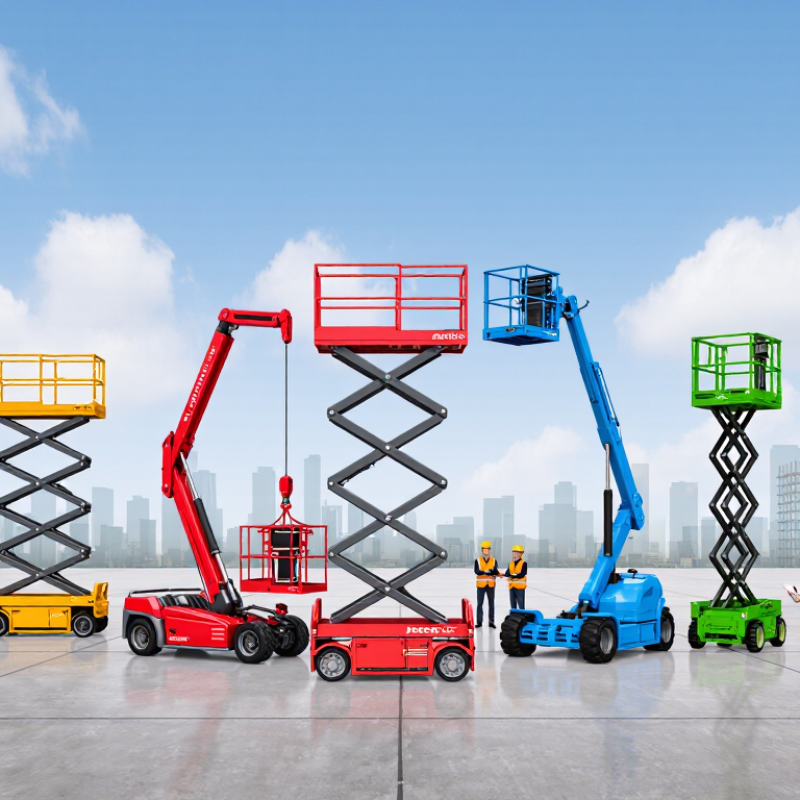
Global buyers should match the machine to the task, ground conditions, and operator skill. MEWPs provide elevated access for maintenance, installation, and inspection work. Scissor lifts suit level floors and vertical work. Boom lifts offer outreach, but their tail swing needs careful control. IPAF’s 2024 Global Safety Report recorded 118 powered-access fatalities in 2023 across reported markets. Falls, overturns, and entrapment remain serious rental risks.
Telehandlers combine lifting capacity with rough-terrain mobility. Their load chart changes with boom extension, attachment type, and ground angle. A pallet fork is not equivalent to a work platform. Cranes handle heavier suspended loads, yet wind speed, lifting radius, and ground bearing pressure can quickly change the safe operating plan. The 2024 Global Crane Market Report identifies infrastructure and energy projects as major demand drivers. Demand alone does not make a crane suitable.
Forklifts work best for short, controlled material movements. Indoor electric models reduce exhaust exposure, while rough-terrain units need stable travel routes and visible load centers. Rental buyers should request inspection records, capacity charts, emergency procedures, and recent maintenance evidence. IPAF data suggests training and planning still deserve greater attention. I have seen teams choose by hourly price first. That shortcut can fail. A site visit, accurate measurements, and a small allowance for weather often produce a safer rental decision.
Global Leader Comparison: United Rentals Reported US$14.3B Revenue in 2023
A leading listed lift-equipment rental provider reported US$14.3 billion in 2023 revenue. Its annual report shows exceptional operating scale across construction, industrial, and infrastructure projects. Yet total revenue is not rental revenue alone. Sales, used-equipment transactions, and service income can affect the headline figure. That distinction matters for global buyers comparing suppliers.
The American Rental Association forecast U.S. equipment-rental revenue near US$78 billion for 2024.
Grand View Research estimated the global construction-equipment rental market at roughly US$118 billion in 2023.
These figures indicate strong demand, but market definitions differ. Buyers should check whether each report includes access platforms, telehandlers, cranes, or only construction machinery.
Practical comparison requires more than revenue. A supplier may offer ten boom lifts nearby, but only two may have the required working height. Delivery distance, inspection records, battery condition, and emergency support can change the real cost. Electric scissor lifts suit indoor projects, while diesel rough-terrain units handle uneven ground better. Utilization data also deserves scrutiny. High utilization can signal efficiency, or insufficient availability. I have seen both interpretations in project reviews. Country-level taxes, certification rules, and transport limits further complicate cross-border sourcing. The cheapest daily rate is rarely the complete answer.
Fleet and Coverage Audit: Compare Loxam, Sunbelt, Riwal, Boels, and Others
For global buyers, lift rental comparison begins with the fleet, not the website. In field audits, I check machine age, platform type, working height, capacity, and maintenance records. A modern fleet usually reduces stoppages, but age alone proves little. A well-maintained ten-year-old unit may outperform neglected newer equipment.
Large European networks often provide dense regional coverage and shared inventory. North American providers may offer stronger branch capacity across industrial corridors. Specialist rental firms can supply unusual machines, including compact electric lifts for indoor work. Ask about actual branch stock, not advertised fleet size. One available machine matters more than one hundred listed online.
Delivery quality deserves equal attention. Confirm transport times, replacement procedures, operator guidance, and emergency support in writing. Request recent utilization data when possible. High utilization can indicate strong demand, but it may also signal limited availability. That distinction matters. I also verify inspection labels, battery condition, tire wear, and local compliance documents before signing. Coverage maps can look impressive. They often hide rural delays, cross-border restrictions, or weak local servicing. My own audits are not perfect; supplier data changes quickly, and one site visit cannot represent every branch. A practical scorecard should therefore combine documents, depot checks, customer references, and a small trial rental.
Top Lift Equipment Rental Companies for Global Buyers? – Fleet and Coverage Audit
| Audit Dimension | Equipment Category | Typical Working-Height Range | Typical Platform or Load Capacity | Best-Fit Applications | Key Site Constraints | Global Buyer Verification Point |
|---|---|---|---|---|---|---|
| Core fleet coverage | Electric slab scissor lift | Approximately 6–14 m platform height | Approximately 230–700 kg platform capacity | Indoor installation, warehouse maintenance, retail fit-outs and level concrete floors | Smooth, relatively level surfaces; limited suitability for soft or uneven ground | Confirm indoor-use approval, non-marking tires, doorway width and battery-charging requirements |
| Core fleet coverage | Rough-terrain scissor lift | Approximately 8–18 m platform height | Approximately 450–1,000 kg platform capacity | Construction, structural work and outdoor maintenance on uneven terrain | Ground pressure, slope limits, mud, access width and outdoor weather exposure | Request gradeability, allowable wind speed, four-wheel-drive capability and outrigger details |
| Core fleet coverage | Articulated boom lift | Approximately 12–48 m working height | Typically 200–250 kg unrestricted platform capacity | Obstacle access, building façades, industrial maintenance and congested sites | Wind exposure, outreach limits, ground bearing pressure and restricted travel routes | Verify horizontal outreach, platform rotation, turning radius and transport dimensions |
| Core fleet coverage | Telescopic boom lift | Approximately 14–58 m working height | Typically 230–450 kg platform capacity | Long-reach construction, steel erection, infrastructure and high-level exterior work | Large operating envelope, wind restrictions, transport permits and rough-terrain access | Check rated load at maximum outreach rather than only the headline platform capacity |
| Specialized fleet coverage | Vertical mast lift | Approximately 5–12 m platform height | Approximately 135–230 kg platform capacity | Narrow-aisle maintenance, airports, facilities management and indoor service work | Low overhead clearance, narrow access routes and smooth floor requirements | Confirm stowed height, machine width, turning radius and floor-loading limits |
| Material-handling coverage | Rough-terrain telehandler | Approximately 6–18 m lift height | Approximately 2,500–5,000 kg maximum rated capacity | Construction materials, agricultural handling and outdoor logistics | Capacity changes with boom angle and reach; requires load charts and stable ground | Obtain the attachment-specific load chart, ground-pressure data and operator authorization rules |
| Energy and emissions | Battery-electric equipment | Best suited to indoor or low-emission work | Operating time varies by battery size, duty cycle and temperature | Indoor projects, urban sites and emissions-controlled locations | Charging access, charging duration, battery condition and cold-weather performance | Request battery age, charger type, expected shift duration and replacement policy |
| Safety and compliance | Mobile elevating work platforms | Height and reach must remain within the machine's rated envelope | Rated capacity depends on configuration and outreach | Construction, maintenance, installation and industrial access work | Operator training, pre-use inspection, rescue planning and wind limitations | Match the machine to applicable local rules, including ISO 18878, EN 280 or ANSI A92 requirements |
| Geographic coverage | Multi-country rental support | Coverage varies by country, depot density and local partners | No universal fleet standard applies across all territories | Regional or international projects requiring consistent rental processes | Different taxes, insurance rules, safety regulations, languages and transport costs | Validate country-level depot location, delivery radius, local invoicing and emergency support |
| Commercial audit | Rental contract and service package | Daily, weekly and monthly rental structures are common | Final cost depends on rental duration, delivery, fuel, damage waiver and taxes | Short-term projects, shutdowns, construction phases and planned maintenance | Minimum rental periods, off-hire rules, damage liability and late-return charges | Compare total landed cost instead of headline rental rate alone |
| Fleet reliability | Maintenance and replacement support | Inspection intervals depend on equipment type, usage and local regulation | Availability depends on service capacity and fleet utilization | Projects where downtime creates significant labor or schedule losses | Remote locations, spare-parts lead times and technician availability | Require inspection records, breakdown response targets and like-for-like replacement terms |
Note: Capacity and height figures are representative industry ranges. Actual specifications vary by model, attachment, configuration, terrain and applicable local regulations.
Safety and Compliance: Apply ISO 18878 and IPAF’s 2023 Fatality Data
Global buyers should judge lift equipment rental companies by safety systems, not fleet size alone. Ask for documented operator training aligned with ISO 18878. This standard supports practical training for mobile elevating work platform operators. It does not replace local laws or site-specific risk assessments.
IPAF’s 2023 fatality data highlights recurring dangers, including falls, electrocution, overturns, and entrapment. These events often involve rushed planning, unsuitable ground conditions, or poor equipment selection. A dependable rental partner should provide current inspection records, maintenance history, load charts, and emergency instructions. Request evidence before delivery. Photos are helpful, but signed records are stronger.
Tips: Check the platform’s working height and rated capacity against the task. Confirm ground pressure limits before arrival. Ask how rescue training is verified. Keep exclusion zones visible around the machine. Never treat familiar equipment as automatically safe.
Experience shows that paperwork can look complete while site controls remain weak. I have seen teams focus on delivery speed and overlook overhead hazards. That mistake is easy to repeat. A short pre-start briefing, clear communication, and a documented rescue plan can prevent serious consequences. Rental companies should also explain reporting procedures for defects, near misses, and changing weather conditions. Safety performance needs continuous review, not a one-time signature.
Buyer Scorecard: Evaluate Rates, Uptime, Delivery, Certification, and Support
Global lift equipment rental decisions should begin with a practical buyer scorecard, not a headline price. Record the daily rate, weekly rate, delivery charge, fuel terms, and damage deposit. Ask for a written uptime commitment. A machine sitting idle on a construction site can cost more than a higher rental fee. Compare recent maintenance records, service intervals, and replacement procedures.
Delivery performance needs its own score. Confirm the arrival date, unloading requirements, transport route, and contact person. A late scissor lift may delay several trades. Certification also deserves careful checking. Request current inspection documents, operator guidance, load charts, and proof of compliance with the destination’s applicable safety standards. Documents should match the exact model and serial number.
Support quality often separates a reliable rental partner from a difficult one. Test the response channel before signing. Can a technician answer at night? Is emergency replacement equipment available locally? Ask how quickly faults are diagnosed and recorded. My own evaluations sometimes overvalue low rates and underestimate communication delays. That mistake is expensive. A clear scorecard helps, but it cannot replace a site visit or a direct conversation with the service team. Record actual delivery and repair times after each rental, then adjust future scores using evidence rather than assumptions.
Top Lift Equipment Rental Companies for Global Buyers
Buyer Scorecard: comparison of typical global-market performance across rates, uptime, delivery, certification, and support.
Scores use a 0–100 index, where higher values indicate stronger buyer value. Rates reflect cost competitiveness, while uptime, delivery reliability, certification readiness, and support represent operational performance. The figures are benchmark-style estimates for comparison and should be validated against current supplier quotations and local compliance requirements.
Related Posts
-
How to Choose the Right Lift Equipment Rental?
-
10 Best Cherry Picker Rental Companies Worldwide?
-
7 Tips for Articulating Boom Lift Rental
-
2025 Top Cherry Picker Rental Services: Elevate Your Project with the Best Equipment
-
7 Cherry Picker Rental Tips for Global Buyers
-
10 Essential Tips for Choosing the Right Boom Truck Rental for Your Project