skip to Main Content

7 Cherry Picker Rental Tips for Global Buyers

Global buyers often compare cherry picker rental quotes by daily price alone. That approach can hide serious costs. Transport, operator training, inspection records, fuel, taxes, and downtime may change the final decision.

Industry data supports a more careful method. The International Powered Access Federation’s Global Safety Report 2024 recorded 118 fatalities involving powered access equipment in 2023, across 34 countries. Falls from platforms remained a major reported cause. The report reminds buyers that equipment selection and working practices cannot be separated. A suitable machine should match the required height, outreach, ground condition, platform capacity, and local safety expectations.

Standards vary between markets.

This guide presents seven practical cherry picker rental tips for international buyers. It considers rental company credibility, machine age, maintenance history, documentation, delivery planning, and after-sales support. It also explains why a boom lift with 20 metres of reach may still fail on soft ground or a narrow access route. Small details matter. A missing load chart can delay a project. An unsuitable battery model can struggle during long winter shifts.

The American Rental Association’s equipment rental research continues to show rental’s value for reducing ownership burdens and improving access to modern equipment. However, rental is not automatically the cheaper option. A short-term saving may create repair disputes or schedule losses later. I have seen buyers focus on headline rates and overlook return conditions. That mistake is understandable, but avoidable. Careful comparison, documented questions, and advice from qualified rental professionals create a safer and more reliable purchasing process across borders.
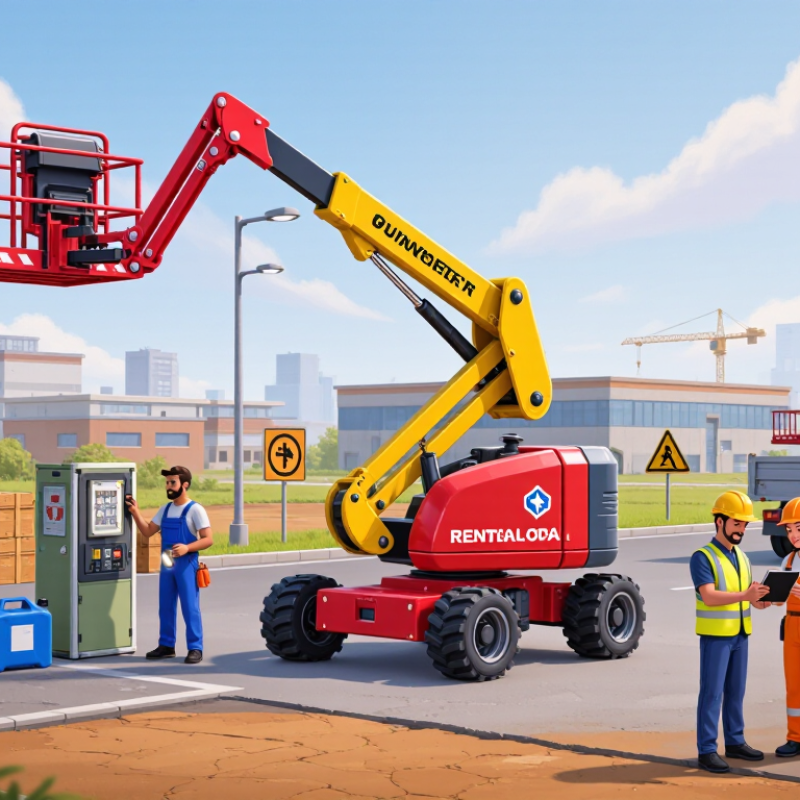
7 Cherry Picker Rental Tips for Global Buyers

Define Cherry Picker Types by Platform Height, Outreach, and Rated Capacity

Before comparing rental rates, match the machine to the work area. IPAF classifies mobile elevating work platforms as Group A, where the platform stays within the tipping lines, or Group B, where it can extend beyond them. Its Type 1, 2, and 3 categories describe whether travel is allowed when elevated and where the controls are located. These distinctions help buyers shortlist equipment, but site measurements still matter.

Tip: Measure the highest work point, then allow room for the worker, tools, and safe positioning. A 10-metre platform height does not mean 10 metres of outreach. Check the manufacturer’s working-height and horizontal-reach charts for the exact model. For example, a narrow aisle may favor a vertical mast, while a wall set back from the machine may require a boom with greater outreach. Confirm ground slope, doorway width, and turning space before booking.

Rated capacity includes people, tools, and materials—not just the worker’s body weight. Compare the platform’s load limit with the heaviest planned combination, and check whether capacity changes when the boom extends. ISO 16368 covers design, calculations, safety requirements, and test methods for mobile elevating work platforms; rental buyers can use it as a technical reference, not a substitute for the machine’s load chart.

Tip: Ask for that chart and inspect the intended setup. One detail is easy to miss: a compact lift can still be unsuitable when its reach or capacity is marginal.

Tips 1–2: Match 30–150 ft Working Height to the Job Requirement

A cherry picker’s working height is not the same as its platform height. Check the task’s highest reach, then allow room for the operator, tools, and safe positioning. A 30-foot unit may suit indoor lighting repairs, while façade work or tree maintenance can require 60, 100, or even 150 feet. Measure the actual work area; estimates from the ground are often wrong. A tape measure and a site sketch help.

Do not rent the tallest machine just in case. Greater reach can mean a larger footprint, more setup constraints, and harder access through gates or narrow aisles. The U.S. Bureau of Labor Statistics reported 395 fatal work injuries from falls, slips, and trips in construction in 2022. That figure covers construction broadly, not cherry picker incidents, but it underlines why reach planning matters. Check overhead lines, slopes, ground bearing conditions, and obstacles at the intended height. Small details matter.

Before booking, compare the manufacturer’s working-height and horizontal-reach charts with the job’s measurements. Ask the rental provider to confirm the figures for the planned setup, especially on uneven ground. One awkward corner can change the machine choice. I would also recheck the measurements after site access is confirmed; plans and reality do not always agree.

Tip 3: Verify ANSI A92.5 Compliance and OSHA Operator Training Rules

Before renting a boom lift, ask for documentation showing which ANSI standard the machine meets. ANSI A92.5 applies to boom-supported elevating work platforms, but newer standards may govern newer equipment. Confirm the model’s design standard, inspection history, rated platform capacity, and wind limits. Check the data plate yourself; a faded label is easy to overlook. Small detail, big risk. The U.S. Bureau of Labor Statistics recorded 395 fatal work injuries from falls, slips, and trips in construction in 2022. That figure covers many work situations, not lifts alone, but it shows why platform safeguards matter.

OSHA requires employers to train aerial-lift operators on hazards, safe operation, and fall protection. For construction, review 29 CFR 1926.453; general-industry requirements appear in 29 CFR 1910.67. Ask the rental provider for the operator manual and a hands-on familiarization session, then verify that each operator’s training covers the specific lift type. Training should include controls, emergency lowering, ground conditions, and what to do if the platform stops aloft. A certificate alone is not proof of practical skill. One detail buyers sometimes miss: OSHA training duties generally remain with the employer, even when equipment is rented. Keep training records, and check local requirements too; I would not assume one country’s paperwork satisfies another’s.

Tip 4: Keep at Least 10 ft from Energized Power Lines Under OSHA Rules

Tip 4: Keep at Least 10 ft from Energized Power Lines Under OSHA Rules

Power lines can be difficult to judge from a lift basket, especially against a bright sky. Treat every line as energized unless the utility confirms otherwise. OSHA’s construction rule generally sets a 10-foot minimum approach distance for lines up to 50 kV; higher voltages require greater clearance. Site conditions and applicable rules can change the required distance, so verify the voltage and safe approach distance before renting or operating a cherry picker. Ten feet is a minimum, not a target.

The risk is measurable. NIOSH’s analysis of U.S. workplace electrocutions from 1992 to 2008 found that construction workers accounted for about 41% of cases. Before work begins, walk the lift route with the operator and mark nearby lines, poles, and overhead crossings. Allow for boom movement, wind, and a worker’s tools. A spotter can watch clearance while the operator moves slowly. Stop if visibility is poor. I have seen distance estimates look comfortable from the ground, then feel very different from a raised platform. Never use the basket or boom to test how close is safe.

Tip 4: Keep Clear of Energized Power Lines

OSHA’s construction clearance table for cranes and derricks specifies minimum distances by voltage. These figures are not a substitute for checking the rules that apply to your equipment and jobsite. Treat lines as energized unless the utility confirms otherwise.

Minimum clearance distances shown in feet. Source: OSHA, 29 CFR 1926.1408, Table A. Confirm applicable requirements and site conditions before work begins.

Tips 5–7: Compare 8-Hour Rates, Delivery Fees, Inspection, and Support

An eight-hour rental rate is only useful when it matches your work plan. Check whether the clock starts at delivery or when the machine is ready to operate. Ask how overtime is billed, including partial hours. A low daily rate can become costly if setup, charging, or site access uses much of the shift. Compare quotes with the same rental duration and equipment capacity. Small print matters.

Delivery fees deserve the same attention. Confirm the charge for both drop-off and pickup, plus any extra cost for a distant or difficult-to-reach site. A narrow entrance, soft ground, or limited unloading space may affect the delivery plan. Share site photos and access measurements before booking. I might overlook this detail when comparing prices; that is an easy mistake to make.

Before accepting the lift, inspect tires, controls, platform rails, and visible hydraulic lines. Ask for any reported defects to be recorded, and clarify who to call if a fault appears during the rental. Good support means a reachable contact and a clear response plan, not just a phone number. Take a few dated photos at handover. It takes minutes. Keep the inspection notes with the rental paperwork.

7 Cherry Picker Rental Tips for Global Buyers - Tips 5–7: Compare 8-Hour Rates, Delivery Fees, Inspection, and Support

Use this comparison to evaluate the full rental package—not just the advertised day rate. Prices below are indicative U.S. planning ranges in USD for an 8-hour shift; actual rates depend on location, season, machine condition, and rental terms.

Equipment Type Typical Working Height Tip 5Indicative 8-Hour Rental Rate Tip 6Typical Local Delivery Fee Tip 6Inspection Checks Before Acceptance Tip 7Support to Confirm in Writing
Towable boom lift Approximately 35–50 ft (11–15 m) $200–$450 per 8-hour shift $100–$300 round trip within a local service area Check tires, stabilizers, controls, emergency lowering, platform gate, and current inspection records. Ask for the breakdown contact, response hours, and arrangements for replacement equipment if a fault cannot be resolved.
Electric articulating boom lift Approximately 30–60 ft (9–18 m) $250–$650 per 8-hour shift $150–$400 round trip, depending on distance and transport requirements Test drive and lift functions; check battery charge, charger, tires, platform controls, alarms, and visible damage. Confirm how to report faults, whether after-hours assistance is available, and who pays for service calls.
Diesel straight-boom lift Approximately 60–120 ft (18–37 m) $450–$1,200 per 8-hour shift $250–$700 round trip; heavy transport can cost more Check engine and hydraulic leaks, tires, boom operation, emergency controls, safety decals, and inspection documentation. Verify service coverage at the jobsite, estimated technician response time, and the process for reporting downtime.
Rough-terrain scissor lift Approximately 30–50 ft (9–15 m) $250–$700 per 8-hour shift $200–$600 round trip, based on machine size and delivery distance Inspect tires, guardrails, platform extension, pothole protection, controls, emergency lowering, and service records. Ask whether the provider can support the machine on the site’s terrain and clarify repair, recovery, and replacement procedures.

Buyer checklist: Confirm whether the 8-hour rate includes fuel or charging, operator, taxes, insurance, and overtime. Request the delivery distance or zone, collection fee, inspection record, and support terms in the written quote. For international comparisons, convert local prices and check local safety rules, transport requirements, and currency-related charges.

Back To Top