skip to Main Content

How to Choose the Best Towable Boom Lift Rental?

Choosing the right towable boom lift rental is not simply a matter of comparing daily prices. The machine must match the work, the ground, the access route, and the operator’s experience. A lift that looks perfect in a brochure may struggle beside a narrow building entrance or on soft landscaping. That detail matters.

Brad Boehler, a former president of the International Powered Access Federation, has emphasized, “There is no substitute for proper training.” His point belongs at the center of every rental decision. Before booking, confirm the required working height, platform capacity, horizontal outreach, and power source. Check whether the trailer can be moved safely across the site. Ask the rental provider for inspection records, operating guidance, emergency-lowering instructions, and clear maintenance support.

The best towable boom lift rental also fits the project schedule. Battery-powered models can reduce noise near schools, offices, and residential areas. Engine-powered units may suit longer outdoor tasks, but fuel, ventilation, and noise deserve closer attention. Uneven terrain can change the decision completely. Stabilizers need firm, suitable ground.

Do not trust the cheapest quote automatically. It may exclude delivery, collection, setup, or operator familiarization. A small omission can become an expensive delay. I have seen equipment choices become complicated because measurements were guessed instead of checked. That is an uncomfortable lesson.

This guide explains how to compare rental providers, machine specifications, safety preparation, transport needs, and total project costs. It also highlights the questions that responsible renters should ask before signing. The goal is practical confidence, not a rushed choice.
How to Choose the Best Towable Boom Lift Rental?

Towable Boom Lift Basics and Common Applications

How to Choose the Best Towable Boom Lift Rental?

Towable Boom Lift Basics and Common Applications

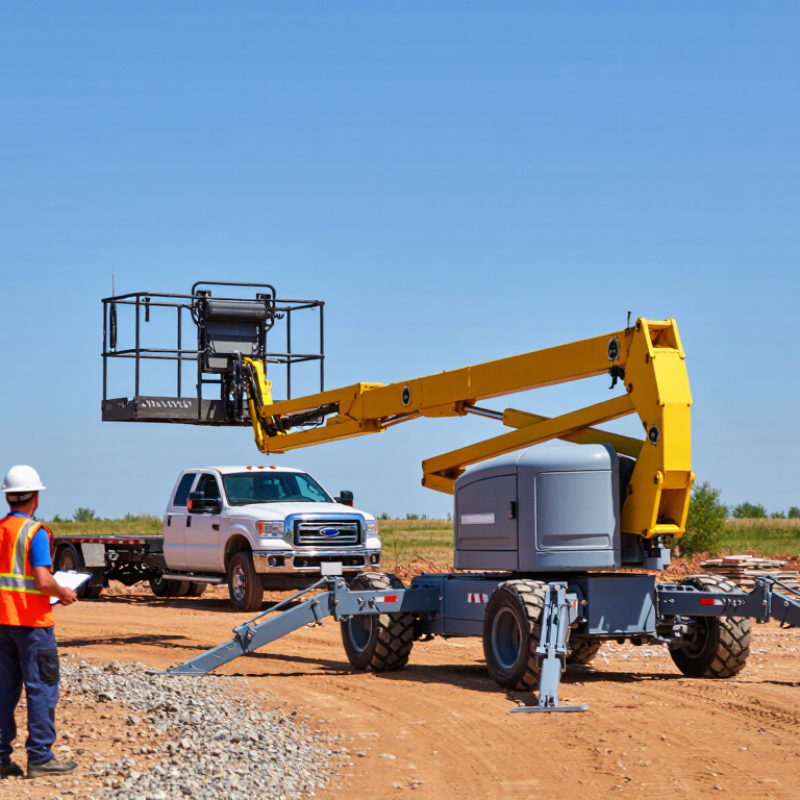
A towable boom lift is a compact aerial work platform mounted on a trailerable chassis. It usually combines a telescopic or articulating boom with stabilizing outriggers. Many models use electric power for quiet indoor work, while engine-powered units suit outdoor tasks. Typical uses include tree trimming, building maintenance, lighting installation, sign repair, warehouse servicing, and gutter access.

Working height is only one selection factor. Measure the required platform height, horizontal outreach, basket capacity, and access width. A narrow gate may reject an otherwise suitable machine. Check the ground carefully, too. Soft soil, slopes, and uneven paving can affect outrigger stability. The easy choice is often wrong. I would not rely on brochure reach alone.

Safety data supports a cautious rental process. The International Powered Access Federation’s Global Safety Report 2024 recorded 118 powered-access fatalities during 2023 across reported countries. Falls from platforms and electrocution remained major incident categories. Before delivery, request inspection records, operating instructions, emergency-lowering details, and recent maintenance information. Verify that operators receive suitable training and understand the site’s overhead hazards. The American Rental Association’s 2024 forecast valued U.S. equipment-rental revenue at more than 78 billion dollars, showing how widely rental equipment is used. High demand does not remove the need for a practical site assessment. A lift that fits the task, terrain, and transport plan is usually the safer rental decision.

How to Choose the Best Towable Boom Lift Rental?

Towable Boom Lift Basics and Common Applications

Towable boom lifts are commonly selected by working height, access conditions, and the task being performed. The height classes shown are representative rental categories converted from commonly used 30-, 45-, 55-, and 70-foot working-height specifications. Always confirm platform height, horizontal outreach, platform capacity, ground conditions, towing requirements, and local safety rules before renting.

Key Factors for Comparing Rental Options

How to Choose the Best Towable Boom Lift Rental?

Comparing towable boom lift rentals starts with the worksite, not the advertised weekly rate. Measure the required platform height, horizontal reach, doorway width, and ground slope. A lift reaching 60 feet may still fail if its outreach is insufficient. Check the machine’s platform capacity against workers, tools, and materials. Leave a realistic margin.

Towability also affects the real rental cost. Confirm the lift’s transport weight, hitch requirements, braking system, and delivery distance. A compact model can reduce setup time, but smaller baskets may slow two-person tasks. Ask whether the rental includes delivery, collection, batteries, charging equipment, and damage protection. Compare the complete invoice. Hidden fees matter.

Safety evidence should influence the decision. The IPAF Global Safety Report 2024 recorded 118 powered-access fatalities during 2023, with falls from height remaining a major reported cause. Request recent inspection records, emergency-control checks, and operator guidance before accepting the equipment. Verify whether site-specific familiarization is included. Do not assume a short handover is enough.

Weather, surface conditions, and overhead obstacles deserve equal attention. Electric units suit quieter indoor or low-emission projects, while engine-powered options may perform better outdoors. However, noise and exhaust can create restrictions. I would also question optimistic productivity estimates. Real sites lose time to repositioning, charging, and access delays. Recheck the rental period after a site visit, not just from a spreadsheet.

How to Choose the Best Towable Boom Lift Rental? - Key Factors for Comparing Rental Options
Lift Size Category Typical Platform Height Typical Working Height Typical Horizontal Outreach Typical Platform Capacity Typical Transport Weight Best Rental Applications Important Comparison Points
Compact towable boom lift 30–40 ft
(9–12 m)
36–46 ft
(11–14 m)
15–25 ft
(4.6–7.6 m)
400–500 lb
(181–227 kg)
2,500–4,000 lb
(1,134–1,814 kg)
Interior and exterior maintenance, residential work, light installation, signage, and tree trimming. Usually easier to tow and position. Confirm doorway access, total height when folded, and whether the work surface is level enough for stabilizers.
Mid-size towable boom lift 45–55 ft
(13.7–16.8 m)
51–61 ft
(15.5–18.6 m)
25–35 ft
(7.6–10.7 m)
500–600 lb
(227–272 kg)
3,500–5,500 lb
(1,588–2,495 kg)
Commercial building maintenance, roofline access, exterior painting, lighting, and moderate-height construction tasks. Offers a practical balance between reach and towing requirements. Compare outreach at the required platform height, not only the maximum reach.
Large towable boom lift 60–75 ft
(18.3–22.9 m)
66–81 ft
(20.1–24.7 m)
35–45 ft
(10.7–13.7 m)
500–700 lb
(227–318 kg)
5,000–7,500 lb
(2,268–3,402 kg)
Large facilities, tall structures, industrial maintenance, high-level inspections, and projects requiring substantial lateral access. Check the towing vehicle’s legal and rated capacity, site turning space, ground-bearing conditions, and stabilizer footprint before reserving.
Articulating boom configuration Varies by model and size Usually close to the rated working height Often less than the maximum height-dependent outreach Commonly 400–700 lb
(181–318 kg)
Depends on lift class Work that requires reaching over walls, roofs, landscaping, machinery, or other obstacles. Compare knuckle articulation, jib reach, platform rotation, and the ability to enter the work area without contacting obstacles.
Telescopic boom configuration Varies by model and size Usually provides a more direct vertical reach Often stronger for straight-line horizontal access Commonly 500–700 lb
(227–318 kg)
Depends on lift class Open-site construction, inspection, structural work, and applications with fewer overhead obstructions. Compare reach charts carefully because maximum outreach normally decreases as platform height and platform load increase.
Battery-electric power Available across compact and mid-size categories Depends on lift size Depends on lift size Depends on lift size Often lower operating emissions and noise than engine-powered units Indoor or noise-sensitive work, finished facilities, schools, hospitals, and areas with ventilation restrictions. Ask for usable operating time per charge, charging requirements, recharge duration, and whether the rental includes a compatible charger.
Engine-powered operation Available across many mid-size and large categories Depends on lift size Depends on lift size Depends on lift size Generally suited to longer outdoor shifts and remote work areas Outdoor construction, sites without convenient electrical service, and extended work periods. Confirm fuel type, expected daily fuel use, refueling responsibility, noise limits, and indoor-air-quality restrictions.
Towing and transport Not applicable Not applicable Not applicable Not applicable Verify gross trailer weight, hitch requirements, brake-controller requirements, and legal towing limits. Projects where the rental customer will collect and return the lift or move it between nearby locations. Do not select by lift weight alone. Include the trailer, accessories, fuel, tools, and allowable payload when checking the tow vehicle.
Access and setup Not applicable Not applicable Not applicable Not applicable Check folded width, folded height, overall length, stabilizer spread, and minimum turning radius. Sites with narrow gates, restricted driveways, landscaping, uneven ground, or limited setup space. Measure the actual route first. Include gates, overhead clearance, slopes, soft ground, and the space needed to deploy outriggers.
Rental term and total cost Not applicable Not applicable Not applicable Not applicable Rates vary by lift size, location, season, rental duration, delivery distance, and accessories. Any project requiring a cost-controlled alternative to equipment ownership. Compare daily, weekly, and monthly pricing together with delivery, pickup, damage waiver, insurance, fuel, cleaning, late-return, and standby charges.
Safety and compliance Not applicable Not applicable Not applicable Not applicable Confirm current inspection records, emergency-lowering functions, harness requirements, and operator training expectations. All elevated work, especially construction, maintenance, and public-access environments. Choose a rental with documented maintenance and inspection status. Follow local regulations, the operator manual, site risk assessment, and rated load limits.

Rental comparison note: Specifications are representative industry ranges rather than a quotation. Actual dimensions, capacities, outreach, weights, power options, and rental charges differ by equipment configuration and location. Always confirm the current specification sheet and rate schedule before booking.

How to Match Lift Specifications to Your Worksite

Choosing a towable boom lift rental starts with the worksite, not the advertised platform height. Measure the highest task, required horizontal reach, and access width. A 45-foot lift may still fail when the wall sits beyond its outreach envelope.

Check the platform capacity against workers, tools, hoses, and materials. Never treat the maximum rating as a comfortable working load.

OSHA’s 2022 fatality data recorded 865 deaths from workplace falls, slips, and trips, representing 21.2% of all fatal work injuries. That figure makes setup discipline more than paperwork.

Confirm ground firmness, slope, overhead obstructions, and wind exposure before delivery. Small yards can require a narrow, lightweight unit, while uneven landscaping may demand stabilizers with broad deployment space. Think about the trailer too.

Power selection matters during long exterior jobs. Battery models reduce exhaust near occupied buildings, but cold weather and repeated repositioning can reduce operating time. Engine-powered units may offer longer shifts, yet they need ventilation and refueling controls.

The rental agreement should include inspection records, operator instructions, emergency lowering procedures, and recent maintenance details. ANSI/SAIA A92.5 addresses boom-supported elevating work platforms, while OSHA requires employers to control recognized fall hazards and provide training.

Ask the rental specialist to map the machine’s working envelope on your site plan. I once underestimated clearance near a loading dock; the lift fit, but the stabilizer deployment did not. That mistake is easy to repeat. Recheck it.

Rental Costs, Safety Requirements, and Transport Planning

How to Choose the Best Towable Boom Lift Rental?

Rental costs depend on lift height, rental duration, delivery distance, and site conditions. Ask for an itemized quote before reserving the machine. Confirm whether fuel, cleaning, insurance, damage protection, and delivery fees are included. A low daily rate may become expensive after transport and overtime charges. Longer rentals often reduce the daily price, but only when the schedule is realistic.

Safety requirements should guide the equipment choice. Check the platform height, outreach, basket capacity, and ground clearance against your work area. Inspect tires, controls, emergency lowering systems, guardrails, and outriggers during pickup. Wear a suitable harness when required by the equipment manual and local rules. Keep people outside the operating zone. Never work beyond stated wind limits. Training matters, even for experienced operators. Familiar machines can still behave differently.

Transport planning prevents costly delays. Verify the tow vehicle’s rated capacity, hitch size, trailer brakes, and electrical connection. Measure narrow gates and overhead cables before delivery. A muddy driveway may need ground protection. Secure the boom completely, remove loose tools, and check tie-down points before travel. I once underestimated a turning area, and the delivery vehicle needed a second attempt. That mistake was avoidable. Leave extra time for traffic, weather, loading, and site access. A careful rental company should explain these details clearly and provide inspection records.

Final Checks Before Booking a Towable Boom Lift

Final checks should happen beside the machine, not at the rental desk. Confirm the boom lift’s working height, side reach, platform capacity, and folded dimensions. A compact towable unit may reach 50 feet, yet still fail on a narrow driveway or uneven lawn. Check the towing vehicle’s rated capacity, hitch class, trailer brakes, lighting, and license requirements.

Inspect the tires, coupler, safety chains, outriggers, controls, guardrails, emergency lowering system, and visible hydraulic lines. Ask for the latest inspection record and maintenance history. IPAF’s Global Safety Report 2024 recorded 118 powered access fatalities during 2023. Falls and overturns remained major event categories. Those figures make a documented pre-use inspection more than paperwork. It is a practical risk control.

Review the site after rain, when soft ground can undermine stabilizers. Measure overhead cables, tree branches, roof edges, and nearby traffic routes. Confirm wind limits from the operator manual, especially before outdoor work. OSHA guidance emphasizes trained operators, fall protection, and inspections before use. Brief every worker on exclusion zones and emergency communication. Test the controls slowly. Something may still be missed. A rental quote that excludes delivery, damage protection, operator training, or overtime can also distort the real cost. Keep those terms in writing before booking.

Back To Top