
7 Best Towable Boom Lift Rental Options for Global Buyers
For global buyers, choosing the right towable boom lift rental requires more than comparing daily prices. Access height, platform capacity, trailer weight, battery condition, and local transport support can change the real rental cost. A compact towable lift may reach a narrow courtyard, while a larger model may require additional towing capacity and site clearance. The International Powered Access Federation’s Global Safety Report highlights continuing risks involving falls, overturns, and improper machine operation. These findings make operator training, pre-rental inspections, and documented maintenance essential.
Market reports also show sustained demand for rental equipment. The American Rental Association has projected continued growth in equipment rental revenue, supported by construction, facility maintenance, utilities, and event work. However, global comparisons remain imperfect. Reporting standards differ between countries, and towable boom lift data is often grouped with broader aerial work platforms. That limitation deserves attention.
Peter Douglas, former CEO of IPAF, has repeatedly emphasized the central principle: “Safety must remain at the heart of powered access.” Buyers should treat that statement as practical guidance, not marketing language. Ask for inspection records. Confirm emergency-lowering functions. Check tire condition before delivery. The seven towable boom lift rental options reviewed here focus on reach, portability, power source, operating environment, and supplier reliability. They are not universally equal. A machine that performs well on a smooth construction site may struggle on gravel, slopes, or wet grass. Careful comparison can prevent an expensive mistake.
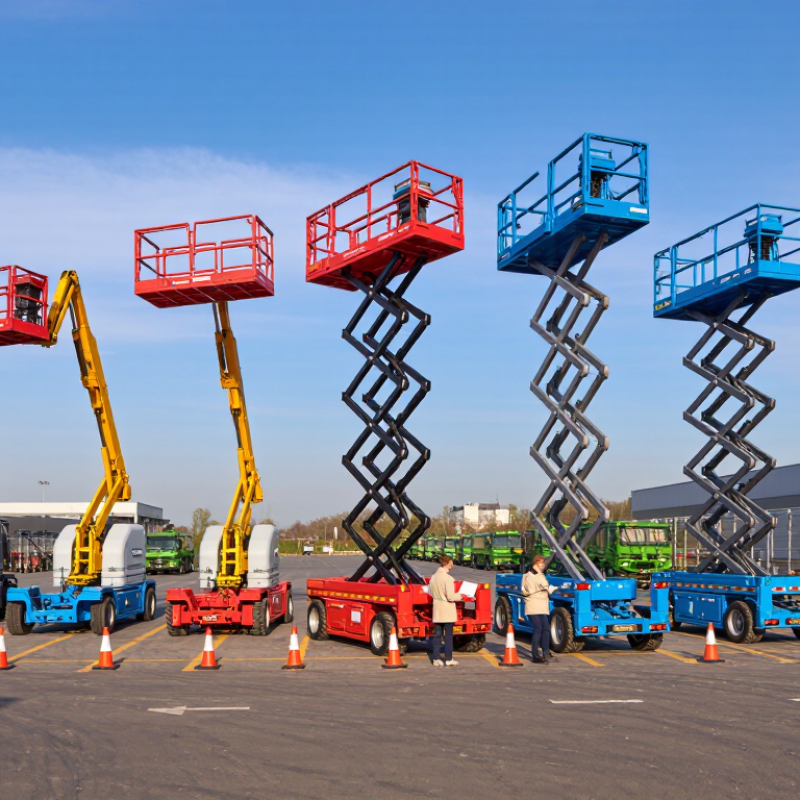
What Makes Towable Boom Lifts Suitable for Global Rental Projects
What Makes Towable Boom Lifts Suitable for Global Rental Projects
Towable boom lifts suit global rental projects because they move easily between small construction sites, warehouses, and maintenance areas. Their compact frames can pass through narrow gates, while outriggers provide stability on prepared ground. Many models use battery power, reducing indoor fumes and noise. A standard trailer can transport the lift, but local towing rules and road conditions still require checking. This detail is easy to overlook.
IPAF’s 2024 Global Safety Report recorded 118 MEWP-related fatalities in 2023 across reported countries. The figure shows why simple transport cannot replace competent training. Operators must understand ground pressure, wind limits, emergency lowering, and overhead hazards. OSHA reports that falls caused 36.5% of construction deaths in its cited industry data. Towable access is useful, but it is not automatically safer. That assumption deserves review.
Tips: Check trailer compatibility, coupler standards, tire ratings, and regional licensing before booking. Inspect outriggers on every setup. Measure gates and ceiling heights with a tape, not memory. Confirm battery charging requirements and cold-weather performance. Rental teams should provide multilingual manuals and practical handover training. A lift may arrive quickly, yet poor site planning can still delay the project.
7 Best Towable Boom Lift Rental Options for Global Buyers — What Makes Towable Boom Lifts Suitable for Global Rental Projects
| Rental Option | Typical Working Height | Typical Horizontal Outreach | Typical Platform Capacity | Common Power Options | Best-Fit Rental Projects | Why It Works for Global Projects |
|---|---|---|---|---|---|---|
| Compact 10 m Class | About 10–11 m | About 4–6 m | Typically 200–230 kg | Battery-electric or petrol | Indoor maintenance, small warehouses, retail façades, and low-rise building work. | Compact dimensions and relatively low transport weight can simplify delivery to sites with limited access. |
| 12 m Class | About 12–13 m | About 5–7 m | Typically 200–230 kg | Battery-electric, petrol, or dual-power configurations | Lighting, signage, tree care, and routine work on low- to mid-rise structures. | A versatile height range suits a broad mix of maintenance tasks without requiring a larger lift for every job. |
| 15 m Class | About 15–16 m | About 7–9 m | Typically 200–230 kg | Battery-electric, petrol, or diesel, depending on configuration | Building maintenance, construction finishing, and access around moderate obstacles. | Offers a practical balance of reach and transportability for rental fleets serving varied customer sites. |
| 17–18 m Class | About 17–18 m | About 8–10 m | Typically 200–230 kg | Battery-electric, petrol, diesel, or hybrid, depending on configuration | Industrial maintenance, larger façades, and work above equipment or landscaping. | Additional outreach can reduce repositioning on jobs where the work area is set back from the lift. |
| 21 m Class | About 20–21 m | About 10–12 m | Typically 200–230 kg | Petrol, diesel, battery-electric, or hybrid, depending on configuration | High-level construction, large building maintenance, and access across wider obstacles. | Provides greater working height and outreach for projects that would otherwise need a larger self-propelled lift. |
| Battery-Electric Towable Lift | Commonly about 10–18 m, depending on model | Commonly about 4–10 m, depending on model | Typically 200–230 kg | Rechargeable battery; some models also offer an auxiliary power source | Indoor or noise-sensitive work, including facility maintenance and work near occupied buildings. | Local charging can avoid dependence on a specific fuel supply at the jobsite; runtime and charging access should be checked before booking. |
| Rough-Terrain or Hybrid Towable Lift | Commonly about 12–21 m, depending on model | Commonly about 5–12 m, depending on model | Typically 200–230 kg | Engine-powered or hybrid; some configurations include electric operation | Outdoor construction, landscaping, and sites where ground conditions or access vary. | Can suit mixed-duty projects, but ground bearing capacity, slope limits, stabilizer setup, and local transport rules must be checked. |
Planning note: Figures are representative ranges for towable boom lift classes, not guaranteed specifications for every machine. Actual working height, outreach, platform capacity, weight, towing requirements, power source, and permitted road use vary by model and market. Confirm the machine data plate, site conditions, towing vehicle capacity, and applicable local regulations before rental.
Related Posts
-
2026 How to Choose the Best Towable Boom Lift Rental for Your Project?
-
Top 5 Reasons Towable Boom Lift Rentals Increase Job Site Efficiency by 30%
-
Top 10 Benefits of Telescopic Forklift Rental for Your Business?
-
10 Tips for Choosing the Best Machinery Movers
-
2025 Top 5 Telehandler Forklift Rental Services You Can Trust
-

Top Tips for Articulating Lift Rental Needs Efficiently