
10 Best Lift Rental Companies for Global Buyers?
Choosing the right lift rental partner involves more than comparing daily prices. Global buyers must assess fleet quality, delivery capability, operator support, and regional compliance. A low quote can become expensive when a machine arrives late or lacks the correct working-height certificate.
Industry data supports this careful approach. The International Powered Access Federation (IPAF) continues to highlight inspection, training, and safe equipment selection as essential controls in powered access operations. Its Global Safety Report also shows why buyers should examine rental companies’ safety systems, not only their advertised fleet sizes. KHL Group’s Access50 report provides another useful reference by tracking leading access-equipment rental companies and their international scale. These sources help separate established providers from smaller firms with limited operational visibility.
This guide evaluates ten lift rental companies for global buyers. The comparison considers equipment availability, geographic coverage, maintenance practices, digital booking tools, delivery coordination, and customer support. It also considers electric and low-emission options, which matter on indoor sites and urban projects.
No ranking fits every project.
A contractor managing a warehouse retrofit may need compact electric scissor lifts. A wind-energy project may require rough-terrain boom lifts, stronger logistics, and longer rental periods. Some companies offer excellent local service but limited cross-border support. Others have impressive fleets yet slower regional communication.
That difference matters. Buyers should verify model specifications, inspection records, insurance requirements, transport terms, and emergency response arrangements before signing. This article offers a practical starting point, not a substitute for site-specific engineering review. After all, even the best lift rental company can be unsuitable for the wrong application.
Understanding Lift Rental Services for Global Buyers
10 Best Lift Rental Companies for Global Buyers
Understanding Lift Rental Services for Global Buyers
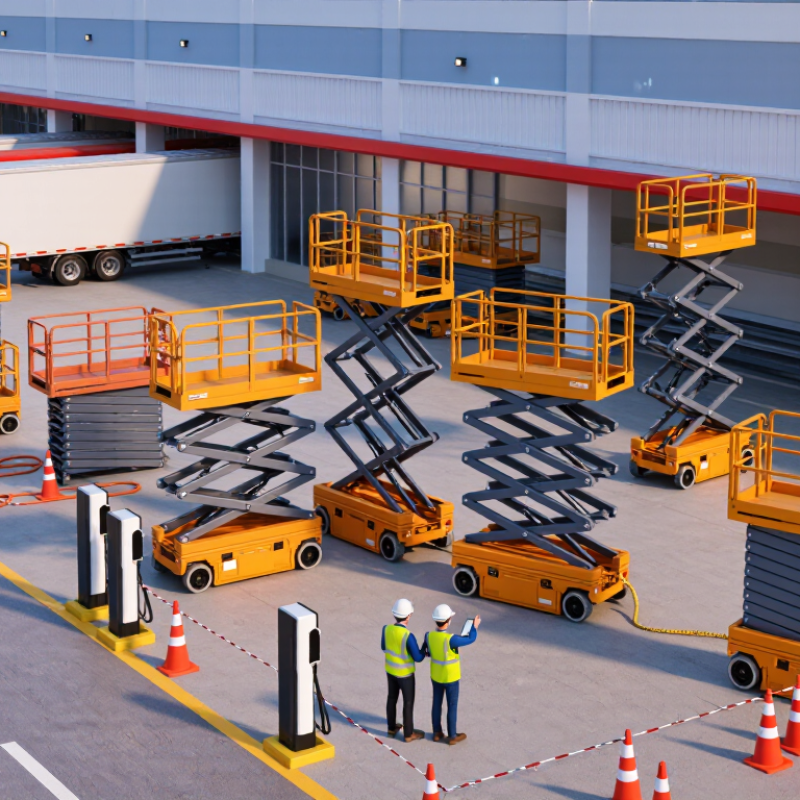
Global lift rental is not simply an equipment transaction. It involves transport, safety documentation, local support, and project timing. Buyers should examine providers that offer scissor lifts, boom lifts, telehandlers, and compact access platforms. Equipment must match the working height, surface conditions, load requirements, and indoor or outdoor environment.
Ask for recent inspection records and clear maintenance histories. A reliable provider explains servicing intervals without hiding technical details. Check whether the rental fleet meets recognized safety standards in the destination country. Electrical specifications also matter. A machine designed for one voltage system may require approved adjustments elsewhere. Small oversights can cause expensive delays.
The strongest rental services provide delivery estimates, multilingual contracts, operator guidance, and responsive emergency support. Confirm insurance responsibilities, damage policies, fuel charges, cleaning fees, and return procedures before signing. Ten useful comparison points include fleet age, availability, transport capacity, spare parts access, technician coverage, training quality, contract clarity, payment security, regional experience, and customer references. Field evaluations often reveal a practical weakness: online availability may not reflect actual fleet condition. Request photographs taken before dispatch. Short-term savings can disappear when a lift arrives late or needs repair. Yet even careful buyers may overlook weather limits, uneven ground, or restricted site access. That deserves another review.
10 Best Lift Rental Companies for Global Buyers? - Understanding Lift Rental Services for Global Buyers
| Profile | Typical Regional Coverage | Main Lift Categories | Typical Working Height | Common Rental Terms | International Buyer Support | Compliance Documentation | Best Suited For |
|---|---|---|---|---|---|---|---|
| Profile 01 | North America | Scissor lifts, boom lifts, vertical mast lifts | 4–41 m | Daily to 12 months | English documentation, export quotations, delivery coordination | Inspection records, operator manuals, maintenance logs | Construction, facilities maintenance, warehouse projects |
| Profile 02 | Western and Northern Europe | Electric scissor lifts, articulated booms, telescopic booms | 6–56 m | 1 day to 24 months | Multilingual contracts, cross-border transport planning | CE-related technical files, risk assessments, test certificates | Industrial shutdowns, commercial construction, infrastructure work |
| Profile 03 | East and Southeast Asia | Compact electric lifts, scissor lifts, mast lifts | 3–22 m | Daily, weekly, monthly | Port delivery support, English-language specifications, spare-parts coordination | Pre-rental inspection reports, charging instructions, service history | Indoor maintenance, retail fit-outs, light industrial applications |
| Profile 04 | Middle East | Rough-terrain booms, telescopic handlers, diesel scissors | 10–58 m | Weekly to project-based | Job-site delivery, customs paperwork support, on-site service options | Load charts, operator manuals, inspection and service records | Large construction sites, oil and gas support, outdoor projects |
| Profile 05 | Australia and New Zealand | Articulated booms, scissor lifts, trailer-mounted lifts | 5–45 m | Daily to long-term hire | Remote-site logistics, delivery scheduling, digital quotation requests | Pre-start checklists, service records, safe-use instructions | Mining support, utilities, building maintenance, events |
| Profile 06 | Latin America | Scissor lifts, boom lifts, personnel lifts | 5–40 m | Weekly to annual | Bilingual communication, inland transport planning, import support | Equipment specifications, inspection certificates, maintenance history | Commercial buildings, telecom work, renewable-energy installations |
| Profile 07 | Africa | Diesel scissors, rough-terrain lifts, telescopic handlers | 8–50 m | Weekly to project-term | Remote-area delivery, mobilization planning, field-service coordination | Load charts, daily inspection forms, repair and service documentation | Infrastructure, utilities, civil engineering, remote construction |
| Profile 08 | Global port-to-port service | New and used scissor lifts, boom lifts, mast lifts | 4–45 m | Monthly to multi-year | Export packing, freight coordination, commercial invoices and packing lists | Serial-number records, technical specifications, export inspection documents | Distributors, contractors, fleet expansion, overseas projects |
| Profile 09 | Urban and metropolitan markets | Low-level access lifts, electric scissors, compact booms | 2–18 m | Hourly, daily, weekly | Fast delivery windows, online reservations, indoor-use guidance | Equipment manuals, battery records, pre-delivery inspection reports | Retail, hotels, offices, schools, indoor maintenance |
| Profile 10 | Specialized industrial markets | High-capacity booms, telehandlers, personnel lifts | 12–75 m | Project-term to 36 months | Method-statement support, technical consultations, scheduled site servicing | Load charts, risk assessments, inspection certificates, service plans | Power plants, petrochemical facilities, shipyards, major infrastructure |
| Buyer note: Working-height ranges, rental periods, delivery options, and documentation requirements vary by location, equipment model, load capacity, site conditions, and applicable regulations. Confirm current specifications, insurance requirements, operator qualifications, inspection status, and local compliance before signing a rental agreement. | |||||||
Related Posts
-
What Are the Top China Construction Lift Rental Suppliers?
-
China Top Snorkel Lift Rental Suppliers for Global Buyers
-

2025 Top Bucket Lift Rental Trends Driving Efficiency and Safety in Construction
-

2025 How to Choose the Right Lift Equipment Rental for Your Project
-

Discover the Ultimate Guide to Lift Rental: Essential Tips for Your Next Project
-
Best Practices for Articulating Lift Rental in Your Construction Projects