
What Are the Top China Construction Lift Rental Suppliers?
Choosing among China construction lift rental suppliers requires more than comparing daily prices. A reliable partner should match the lift to the project’s height, load capacity, site access, and schedule. This guide examines how suppliers support construction lift rental projects across commercial, industrial, and infrastructure sites.
Practical experience matters. A supplier should explain installation procedures, inspection routines, emergency response, and operator training clearly. Strong companies usually provide equipment records, maintenance schedules, technical drawings, and direct support contacts. Ask how quickly spare parts can reach a remote project. A delayed brake component can stop an entire crew.
Not every strong supplier fits every site.
Price alone can hide important differences. A lower quote may exclude transport, assembly, dismantling, insurance, or standby service. Careful buyers should compare the complete rental scope, not only the headline rate. Supplier reputation also deserves independent checking through project references, customer feedback, and verifiable business information.
This overview focuses on suppliers that demonstrate technical knowledge, transparent communication, and dependable after-sales service. It also considers regional coverage, equipment availability, safety documentation, and contract flexibility. Still, no ranking can suit every construction team. Site conditions change, and supplier performance may vary by branch or project season. That limitation deserves attention. A thoughtful decision combines documented evidence with a direct technical discussion before signing any rental agreement.
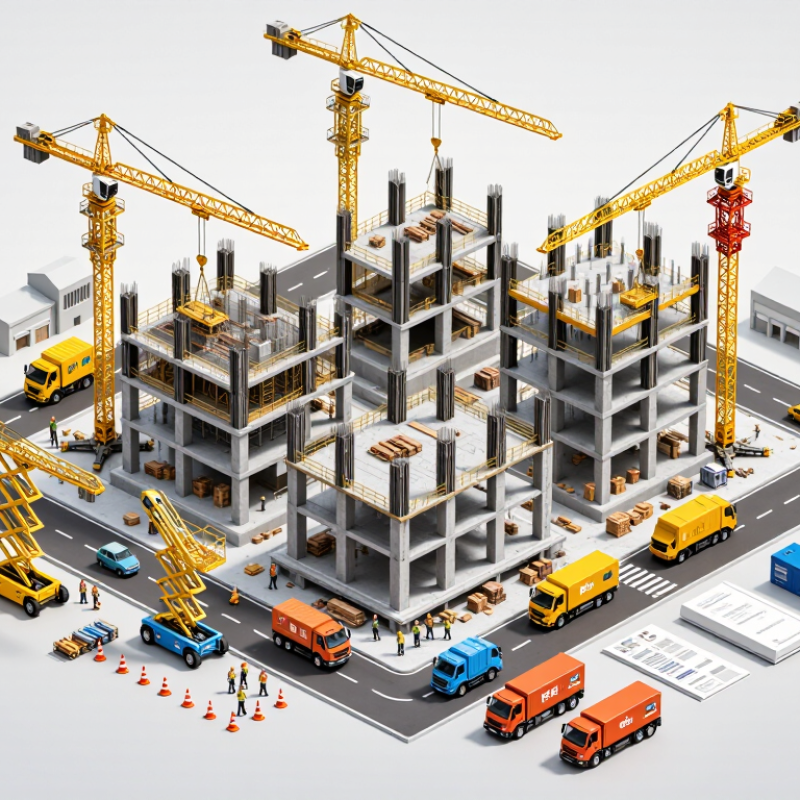
China’s Construction Lift Market: 2024 Demand and 2030 Growth Forecast
China’s construction lift rental market is moving from rapid expansion toward stricter fleet management. Off-Highway Research reported that China’s aerial work platform fleet exceeded 300,000 units by 2023. Demand remained strong in 2024, supported by urban renewal, warehouse construction, and maintenance projects. Research and Markets forecasts continued growth in China’s construction equipment rental sector through 2030, although estimates differ by equipment category.
The strongest rental suppliers are usually regional fleet operators, manufacturer-linked rental divisions, and independent companies with dense service networks. Buyers should compare lift height, platform capacity, delivery distance, inspection records, and emergency response times. A low daily rate can hide transport charges or weak maintenance. That mistake is common. The best supplier may not have the largest fleet. It may have the fastest technician near the project.
Tips: Ask for recent inspection documents, usage hours, battery or fuel records, and operator training evidence. Check whether the contract explains damage limits and replacement arrangements. The China Association of Construction Machinery Industry has repeatedly highlighted equipment safety and after-sales service as key market priorities. Market forecasts are useful, but they are not exact. Regional construction delays, financing pressure, and uneven demand could weaken the 2030 growth path. A practical rental decision should combine report data with site-level evidence.
What Are the Top China Construction Lift Rental Suppliers? - China’s Construction Lift Market: 2024 Demand and 2030 Growth Forecast
| Category | Market Dimension | 2024 Reference | 2030 Outlook | Implication for Rental Suppliers |
|---|---|---|---|---|
| Demand Drivers | Urban construction activity | China’s permanent urbanization rate reached 66.16% at the end of 2023, supporting continued demand for urban building, infrastructure, and renewal projects. | Ongoing urban renewal and metropolitan infrastructure development are expected to support steady equipment utilization. | Prioritize dense urban areas, public works, renovation projects, and sites with restricted equipment-access conditions. |
| Fixed-asset investment | National fixed-asset investment excluding rural households increased by approximately 3.2% year on year in 2024, according to official statistical releases. | Investment growth is likely to remain uneven, with infrastructure and industrial construction providing stronger support than residential new-build activity. | Maintain flexible fleet allocation between infrastructure, industrial, logistics, and commercial projects. | |
| Real-estate market adjustment | Real-estate development investment declined by approximately 10.6% in 2024, creating weaker demand in some residential construction segments. | Rental demand is expected to shift from large speculative housing projects toward completion, refurbishment, affordable housing, and urban-renewal work. | Suppliers should avoid excessive concentration in new residential construction and expand service coverage for renovation and completion projects. | |
| Equipment replacement and safety upgrades | Government equipment-renewal policies introduced in 2024 encouraged replacement of aging industrial and construction equipment. | Demand should increasingly favor newer, compliant, energy-efficient, and digitally monitored construction lifts. | Suppliers with documented inspection records, remote monitoring, and newer fleets should gain a competitive advantage. | |
| Labor and productivity requirements | Higher safety and productivity requirements are increasing the value of professionally installed and maintained vertical-access equipment. | Professional rental packages are expected to replace more informal purchase-and-self-maintenance arrangements. | Offer installation, operator training, scheduled maintenance, emergency response, and dismantling as a single service package. | |
| Equipment Demand | Passenger and material construction hoists | Core rental category for high-rise construction, major refurbishment, industrial facilities, and infrastructure projects. | Expected to remain the largest construction-lift rental category by project application. | Fleet depth, rapid installation, spare-part availability, and compliance documentation are key selection factors. |
| Rack-and-pinion construction elevators | Widely used where frequent vertical transport of personnel and materials is required during the construction phase. | Demand should track industrial parks, logistics facilities, urban renewal, and large public infrastructure projects. | Provide multiple cage configurations, variable mast heights, and project-specific loading solutions. | |
| Temporary platform and suspended-access systems | Typically used for façade maintenance, external finishing, repair, and building-envelope refurbishment. | Urban renovation and maintenance projects are expected to support stable demand for temporary access equipment. | Suppliers should combine short-term rental, inspection, installation, and removal services. | |
| Low-emission and digitally monitored equipment | Electric drives, energy monitoring, telematics, overload protection, and digital inspection records are becoming more important. | Adoption remains project-dependent but is strongest where safety, energy use, and reporting requirements are strict. | Digital fleet management and lower operating emissions should become standard differentiators by 2030. | |
| Supplier Evaluation | Fleet availability | A suitable supplier should be able to provide equipment matching required load, speed, cage size, mast height, and site conditions. | Availability will remain a decisive factor as project schedules become shorter and more variable. | Request current fleet lists, utilization status, delivery lead times, and replacement-equipment commitments. |
| Compliance and inspection | Important documentation includes equipment records, installation acceptance, periodic inspection, operator qualification, and maintenance history. | Compliance transparency is expected to become more important as construction safety enforcement and digital project management improve. | Select suppliers able to provide traceable, project-level compliance files before mobilization. | |
| Installation and dismantling capability | Professional installation is essential for mast alignment, anchoring, electrical connection, testing, and safe commissioning. | Turnkey installation and dismantling services should grow faster than equipment-only rental. | Compare technician coverage, mobilization time, installation procedures, and emergency support capacity. | |
| Service response | Downtime risk is affected by spare-parts inventory, technician availability, preventive maintenance, and regional service coverage. | Customers are likely to place greater emphasis on measurable response times and uptime commitments. | Use service-level agreements covering response time, planned maintenance, fault escalation, and substitute equipment. | |
| Rental flexibility | Monthly rental remains common, while short-term, phased, and project-based contracts are useful for refurbishment and infrastructure work. | Flexible contracts should expand as construction schedules and project financing remain uncertain. | Compare minimum rental periods, transport charges, installation fees, extensions, early returns, and damage terms. | |
| 2030 Forecast Scenario | Conservative demand scenario | 2024 demand index: 100 | Approximately 130 by 2030, based on a 4.5% compound annual growth assumption. | Likely if residential construction remains weak and growth is concentrated in replacement and maintenance work. |
| Base demand scenario | 2024 demand index: 100 | Approximately 146 by 2030, based on a 6.5% compound annual growth assumption. | Supported by urban renewal, infrastructure investment, equipment replacement, and wider professional rental adoption. | |
| High-growth demand scenario | 2024 demand index: 100 | Approximately 163 by 2030, based on an 8.5% compound annual growth assumption. | Possible if construction recovery, public investment, industrial expansion, and equipment-renewal programs strengthen simultaneously. |
Related Posts
-
Essential Tips for Cherry Picker Rental Success?
-
China Top Snorkel Lift Rental Suppliers for Global Buyers
-

Top 10 Benefits of Boom Lift Rental for Your Next Construction Project
-

2025 How to Choose the Right Lift Equipment Rental for Your Project
-
Best Practices for Articulating Lift Rental in Your Construction Projects
-
How to Choose the Right Aerial Lift Rental for Your Project?