
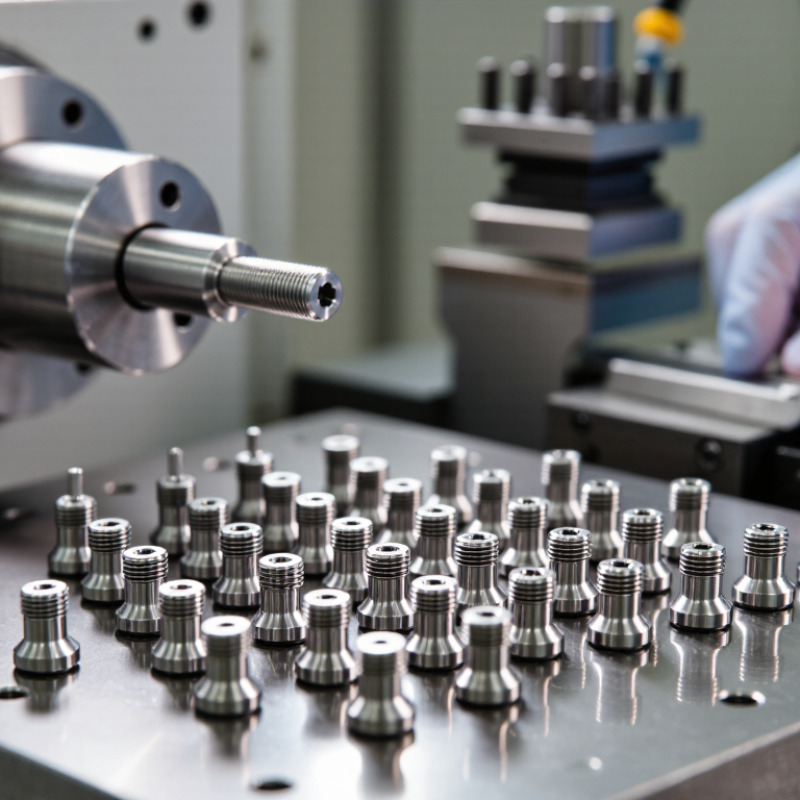
Why Choose Swiss Turning Services for Titanium Bone Screws?
Why Titanium Bone Screws Require Swiss-Type Machining
Titanium bone screws demand controlled cutting, not simply sharp tools. Titanium conducts heat poorly, at roughly 7 W/m·K, according to ASM International data. Heat therefore remains near the cutting edge. The material also springs back and can harden during unstable cutting. Small errors may damage threads, recesses, or the screw’s seating surface.
Swiss-type machining supports this geometry. A guide bushing holds the slender blank close to the cutting zone. That reduces deflection during thread production and cross-hole drilling. Live tooling can complete several features in one setup. Fewer setups often mean fewer alignment risks. It is a practical advantage.
The details matter. Stable coolant flow helps control heat. Sharp, dedicated tools reduce burr formation. Measured thread pitch and surface finish support reliable assembly. ASTM F136 titanium alloy is widely specified for surgical implants, while ISO 5832-3 defines requirements for wrought titanium alloy. These standards guide material control, but machining still determines the final surface.
Grand View Research reported in 2024 that the orthopedic implants market is expected to grow at about 4% annually through 2030. That growth increases pressure for repeatable production and traceable inspection. However, Swiss turning is not magic. Tool wear can still alter a tiny thread profile. Experienced manufacturers must inspect first-off parts, monitor runout, and review process data continuously. Even good processes need questioning.