
Why Choose a Single Gauge Manifold?
Single-Gauge Manifolds: Definition, Ports, and Core Functions
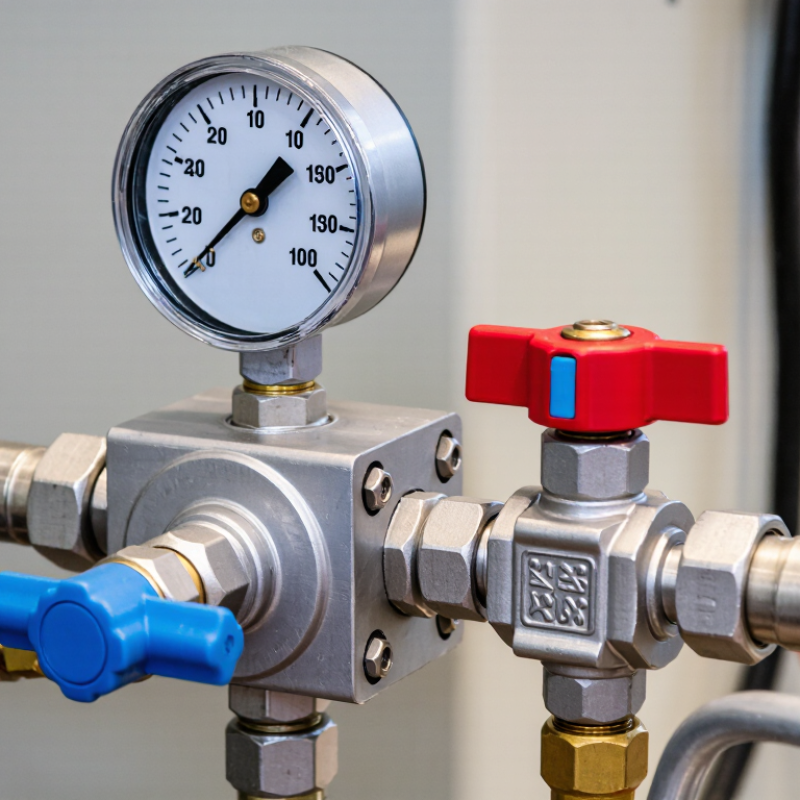
A single gauge manifold is a compact fluid-control assembly with one pressure gauge. It connects a supply line, equipment line, and pressure-monitoring point. The manifold body directs flow through internal passages. The gauge displays pressure in one selected section. It is simple to read. That simplicity matters in cramped panels and field service work.
Typical ports include an inlet, outlet, gauge connection, and sometimes a vent or drain port. Port locations vary by design, so technicians should check the flow markings carefully. The inlet receives fluid from the source. The outlet sends it toward connected equipment.
A vent port can help release trapped pressure during maintenance, when the system design permits it. Thread quality and seal selection require attention.
The core functions are isolation, monitoring, and controlled routing.
Closing the valve can separate equipment from the supply. Opening it can restore flow after inspection. In practice, a single gauge manifold reduces visual clutter and lowers installation effort. I have found it useful where only one pressure zone needs regular observation. However, it cannot show two pressures at once. That limitation is easy to overlook. A pressure reading may also become misleading if the gauge is installed on the wrong side of the isolation valve. Careful labeling, leak checks, and gradual valve operation improve reliability. The design is efficient, but not automatically suitable for every system.