
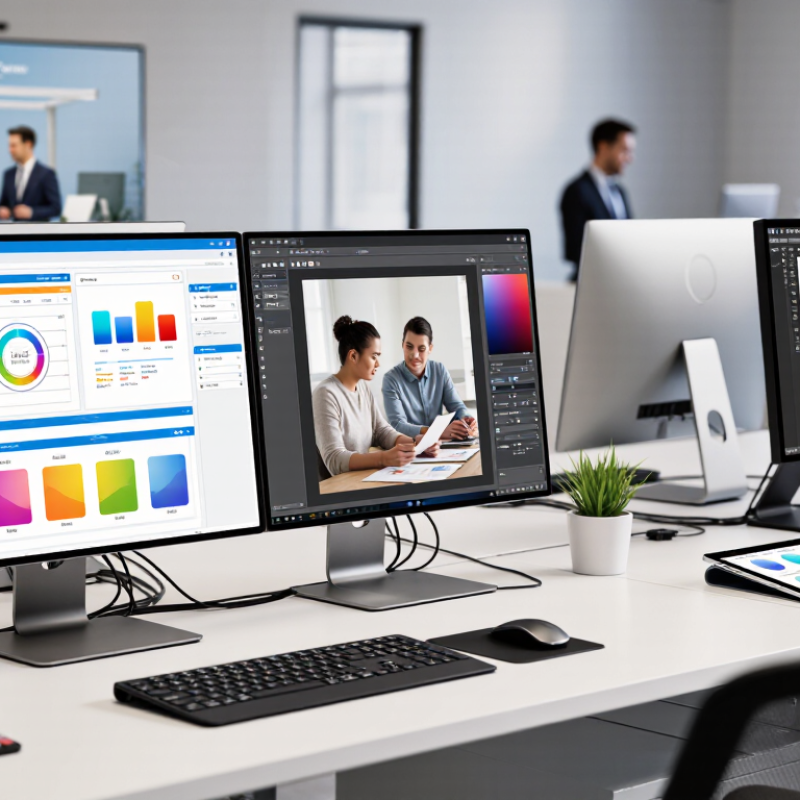
A display screen monitor can improve communication, but its business value depends on practical planning. AVIXA’s 2024 Industry Outlook and Trends Analysis estimated the professional audiovisual market at about $306 billion in 2023. That scale reflects strong demand, but it also exposes a common mistake: buying hardware before checking the site.
Installation costs extend beyond the screen itself. Measure wall strength, viewing distance, ambient light, and cable routes. A bright lobby may require higher output, increasing energy use. Ceiling height can also require lifts, permits, or specialist labor. Include network equipment and content management in the budget. They are easy to overlook. In a small office, a single power socket may sit behind furniture, forcing expensive rewiring.
Maintenance deserves equal attention. Keep ventilation openings clear. Dust can raise internal temperatures and shorten component life. Schedule cleaning and connection checks every three to six months, depending on traffic and air quality. ENERGY STAR display requirements emphasize power management and reduced off-mode consumption, which can lower avoidable operating costs. The U.S. Department of Energy also reports that efficient lighting technologies can use substantially less electricity and last much longer than older alternatives; similar efficiency thinking should guide screen selection.
A useful calculation includes purchase, installation, electricity, support, and replacement costs. The cheapest quotation can be misleading. I have seen projects fail because brightness was chosen by appearance, not measured conditions. A pilot installation is slower, but often wiser. Even then, assumptions should be reviewed after the first month.