
What Makes China the Best PV Cable Harness Supplier?
China’s PV cable harness advantage begins with its manufacturing ecosystem. The IEA PVPS Trends 2024 report recorded more than 1.6 terawatts of global solar capacity by the end of 2023. China contributed approximately 216.9 gigawatts of new installations that year. Such demand supports dense networks for copper conductors, insulation materials, connectors, molding, testing, and automated assembly.
The supply chain is unusually close. A cable harness producer can source cable compounds, terminals, junction components, and packaging within short transport distances. The International Energy Agency reported that China held over 80% of global manufacturing capacity across several solar production stages in 2022. This concentration improves material availability and enables faster engineering changes. A harness can move from drawing review to sample production with fewer interruptions.
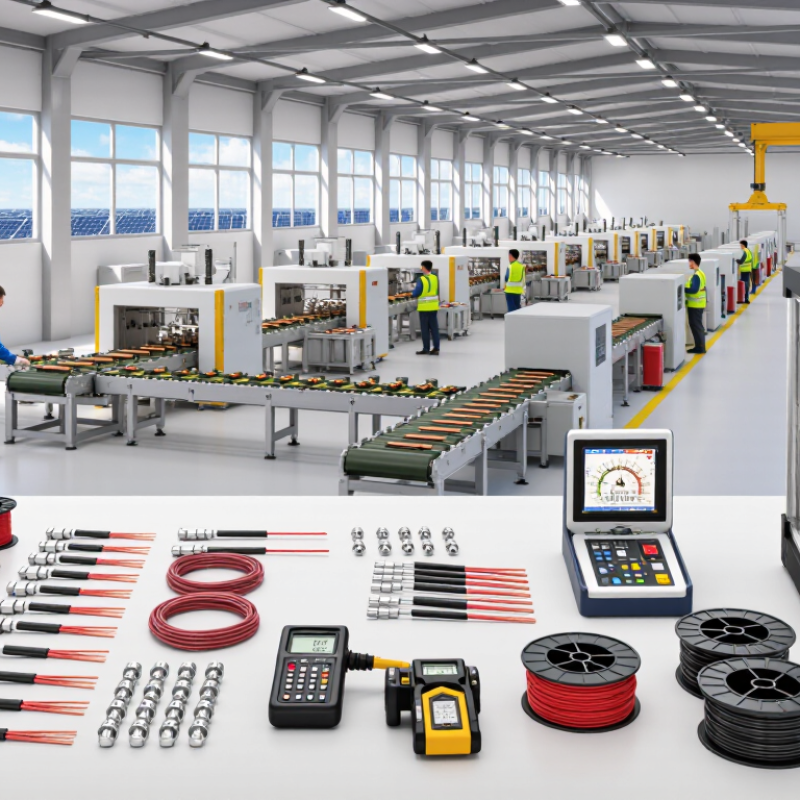
That speed matters in field conditions. Technicians often inspect meter-long cable assemblies under intense sunlight, dust, and repeated thermal cycling. Chinese factories commonly combine crimp-force monitoring, insulation resistance testing, and batch traceability. These controls make quality measurable, not assumed. Still, the advantage is not automatic. Supplier audits can reveal inconsistent crimp heights, unclear testing records, or weak corrective actions. No factory is flawless. Buyers should verify conductor resistance, connector compatibility, flame performance, and long-term weathering against project standards. The IRENA Renewable Capacity Statistics 2024 report also showed solar capacity reached about 1,419 gigawatts globally in 2023, increasing pressure for reliable, scalable supply.