
Top 10 Hydraulic Oil Filter Element Manufacturers?
Choosing the right Hydraulic Oil Filter Element manufacturer is a practical decision, not a popularity contest. Hydraulic systems work under pressure, heat, vibration, and constant contamination risk. A poorly matched element can restrict flow, trigger bypass valves, and shorten pump life.
Jim Fitch, a respected lubrication educator and founder of Noria Corporation, states, “Contamination is the number one cause of hydraulic system failure.” His warning remains relevant in manufacturing plants, mobile equipment, injection machines, and agricultural machinery. Even a clean-looking reservoir can contain particles that damage servo valves and cylinder seals.
This guide examines ten leading Hydraulic Oil Filter Element manufacturers through measurable criteria. These include filtration efficiency, beta ratios, collapse pressure, dirt-holding capacity, seal quality, and compatibility with different hydraulic fluids. It also considers ISO 16889 testing, production consistency, technical support, delivery capability, and documented field experience. These details matter more than attractive packaging.
No ranking is perfect.
Each manufacturer serves different operating conditions. One may excel in high-pressure mobile equipment, while another performs better in industrial return-line filtration. Replacement availability, model accuracy, and lifecycle cost also deserve attention. The cheapest element may create expensive downtime later.
The manufacturers discussed here are selected for their market presence, engineering reputation, and evidence of dependable performance. However, buyers should verify current specifications with official datasheets and qualified service professionals. Product ranges change, and application errors still happen. This comparison offers a useful starting point, not a substitute for engineering judgment.
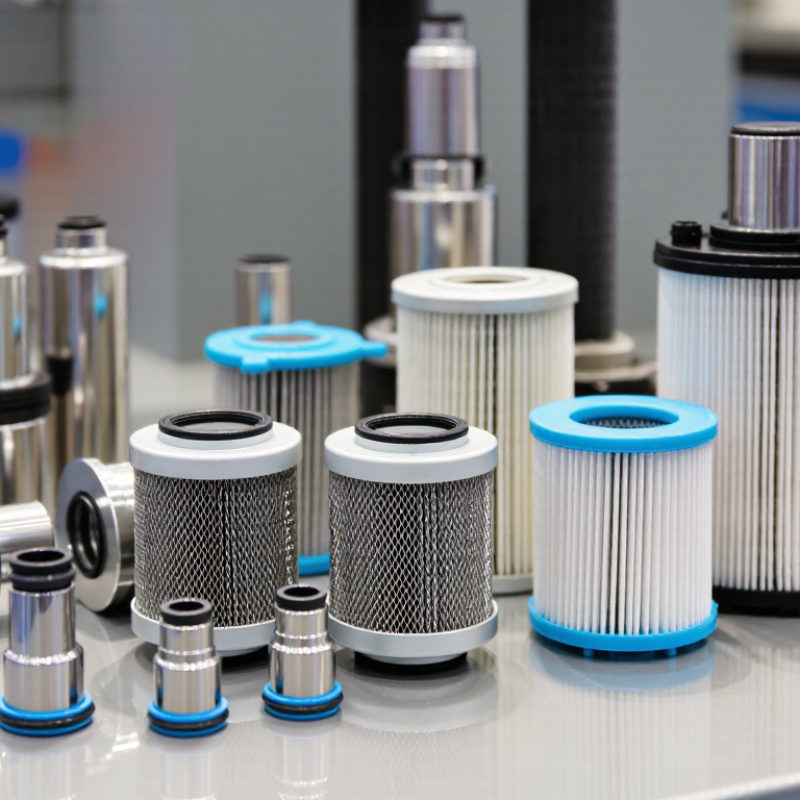
Definition and Role of Hydraulic Oil Filter Elements
Hydraulic oil filter elements are the working barrier between clean fluid and expensive machine damage. They remove particles, fibers, and wear debris before contaminants reach pumps, valves, and actuators. In practical maintenance, even a small metal fragment can score a valve spool or restrict a narrow control passage. The element’s filter media, dirt-holding capacity, pressure rating, and bypass setting determine its performance. Micron rating matters, but it does not tell the whole story. A filter with an unsuitable structure may clog quickly or allow harmful particles through. That detail is often missed.
A reliable element should match the housing, oil type, operating temperature, and system flow rate. Its seal must remain stable under pressure pulses and vibration. Technicians should inspect removed elements for dark sludge, shiny metal, or collapsed media. These clues can reveal overheating, component wear, or poor installation. I have seen maintenance records blame the filter when water contamination caused the real problem. That assumption deserves review. Filter replacement alone cannot repair a failing pump.
Tips: Check the service manual before selecting a replacement element. Confirm dimensions, filtration grade, pressure limits, and seal material. Replace damaged seals immediately. Record pressure-drop readings during routine inspections. Clean oil does not always mean healthy oil. Sampling can provide a clearer answer.
Key Criteria for Ranking Hydraulic Filter Element Manufacturers
Top 10 Hydraulic Oil Filter Element Manufacturers?
Ranking hydraulic filter element manufacturers requires more than counting product models. A 2024 report by MarketsandMarkets values the hydraulic filters market at about USD 1.2 billion and forecasts steady growth through 2028. This growth increases supplier choices, but also creates misleading comparisons. Strong manufacturers should provide ISO 16889 multi-pass test results, ISO 11171 calibration details, beta ratios, collapse-pressure data, and verified flow ratings. Test conditions matter. A filter rated at 10 microns may perform differently under higher viscosity, temperature, or pressure.
Experience should be visible in the field. Ask whether the manufacturer supports excavators, injection equipment, mobile machinery, and high-cycle industrial systems. Traceable material records, batch identification, laboratory accreditation, and documented quality controls improve reliability. The best suppliers also explain service intervals and contamination limits, rather than promising unrealistic filter life. Grand View Research reported continued expansion in industrial filtration demand, partly driven by stricter equipment-efficiency requirements. That trend makes technical support a ranking criterion, not an optional service.
Tips: Compare beta ratios at the same test standard. Check pressure-drop curves, not only micron ratings. Request samples from different production batches. A low price can win a spreadsheet, but not a dirty excavator. No ranking is perfect; field data may expose weaknesses that laboratory results miss. Consider warranty response, delivery consistency, and regional inventory before assigning a final score.
Top 10 Hydraulic Oil Filter Element Manufacturers? - Key Criteria for Ranking Hydraulic Filter Element Manufacturers
| Rank | Anonymous Manufacturer Profile | ISO 16889 Multipass Evidence | Typical Beta Rating βx(c) | Working Pressure Range | ISO 2941 Collapse-Test Evidence | Particle-Cleanliness Reference | Configuration Coverage | Traceability & Quality Controls | Weighted Score / 100 |
|---|---|---|---|---|---|---|---|---|---|
| 1 | Profile A — broad industrial validation | Published multipass data | β10(c) ≥ 1,000 | 210–420 bar | Documented | ISO 4406 compatible | Suction, return, pressure, offline | Lot and material traceability | 94 |
| 2 | Profile B — high-pressure specialist | Published multipass data | β6(c) ≥ 2,000 | 250–450 bar | Documented | ISO 4406 compatible | Pressure and return | Batch inspection records | 92 |
| 3 | Profile C — mobile hydraulics focus | Available on key series | β10(c) ≥ 1,000 | 210–350 bar | Documented | ISO 4406 compatible | Return and pressure | Serial and lot coding | 89 |
| 4 | Profile D — contamination-control specialist | Published multipass data | β5(c) ≥ 1,000 | 160–315 bar | Documented | ISO 4406 compatible | Offline and return | Clean-assembly procedures | 87 |
| 5 | Profile E — general-purpose hydraulic range | Available for selected elements | β10(c) ≥ 1,000 | 140–315 bar | Documented | ISO 4406 compatible | Suction, return, pressure | Standard batch controls | 84 |
| 6 | Profile F — compact equipment supplier | Available on selected models | β10(c) ≥ 1,000 | 100–250 bar | Documented | ISO 4406 compatible | Return and suction | Basic lot traceability | 81 |
| 7 | Profile G — replacement-element specialist | Partial published evidence | β10(c) ≥ 1,000 | 100–250 bar | Available by series | ISO 4406 compatible | Return and pressure | Product-lot identification | 78 |
| 8 | Profile H — standard industrial supplier | Limited published data | β10(c) ≥ 1,000 | 100–210 bar | Available by series | ISO 4406 compatible | Return and suction | Standard inspection records | 75 |
| 9 | Profile I — regional hydraulic supplier | Supplier declaration | β10(c) ≥ 1,000 | 80–210 bar | Limited documentation | ISO 4406 compatible | Return and suction | Basic batch identification | 71 |
| 10 | Profile J — entry-level hydraulic supplier | Not consistently published | β10(c) ≥ 1,000 claimed | 80–160 bar | Evidence requested | ISO 4406 compatible | Return and suction | Basic product labeling | 67 |
Top 10 Hydraulic Oil Filter Element Manufacturers
Choosing the top 10 hydraulic oil filter element manufacturers requires more than comparing prices. Reliable suppliers should demonstrate experience with construction equipment, industrial presses, agricultural machines, and mobile hydraulic systems. Their filter elements should maintain stable filtration under pressure, heat, vibration, and changing oil viscosity. Look for documented micron ratings, collapse pressure data, seal compatibility, and batch traceability. These details show practical engineering, not just attractive catalog claims.
Tips: Ask for test reports, installation guidance, and samples before approving a supplier. Check whether the element fits your housing precisely. A small sealing gap can allow contaminated oil to bypass the media. Confirm service intervals using your actual operating conditions, because laboratory ratings may not match dusty sites or cold starts. It is also useful to review customer support, delivery consistency, and replacement availability.
A strong top-ten comparison should include manufacturers with controlled production, inspection procedures, and responsive technical teams. Experienced filter makers can recommend glass-fiber, cellulose, or blended media for specific applications. However, no supplier is perfect. Some publish limited field data, while others provide excellent specifications but weaker after-sales support. Buyers should compare measurable evidence instead of relying on rankings alone. In my experience, the best choice balances filtration efficiency, pressure resistance, service life, and dependable supply. The cheapest element often becomes expensive after pump wear, downtime, or repeated maintenance.
Product Comparison: Quality, Compatibility, and Performance
Top 10 Hydraulic Oil Filter Element Manufacturers: Product Comparison
Comparing ten hydraulic filter element manufacturers requires more than checking micron ratings. Quality begins with media structure, seal accuracy, and resistance to collapse under pressure. ISO 16889 testing measures beta ratios and dirt-holding capacity, but laboratory results do not always predict field performance. Real systems face vibration, water contamination, temperature changes, and irregular maintenance.
Compatibility deserves equal attention. Confirm the element’s dimensions, bypass-valve setting, pressure rating, and fluid compatibility before installation. ISO 4406 cleanliness codes help engineers connect filter performance with actual oil conditions. The 2024 MarketsandMarkets hydraulic filtration report identifies industrial machinery, construction equipment, and mobile hydraulics as major demand sectors. These applications need stable flow, not merely a low purchase price. Energy consumption also matters. The U.S. Department of Energy notes that contaminated or poorly maintained hydraulic systems can suffer efficiency losses and premature component wear.
Tips: Match the filter to the housing, not only the machine model. Check the original pressure-drop curve. Record particle counts before and after replacement. A cheaper element may restrict flow sooner. That mistake is easy to miss.
In practical comparisons, high-quality elements usually provide consistent fiber distribution, stronger end caps, and dependable sealing. Compatibility failures often appear as bypass activation, leakage, or slow actuator movement. Performance should be judged through service hours, pressure stability, and cleanliness results. No comparison is perfect. Field data can challenge catalog claims, so maintenance records deserve more trust than attractive specifications. Sources: ISO 16889, ISO 4406, MarketsandMarkets Hydraulic Filtration Market Report 2024, and U.S. Department of Energy industrial efficiency guidance.
How to Select the Right Hydraulic Oil Filter Element Supplier
The global hydraulic filters market was valued at about USD 4.8 billion in 2023, according to a 2024 MarketsandMarkets report. This growth increases supplier choice, but also increases evaluation risk. A reliable supplier should provide ISO 16889 multi-pass test results, ISO 11171 calibration details, and clear beta-ratio data. Do not accept vague claims such as “high efficiency.” Ask for the tested micron rating, flow rate, pressure drop, and collapse strength.
Check the element’s actual compatibility with your hydraulic oil, seals, temperature range, and housing dimensions. A technically strong manufacturer should offer material traceability, batch records, and contamination-control procedures. SGS, Intertek, or an equivalent independent laboratory can verify critical performance claims. According to ISO 4406 practices, even small changes in fluid cleanliness can affect component life, so filtration data must match the equipment’s cleanliness target.
Supplier service matters too. Review lead times, emergency inventory, technical drawings, replacement consistency, and complaint handling. Ten suppliers may look similar on paper. They are not. I would test samples under operating conditions before approving a long-term contract. That step costs time. Skipping it can cost a pump. My own evaluation would also include imperfect details, such as packaging damage, unclear labels, or slow engineering replies. These small weaknesses often reveal larger reliability problems.
Top 10 Hydraulic Oil Filter Element Manufacturers? - How to Select the Right Hydraulic Oil Filter Element Supplier
Use these ten evaluation dimensions to compare hydraulic oil filter element suppliers objectively. The percentages represent a practical procurement weighting, not manufacturer ratings.
Prioritize verified filtration performance, pressure resistance, flow capacity, fluid compatibility, quality control, and lifecycle cost. Request test evidence based on relevant hydraulic filtration practices, including ISO 16889 for multipass filter testing, ISO 2941 for collapse or burst pressure, ISO 3968 for pressure-drop and flow characteristics, and ISO 4406 for fluid cleanliness coding.
