
7 Tips for Choosing the Best Crane Rentals?
Choosing the right crane rentals provider can determine whether a lift runs smoothly or becomes an expensive delay. The decision involves more than comparing hourly rates. A suitable crane must match the load, reach, site access, ground conditions, and project schedule. As crane safety educator Mike Parnell says, “A crane is only as safe as the people who plan and operate the lift.” That principle deserves attention.
These seven tips examine the details that are easy to overlook. Start by confirming the crane’s rated capacity at the required radius, not merely its maximum lifting figure. A mobile crane rated for 80 tons may handle far less at a long boom extension. Check operator qualifications, recent inspection records, maintenance history, and the rental company’s communication standards. Ask how quickly they respond when wind, rain, or a delivery delay changes the plan.
Look closely at the worksite. Narrow gates, soft soil, overhead lines, and limited setup space can eliminate an otherwise suitable machine. Confirm outrigger dimensions and ground-bearing requirements before arrival. Request a written quotation covering transport, setup, fuel, standby time, and any additional equipment. Cheap crane rentals can become costly when these details appear later. I have seen projects focus heavily on price and underestimate coordination. That is a mistake worth questioning. The best choice balances safety, capability, reliability, and practical experience, while leaving enough time for a qualified professional to review the lift plan.
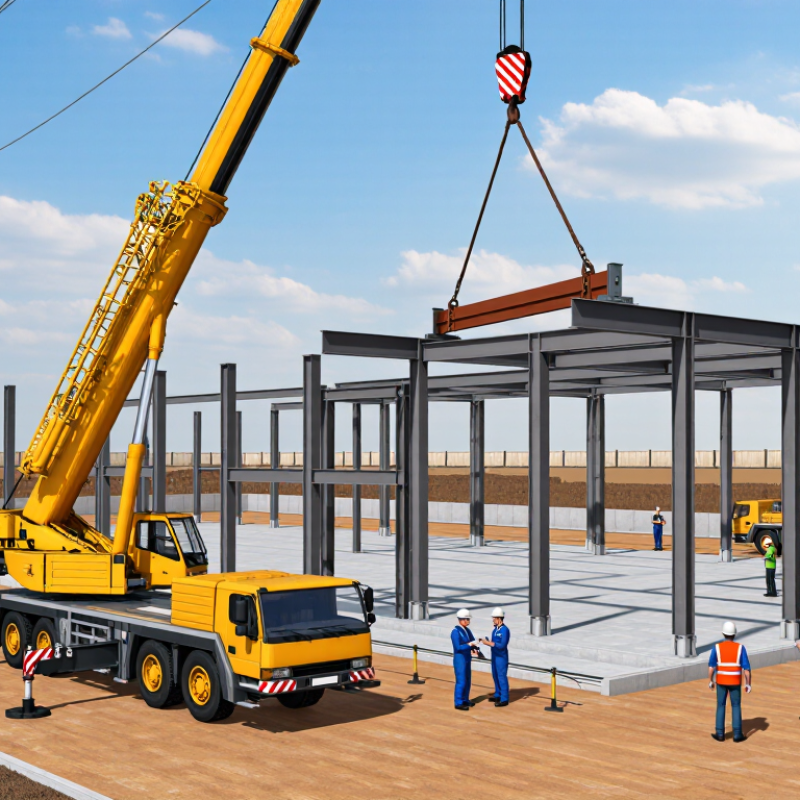
Define Your Lifting Requirements and Project Scope
Define Your Lifting Requirements and Project Scope
A successful crane rental starts with a clear lifting picture. Record the heaviest load, its dimensions, and its lifting points. Include the load’s center of gravity. Small details can change the equipment choice.
Measure the required lift height and the farthest working radius. A 12-ton load near the crane may need less capacity than a lighter load placed farther away. Check delivery routes, overhead obstructions, nearby structures, and available setup space. Ground conditions matter too. Soft soil may require engineered mats or another foundation solution.
From practical site planning, I have seen estimates fail because teams measured height but ignored radius. That mistake can create delays and expensive changes. I once reviewed a plan that overlooked a temporary fence near the setup area. The crane could lift the load, but the access route was unusable. Recheck the site.
Share accurate information with the rental provider. Provide load charts, lifting dates, expected working hours, and weather limitations. Ask for inspection records and operator qualifications. Confirm that the selected crane suits the complete lift plan, not just the maximum weight. Wind, rain, and poor visibility can affect safe operations. Build realistic time allowances for setup, rigging, testing, and relocation. A rushed lift is rarely a reliable lift.
7 Tips for Choosing the Best Crane Rentals? - Define Your Lifting Requirements and Project Scope
| Tip | Lifting Requirement | Planning Data to Define | Rental Selection Guidance | Information to Confirm Before Rental |
|---|---|---|---|---|
| 1 | Calculate the total load weight | Record the load weight, lifting accessories, spreader beams, rigging hardware, and any temporary attachments. A practical planning allowance is often added for rigging and accessories, but the exact allowance must be based on the lift plan. | Select a crane whose rated capacity exceeds the total planned load at the required working radius. Do not choose equipment based only on the crane's maximum headline capacity. | Obtain verified load weights, equipment drawings, center-of-gravity details, and the rated capacity of every sling, shackle, hook, and lifting beam. |
| 2 | Measure lifting height and working radius | Define the pickup point, landing point, maximum hook height, horizontal radius, boom clearance, and required vertical clearance. The working radius is measured from the crane's center of rotation to the load center. | Compare the manufacturer's load chart at the actual radius and boom configuration. A crane with a higher nominal capacity may have a lower usable capacity at long radius. | Prepare a scaled site plan showing crane position, load path, obstacles, overhead lines, buildings, excavation edges, and final placement location. |
| 3 | Match the crane type to the site | Assess ground bearing capacity, access width, turning space, gradients, surface conditions, available setup area, and whether the lift is indoors, outdoors, or on a restricted-access site. | Mobile cranes are suited to relocatable outdoor work; crawler cranes provide strong stability on suitable prepared ground; compact or mini cranes can be useful where access and footprint are limited. | Confirm axle loads, outrigger reactions, minimum access dimensions, transport requirements, ground preparation, mats, plates, and any restrictions on underground utilities or suspended slabs. |
| 4 | Define the lift frequency and duty cycle | List the number of lifts, average and maximum load, operating hours per day, expected rental duration, repositioning frequency, and whether the work involves repetitive production lifting. | Short-duration work may favor a crane delivered for a single lift, while repetitive or multi-day operations may justify a dedicated crane and a planned maintenance schedule. | Request operating-hour limits, inspection intervals, fuel or battery requirements, setup and dismantling time, standby charges, overtime terms, and replacement arrangements. |
| 5 | Account for wind and weather conditions | Identify the load's sail area, expected wind exposure, seasonal weather, lightning risk, visibility, temperature, and site-specific shutdown thresholds required by the lift plan or equipment documentation. | Choose equipment and accessories appropriate for the exposed load. Large panels, tanks, structural sections, and sheet materials may be strongly affected by wind even when their weight is moderate. | Confirm the crane's operating limits, anemometer availability, weather-monitoring procedure, load-control requirements, and who has authority to stop lifting operations. |
| 6 | Plan permits, regulations, and qualified personnel | Identify road permits, traffic control, overhead-line clearances, site rules, inspection records, lift-plan requirements, operator qualifications, signal-person qualifications, and local regulatory obligations. | Select a rental arrangement that clearly states whether the equipment is supplied bare, with an operator, or with a complete lifting crew and planning support. | Confirm current inspection certificates, operator credentials, insurance responsibilities, site orientation requirements, communication methods, and documentation required before mobilization. |
| 7 | Compare the complete project cost | Include base rental, delivery, mobilization, demobilization, assembly, dismantling, operator labor, fuel, rigging, mats, permits, traffic control, standby time, overtime, and possible weather delays. | Compare quotations using the same crane configuration, working radius, rental period, crew scope, site conditions, and included services. The lowest daily rate may not be the lowest total project cost. | Request an itemized quotation with assumptions, exclusions, minimum rental periods, cancellation terms, damage responsibilities, emergency support, and additional-hour rates. |
Planning note: Actual crane capacity, setup requirements, operating limits, and legal obligations must be verified using the selected crane's current load chart, manufacturer documentation, site conditions, and a qualified lift plan.
Related Posts
-
Best China Crane Lift Rental for Global Buyers?
-

How to Choose the Right Crane Truck Rental for Your Project?
-

Top Mobile Crane Rental Options for Your Global Projects?
-

Top 10 Crane Truck Rental Services in China for Global Buyers
-
7 Essential Tips for Choosing Mobile Crane Rental Services
-
Top 10 Mobile Crane Rental Companies Leading the Industry with Market Insights