
skip to Main Content

7 Tips for Choosing a Hydraulic Cutting Machine

Choosing the right Hydraulic Cutting Machine starts with the material on your worktable, not the largest force listed in a catalog. A machine cutting thin gasket sheets has different needs from one handling thick rubber, leather, or composite stock. Bed size, cutting stroke, operating speed, and available floor space all affect daily performance. Small details matter.

Blaise Pascal’s principle is commonly summarized this way: “Pressure applied to a confined fluid is transmitted throughout the fluid.” That basic idea helps explain hydraulic force, but it does not tell you whether a particular machine fits your production needs. Compare the required cutting force with your materials and tooling, then check how the machine controls its stroke. Ask about guarding, maintenance access, spare parts, and local service support. A low purchase price can feel appealing; downtime may change that calculation quickly.

The following seven tips offer a practical way to assess machine specifications, safety features, build quality, and supplier support. Look closely at real operating details, such as how easily an operator can position a sheet or replace a cutting die. Request a demonstration using material similar to your own. Even experienced buyers can overlook one awkward setup step. I would, too, if I focused only on the brochure. Compare options carefully, and choose a machine that suits both your workload and the people who will operate it.
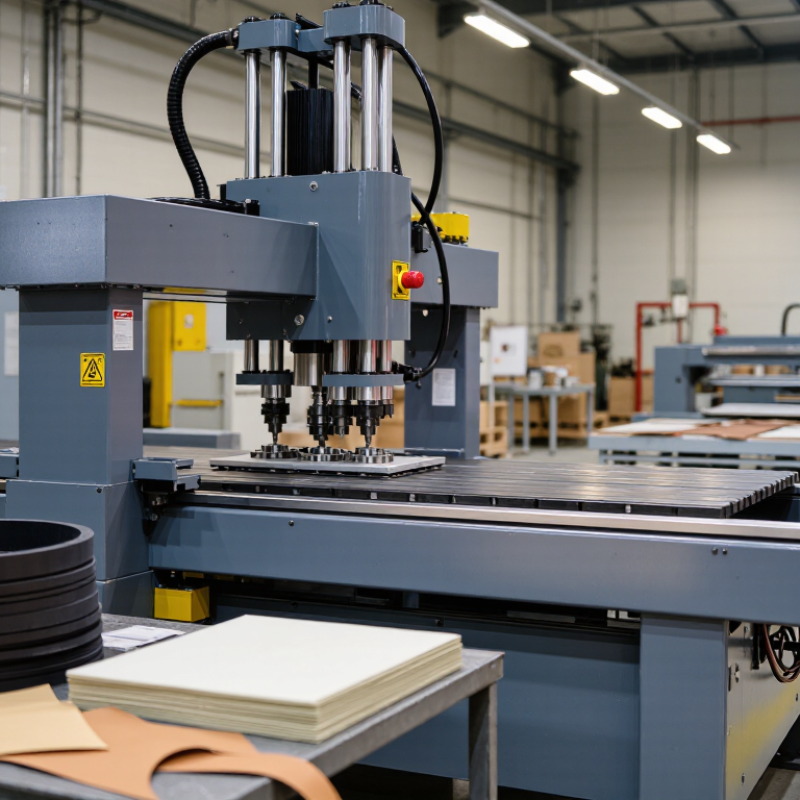
7 Tips for Choosing a Hydraulic Cutting Machine

Define the Cutting Tasks and Materials You Need to Handle

Tip: Define the job before comparing machine specifications. List the materials you cut, their thickness, and the shapes you need. Note whether parts are flat sheets, tubes, or irregular blanks. Record the required edge quality and dimensional tolerance, too. A machine suited to occasional straight cuts may struggle with frequent, detailed profiles. Be specific.

Include the hardest routine job, not just the easiest sample. Mild steel, stainless steel, and aluminum can behave differently under the same setup. Thickness, hardness, and surface condition all affect cutting results. If possible, test a representative offcut and inspect the edge for burrs, distortion, or excess heat marks. One sample will not tell the whole story, but it helps.

Tip: Estimate your real workload. Count cuts per shift, typical part size, and material changes. A high-capacity machine may be unnecessary for short runs, while a small unit can create delays during steady production. Check how the machine handles your actual stock dimensions and whether loading space fits your work area. I have seen planning focus too much on peak thickness; it is easy to overlook awkward parts and setup time.

Compare Hydraulic Force, Cutting Capacity, and Machine Size

Compare hydraulic force at the cutting point, not just the machine’s headline tonnage. Pressure multiplied by cylinder area determines available force, but tool geometry and material resistance affect the result. Ask for the rated force across the full stroke. A thick stack of dense material may need more capacity than a single sheet. Fit matters.

Check the stated cutting capacity against your actual material, maximum thickness, and die dimensions. Request test cuts using representative samples; clean edges on thin stock do not prove reliable performance on thicker layers. Leave a practical reserve rather than operating continuously at the machine’s limit. Measure twice. The U.S. Bureau of Labor Statistics reported a 2.7 recordable-injury-and-illness rate per 100 full-time workers in manufacturing for 2022, in its Survey of Occupational Injuries and Illnesses. That figure is not specific to cutting machines, but it reinforces the need to assess loading, guarding, and operator access alongside output.

Machine size means more than its footprint. Measure the worktable, opening, material-feed path, and space needed to load stock and remove cut pieces. Include room for maintenance access and hydraulic service connections. A compact machine can still be awkward in a tight cell. I would verify the layout with a taped floor outline before ordering; drawings can miss the daily reach and handling issues.

7 Tips for Choosing a Hydraulic Cutting Machine - Compare Hydraulic Force, Cutting Capacity, and Machine Size

Use the checks below to compare machines against your material, cut geometry, production rate, and available floor space. Example calculations are illustrative; confirm machine ratings and operating limits in the supplier’s technical documentation.

Tip What to compare Useful data or check Selection guidance
1. Match hydraulic force to the job Rated cutting force, operating pressure, and cylinder bore Ideal cylinder force: F = P × A, where pressure is in pascals and piston area is in square metres. Example: 20 MPa acting on a 100 mm bore produces about 157 kN, or 16.0 metric tonne-force, before losses. Compare the machine’s stated cutting force—not pressure alone—and check the rating point and any stated operating conditions.
2. Verify cutting capacity for your material Material type, strength, thickness, cut length, and cut shape Cutting force depends on the material’s shear strength and the area being sheared. Blade angle, clearance, and workpiece geometry also affect the required force. Ask for a capacity confirmation for your exact material and cut configuration; a thickness rating alone may not describe every cutting condition.
3. Check blade length and usable cutting width Maximum cut length and the usable working area Compare the stated maximum cutting length with the longest workpiece or cut line required in production. Confirm how the machine’s capacity changes when the full blade length is used, especially for thick or high-strength material.
4. Confirm stroke and opening clearance Ram stroke, maximum opening, and available throat or working depth Measure the workpiece dimensions, tooling height, and required loading and unloading space; compare them with the machine drawing. Make sure the workpiece can be positioned and removed safely throughout the full operating cycle, not merely fit under the open blade.
5. Measure the full machine footprint Overall length, width, height, access space, and service clearances Use the installation drawing to compare machine dimensions with the available floor area, doorways, material routes, and maintenance access. Include space for operators, workpiece handling, electrical connections, and hydraulic service—not just the machine’s base dimensions.
6. Compare power, cycle rate, and duty requirements Motor power, supply requirements, cycle time, and rated duty Check the electrical supply data and ask for cycle-rate information under the intended load. Hydraulic performance can vary with load and operating conditions. Compare expected production demand with the machine’s stated operating duty; do not assume a maximum cycle rate applies at maximum cutting force.
7. Check weight, foundation, and safety provisions Machine mass, floor loading, guarding, controls, and emergency stops Confirm the machine’s installed weight and foundation requirements with the technical documentation and a qualified site professional. Review safeguards against the applicable local regulations. Treat installation and safeguarding as part of the selection: verify access for delivery, floor suitability, and the required operator-protection features before purchase.

Conversion note: 1 metric tonne-force = 9.80665 kN. Machine dimensions, capacities, and duty ratings vary by design; confirm all values for the specific configuration being considered.

Assess Blade Design, Accuracy, and Control Features

Start with the blade and the material you plan to cut. Blade angle, thickness, and clearance affect edge quality, cutting force, and wear. A blade suited to thin sheet may struggle with dense stock. Check the manufacturer’s capacity guidance, then inspect how the blade is held and adjusted. Loose fasteners or uneven clearance can leave burrs along one edge. Small details matter.

Accuracy needs more than a precise-looking display. Check whether the machine repeats its position across several test cuts, and measure the results with a reliable rule or caliper. Look for a rigid frame, a clear back gauge, and adjustments that stay put under load. Controls should make stroke length and operating mode easy to understand; confusing settings invite mistakes. Guarding and accessible emergency stops also deserve a close look. A practical trial cut can reveal more than a polished specification sheet, though one test may not represent every material or thickness. I would not overlook setup time, either. A machine that cuts accurately but takes constant adjustment can slow a busy shop.

7 Tips for Choosing a Hydraulic Cutting Machine

Compare blade design, cutting accuracy, and control features alongside capacity, safety, and maintenance needs.

The bars show suggested buyer-priority ratings on a 1–5 scale, not measured machine performance or market data. Use them as a checklist, then verify each model’s rated capacity, accuracy specifications, guarding, and controls with its documentation and a test cut.

Check Safety Systems, Maintenance Needs, and Spare-Part Access

When evaluating a hydraulic cutting machine, inspect the safety system in person, not just on a specification sheet. Check that guards block access to the blade, interlocks stop motion when opened, and the emergency stop is reachable from the operator’s normal position. Test the controls during a supervised cycle. Test it live. Ask how the machine releases stored hydraulic pressure before cleaning or servicing; trapped pressure can remain even after power is off. Siemens’ 2024 True Cost of Downtime report estimated that downtime costs the world’s 500 largest companies about $1.4 trillion annually, or roughly 11% of their revenue. That figure is not a forecast for one workshop, but it shows why safety and service planning deserve attention.

Maintenance needs are easier to judge with a real service schedule. Look for accessible filters, clearly routed hoses, and enough clearance to inspect seals without dismantling nearby equipment. Ask which parts wear fastest, how often they are replaced, and whether routine work needs a specialist. Spare-part access matters. Request a parts list, typical lead times, and clear identification for seals, blades, and hydraulic fittings. A low purchase price can feel less attractive when a small seal keeps production stopped. Still, a neat checklist can miss awkward details: ask the maintenance team to review the proposed machine layout before purchase. Check the manual and applicable safety requirements for your site.

Evaluate Supplier Support, Warranty, and Total Operating Cost

A hydraulic cutter can look affordable until a seal fails mid-shift. Ask suppliers who handles commissioning, operator training, and fault diagnosis. Get response targets in writing, including weekend coverage and local spare-part availability. A phone number alone is not support. Request a sample service report and confirm technicians understand your operating pressure, material, and duty cycle. The U.S. Department of Energy’s Operations & Maintenance Best Practices guide reports that effective operations and maintenance can reduce facility energy use by 5–20%. That figure is not specific to cutting machines, but it highlights how maintenance practices influence running costs. Use service records to set inspection intervals rather than waiting for leaks.

Read warranty terms line by line. Check whether labor, travel, pumps, valves, seals, and contamination-related failures are covered, and for how long. Ask what voids coverage; using the wrong oil grade or missing filter changes may matter. Then compare total cost over a realistic service life: purchase, installation, electricity, hydraulic fluid, consumables, training, repairs, and lost production. I would not treat a long warranty as proof of low risk. Ask for annual service estimates and prices for common replacement parts before signing. Leave room for uncertainty: utilization and material thickness can shift costs quickly.

Back To Top