
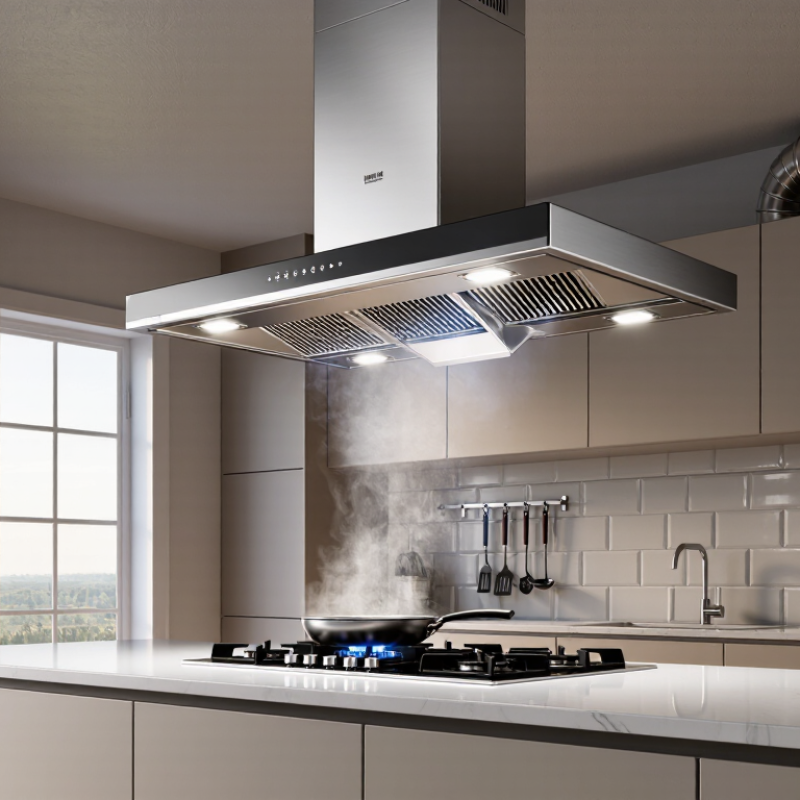
What Is Range Exhaust and How Does It Work?
A range exhaust system captures smoke, grease, moisture, and cooking odors above the cooktop. Its fan pulls contaminated air through a hood and sends it outdoors through ductwork. The stronger the fan, the more air the house loses. That missing air must come from somewhere.
The International Residential Code, Section M1503.4, requires makeup air when a range hood can exhaust more than 400 cubic feet per minute. The replacement airflow should approximately match the exhaust rate. A 600-CFM hood may therefore need about 600 CFM of incoming air. The system must open and operate with the exhaust fan. IRC guidance also limits makeup air to 10°F below indoor room temperature. Local code adoption can differ.
ASHRAE kitchen ventilation guidance treats pressure balance as part of safe exhaust design. DOE Building America research also identifies strong exhaust fans as a contributor to house depressurization and combustion-air concerns. Duct length, elbows, filters, and wind can reduce actual airflow. Rated CFM is not always installed CFM. That detail gets overlooked.
A practical design uses a dedicated intake, washable filter, motorized damper, and tempering method. The intake should stay away from garages, vents, and dusty exterior areas. Airflow testing matters. A hood that feels powerful may still capture poorly if the canopy is too small or the duct is restrictive. The 400-CFM threshold is important, but it is not a complete safety guarantee.