
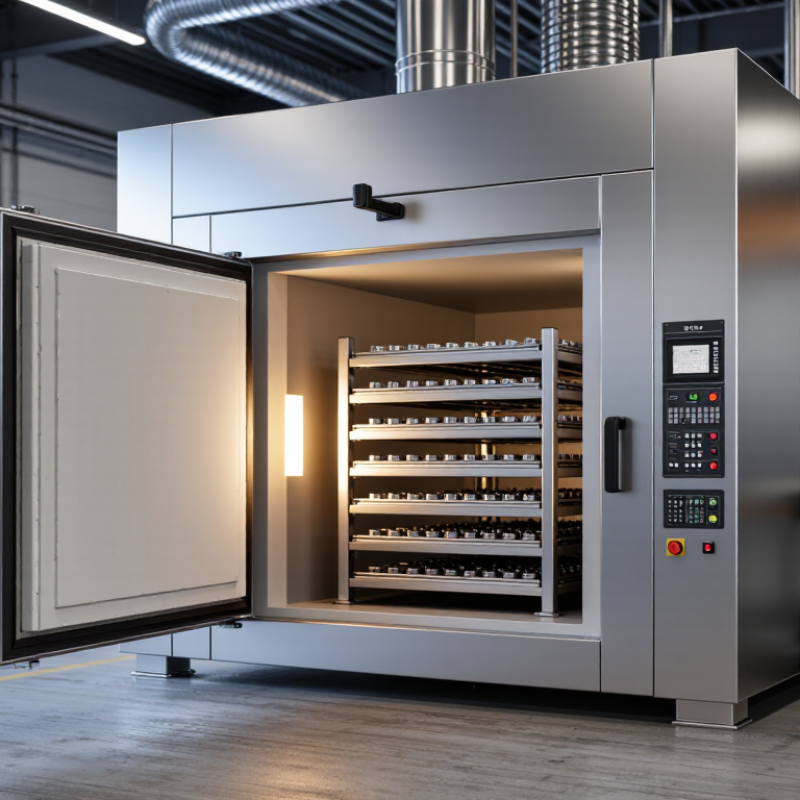
How to Choose the Right Hardening Oven?
Temperature control should be tested, not assumed from the controller display. A suitable hardening oven must maintain the required setpoint throughout its working zone. Under AMS2750, review the furnace class, instrumentation type, calibration records, and required test intervals. These details affect process confidence.
For Class 2 uniformity, the usual tolerance is ±10°C across the qualified temperature range. Confirm this through a documented temperature uniformity survey, or TUS. Place calibrated thermocouples near corners, the center, and areas close to the load. Record readings after the oven stabilizes. A cold doorway or overloaded rack can reveal problems that an empty test misses.
System accuracy testing also matters. Compare the control sensor with an independent calibrated sensor during operation. Check the results against the applicable AMS2750 requirements and your process specification. Do not accept a certificate without reviewing its temperature range, sensor locations, and test conditions. I would also question a perfect report from an unrealistic empty chamber. Real loads change airflow and recovery time. That is easy to underestimate. A short recovery may look efficient, yet it can create uneven heating between parts. Before purchase, ask for recent TUS data under representative loading. Verify who performed the testing and how the instruments were calibrated. A careful review may take longer, but it exposes weaknesses before production does.