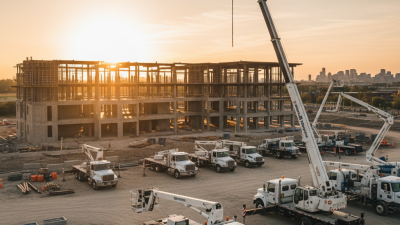
How to Find the Best Boom Rentals for Your Construction Projects
In the fast-paced world of construction, the need for efficient lifting equipment has made boom rentals an integral aspect of project management. According to a recent report by the Construction Industry Institute, approximately 30% of construction projects face delays due to equipment-related issues, highlighting the importance of selecting the right rental services. Boom rentals not only provide the necessary equipment for reaching elevated areas safely but also help to optimize costs, allowing projects to remain within budget and schedule constraints.
Industry expert John Anderson, a recognized authority in construction equipment rental, emphasizes the critical nature of this decision: "Choosing the right boom rental can be the difference between a successful project and costly setbacks." With various types of boom lifts available, each suited for specific tasks across diverse terrains and environments, understanding the nuances of what to look for is paramount. This guide will explore key considerations in finding the best boom rentals tailored to your construction needs, ensuring that you make informed choices that enhance productivity and safety on site.

Understanding Different Types of Boom Lifts for Construction Projects
When selecting boom lifts for construction projects, it’s crucial to understand the different types available, as each serves specific functions that can greatly impact project efficiency and safety. The main categories include telescopic boom lifts, articulating boom lifts, and towable boom lifts. Telescopic boom lifts, for instance, are ideal for projects that require high reach with minimal horizontal movement. According to a report by IBISWorld, the demand for such equipment has increased by approximately 5% annually as companies focus on maximizing vertical productivity on construction sites.
On the other hand, articulating boom lifts are designed for more complex and confined job sites where navigating obstacles is necessary. Recent industry surveys indicate that over 30% of contractors prefer these lifts for tasks that involve working around barriers. Their ability to extend and maneuver in tight spaces allows crews to access hard-to-reach areas safely. Additionally, towable boom lifts, which are often favored for their portability, have seen a rise in popularity, especially for smaller projects, as reported by the American Rental Association, which estimates that this segment has grown by 7% over the past year due to the increasing need for versatile and cost-effective lifting solutions.
Understanding the unique capabilities of each boom lift type can lead to more informed decisions that enhance both the safety and efficiency of construction projects. By aligning equipment selection with project requirements, construction managers can not only improve workflow but also adhere to safety regulations that are becoming increasingly stringent across the industry.
Assessing Your Project's Specific Boom Lift Requirements
When embarking on a construction project, accurately assessing your specific boom lift requirements is crucial for ensuring efficiency and safety. According to the American Rental Association, the boom lift rental market is expected to grow by over 5% annually, driven by increasing construction activities and the growing need for elevated work platforms. This growth emphasizes the necessity of understanding the particular needs of your project, such as height requirements, weight capacity, and the terrain of the job site.
Moreover, it's essential to consider the type of boom lift needed for your tasks. For instance, articulating boom lifts provide flexibility and the ability to reach over obstacles, making them ideal for urban areas with limited access. Conversely, telescopic boom lifts offer greater height and reach, suitable for larger construction sites. Reports from industry experts suggest that selecting the right type of boom lift can optimize productivity on-site, with proper equipment leading to a potential decrease in project completion time by up to 20%. Therefore, detailed planning and consultation with equipment professionals can significantly impact project outcomes and safety protocols.
Comparison of Boom Lift Types for Construction Projects
Evaluating Rental Companies: Key Factors to Consider
When evaluating rental companies for boom equipment essential to your construction projects, several key factors come into play.
First, assess the company’s reputation in terms of reliability and service quality. Look for companies with a solid track record, supported by customer testimonials and reviews.
This information can often be found through online platforms or by reaching out to industry contacts who may have experience with specific rental services.
A company that has established a reliable presence is more likely to provide equipment that meets safety standards and is well-maintained.
Another critical factor is the range of equipment available for rent. A reputable rental company should offer a variety of boom lifts with different specifications and capabilities to fit various project requirements.
Ensure that they can provide equipment that not only meets your immediate needs but also any specialized requirements you may encounter in future projects.
Furthermore, inquire about their maintenance practices. A company that regularly services and updates its fleet not only ensures your safety but also helps avoid delays caused by equipment failure on-site.
Considering these factors will help you make an informed decision in selecting the best boom rentals for your construction endeavors.
Comparing Rental Costs and Terms for Boom Lifts
When it comes to selecting boom lifts for construction projects, understanding rental costs and terms becomes essential for effective budgeting and project management. According to a report from the American Rental Association, the rental market for construction equipment, including boom lifts, is projected to grow by 4.1% annually, reflecting increasing demand across various sectors. This highlights the importance of accurately comparing costs between different rental providers to ensure competitive pricing.
Industry data indicates that the average rental cost for boom lifts can range between $200 and $1,200 per day, depending on the type and size of the lift. Additionally, longer rental terms often lead to more favorable rates, with many companies offering significant discounts for weekly or monthly rentals. It’s crucial for project managers to assess the specific job requirements, such as lift height and load capacity, to choose the most appropriate model. Furthermore, understanding rental agreements—including maintenance responsibilities and insurance provisions—can prevent unexpected expenses and legal complications down the line.
In addition to direct costs, factors such as availability, delivery options, and customer support should also influence the decision-making process. A comprehensive analysis of rental terms not only includes price but also considers the flexibility and service level provided by rental companies. With the construction industry increasingly relying on rental equipment, a diligent comparison of these elements will lead to more informed and economical choices that align with project timelines and budgets.
How to Find the Best Boom Rentals for Your Construction Projects - Comparing Rental Costs and Terms for Boom Lifts
| Rental Company | Boom Lift Type | Daily Rate ($) | Weekly Rate ($) | Monthly Rate ($) | Deposit ($) | Insurance Included |
|---|---|---|---|---|---|---|
| Company A | Articulating Boom Lift | 150 | 750 | 2200 | 500 | Yes |
| Company B | Telescopic Boom Lift | 175 | 850 | 2500 | 600 | No |
| Company C | Compact Boom Lift | 130 | 650 | 2000 | 400 | Yes |
| Company D | Rough Terrain Boom Lift | 200 | 950 | 2800 | 700 | No |
| Company E | Straight Boom Lift | 160 | 800 | 2400 | 550 | Yes |
Ensuring Safety Standards and Compliance in Boom Lift Rentals
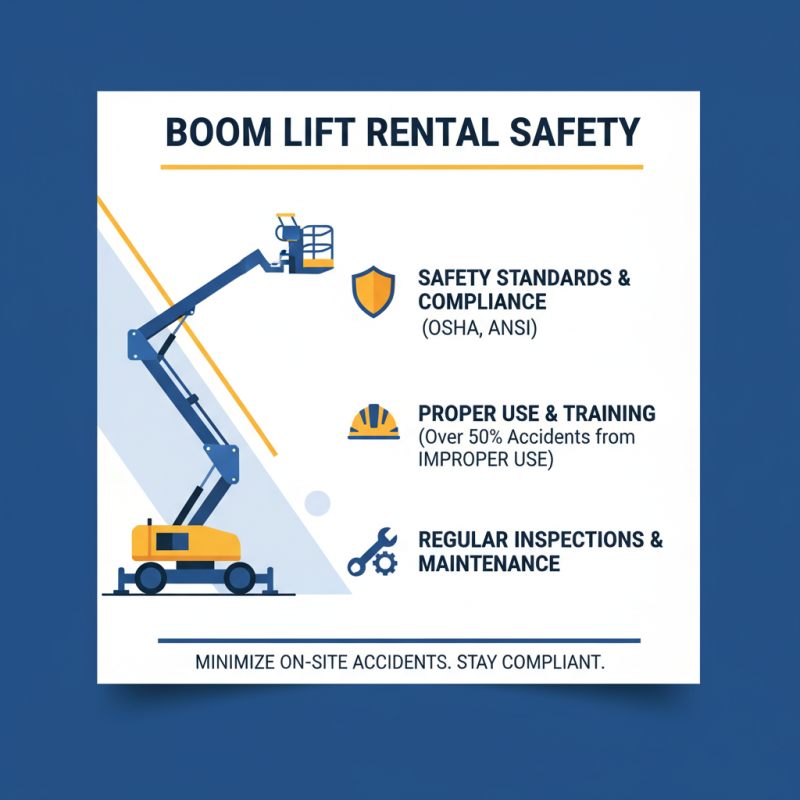
When selecting boom lift rentals for construction projects, ensuring safety standards and compliance is paramount. According to the Occupational Safety and Health Administration (OSHA), over 50% of boom lift accidents are due to improper use or failure to follow safety protocols. It is crucial for construction companies to thoroughly assess the safety certifications of their rental providers and confirm that the equipment meets the latest ANSI (American National Standards Institute) standards. Ensuring that the boom lifts are regularly inspected and maintained can significantly minimize the risk of accidents on site.
In addition to equipment safety, training and personnel certifications play a critical role in compliance. The National Association of Elevating Scrambled Systems (NAES) recommends that all operators undergo thorough training and certification programs that focus not only on the operational aspects of boom lifts but also on safety practices and emergency procedures. A report by the International Powered Access Federation (IPAF) indicates that sites adhering to proper training protocols witness 80% fewer accidents. Therefore, investing in proper training can enhance both safety and efficiency, ultimately leading to a more successful construction project.
Related Posts
-
10 Essential Tips for Choosing the Right Boom Truck Rental for Your Project
-
2025 How to Choose the Right Lift Equipment Rental for Your Project
-
7 Essential Tips for Choosing Mobile Crane Rental Services
-
How to Choose the Best Telehandler Forklift Rental for Your Project Needs
-
Why Choose Mobile Crane Rental for Your Next Construction Project
-
Essential Guide to Choosing the Right Machinery Movers for Your Business Needs