
What is an Electrical Ring Main Unit and How Does it Work?
The Electrical Ring Main Unit (RMU) is a crucial component in modern electrical distribution systems. It enhances efficiency and reliability while ensuring safety. According to the International Electrotechnical Commission, RMUs are part of medium voltage networks, which often require minimal maintenance and have a lifespan of over 30 years. This unit combines switchgear functions and is often used in substations.
In recent years, the demand for reliable power distribution has surged. A report by MarketsandMarkets indicates a projected growth of the RMU market at a CAGR of 6.4% from 2021 to 2026. This growth is driven largely by urbanization and the expansion of renewable energy sources. However, some professionals express concern about the knowledge gap in operating RMUs among engineers. Filling this gap is imperative to harness the full potential of an Electrical Ring Main Unit.
The design and deployment of an RMU may vary, with different configurations suiting specific applications. Understanding these intricacies is essential for optimal operation. Misinformation and lack of training can lead to mismanagement. Hence, studying the workings of an Electrical Ring Main Unit can illuminate how it contributes to a robust electrical grid.
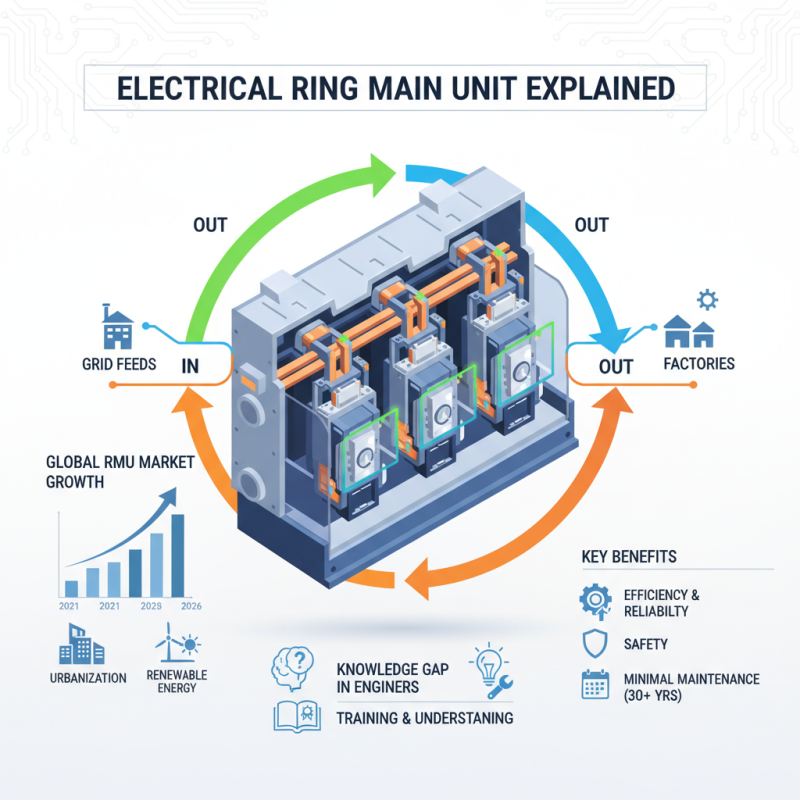
What is an Electrical Ring Main Unit (RMU) and Its Purpose?
An Electrical Ring Main Unit (RMU) is a crucial component of electrical distribution networks. It functions to manage, protect, and control electricity supply in medium-voltage systems. RMUs connect the power source with transformers or other distribution equipment, ensuring a stable and reliable flow of electricity. Their design often incorporates several switching mechanisms. These allow operators to isolate parts of the network easily.
The primary purpose of an RMU is safety.
It reduces the risk of electrical faults and minimizes potential outages. By integrating protective devices, such as circuit breakers, RMUs help prevent damage to both equipment and personnel. They also enhance the performance of the entire electrical system. However, while RMUs are effective, they are not foolproof. Operators must monitor them regularly to ensure they function correctly. This reveals a potential flaw. Overlooking maintenance could lead to significant problems down the line.
An RMU often comprises modular components, enabling flexibility in design. This can lead to challenges in ensuring compatibility with older systems. Integrating new technologies requires careful planning. Installation practices can vary, which may affect reliability. Despite these challenges, the importance of RMUs in modern electrical distribution remains undeniable. Their role in supporting infrastructure is essential for efficient energy management.
Key Components and Construction of a Ring Main Unit
A Ring Main Unit (RMU) is a key component in electrical distribution networks. It ensures reliable power supply in urban areas. The RMU combines multiple functions, including switching, protection, and monitoring. This compact device typically includes circuit breakers, fuses, and isolation switches.
One of the critical components of an RMU is the load break switch. This allows for maintenance without interrupting service. Additionally, the RMU contains transformers and surge arresters, which enhance its functionality. Metal-clad designs are common, providing durability and safety against environmental conditions. According to industry reports, about 70% of urban electrical distribution relies on RMUs for efficient energy management.
The power industry emphasizes the importance of RMUs. They help avoid overloading and ensure consistent power distribution. However, some designs still face challenges. For example, maintenance access can be limited in cramped spaces. Addressing these concerns can boost performance and longevity.
Operational Principles: How RMUs Manage Electrical Distribution
Electrical Ring Main Units (RMUs) play a critical role in managing electrical distribution. These compact devices are designed for high-voltage applications. They ensure reliable power supply to various networks. RMUs are particularly useful in urban settings where space is limited. They connect multiple circuits to a common power source, allowing for effective load management and system flexibility.
Operationally, RMUs utilize circuit breakers, switches, and fuses to control the flow of electricity. They can isolate faults quickly, minimizing damage and service interruptions. This rapid response is vital for maintaining system stability. RMUs also provide valuable data on electrical performance, aiding in predictive maintenance. This proactive approach increases reliability and reduces downtime.
Tips: Regularly inspect RMUs for signs of wear or damage. This can prevent unexpected failures. Always ensure that operators receive proper training. Understanding the RMU's components can enhance safety. Remember, a well-maintained RMU is key to efficient operation.
Safety Features and Protection Mechanisms in RMUs
Electrical Ring Main Units (RMUs) are essential in electrical distribution networks. They help manage the flow of electricity efficiently. Safety features in RMUs are crucial for protecting both equipment and personnel. One key feature is overcurrent protection, which prevents damage from excessive current flow. Circuit breakers or fuses automatically disconnect the power during faults.
Another important safety element is insulation. RMUs are designed with robust materials that ensure safe operation under high voltages. This minimizes the risk of electrical shorts and potential hazards. Grounding systems also play a vital role in safety. These systems help dissipate excess electrical charges safely into the ground. Regular maintenance checks are needed to ensure these safety features function properly.
Emergency shutdown mechanisms add an extra layer of protection. They allow for quick disconnection of the unit in critical situations. However, even with all these measures, human error can lead to serious incidents. Operator training is essential, yet often overlooked. Understanding the RMU’s complexities is key for safe operation. More focus on practical training could reduce risks in the field.
What is an Electrical Ring Main Unit and How Does it Work? - Safety Features and Protection Mechanisms in RMUs
| Feature | Description | Importance |
|---|---|---|
| Construction | A compact design used in substations for efficient distribution of electricity. | Helps in minimizing space requirements and enhancing safety. |
| Switchgear | Includes circuit breakers, protection relays, and fuses. | Crucial for controlling and protecting electrical circuits. |
| Isolation | Isolator switches ensure safe maintenance of the RMU. | Prevents accidental energization during maintenance work. |
| Grounding | Integrated grounding systems for electrical safety. | Protects personnel and equipment from faults and surges. |
| Protection Mechanisms | Features like overcurrent, earth fault, and differential protection. | Ensures operational reliability and safety in electrical distribution. |
| Maintenance | Regular checks and servicing of components are essential. | Extends the lifespan and reliability of the equipment. |
Applications and Benefits of Ring Main Units in Power Systems
Ring Main Units (RMUs) play a crucial role in electricity distribution networks. They enhance reliability and safety in power systems. RMUs are compact, switchgear assemblies that allow for the control and protection of electrical feeds. Their ability to connect multiple supply lines makes them ideal in urban centers and industrial areas.
One significant application of RMUs is in substations and feeder lines. They improve fault management by isolating damaged sections without cutting power to the entire grid. This is crucial during maintenance work or unexpected outages. Utilities benefit from decreased downtime, leading to increased customer satisfaction. RMUs also support renewable energy integration, allowing for flexible grid management.
Tips: Regular inspection of RMUs is vital. Ensure that all connections are tight and components are free from damage. Consider implementing remote monitoring to track performance in real-time. This enhances safety and ensures optimal functionality.
Another benefit of RMUs is the reduction in space requirements. Their modular design allows for installation in limited areas. However, inadequate spacing can impede access during maintenance. Thus, design layouts should always prioritize serviceability while utilizing available space efficiently.
