
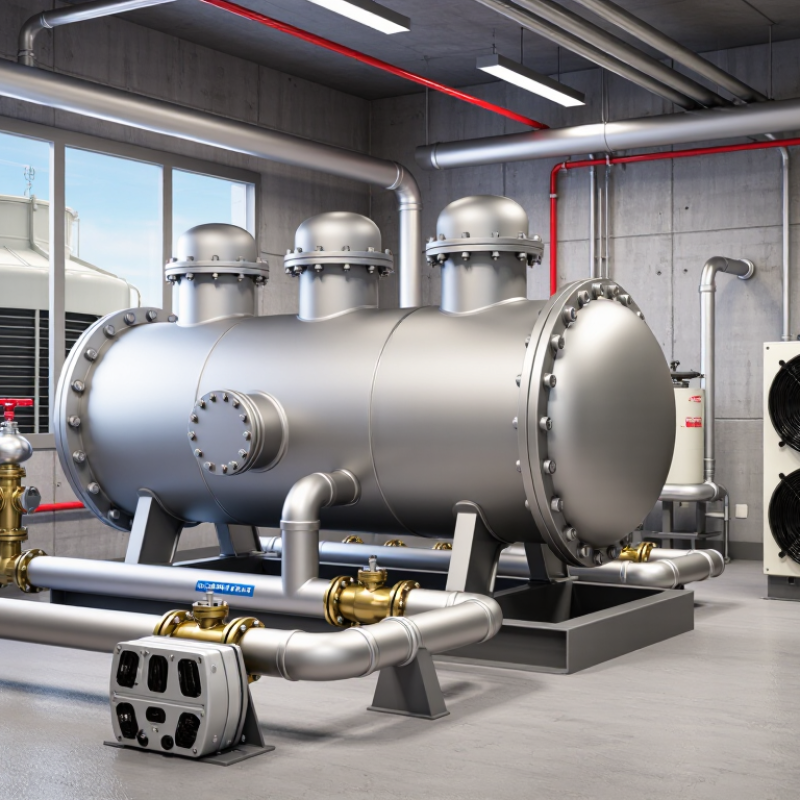
How to Choose a Water Cooled Condenser?
Start with the real cooling load, not the equipment catalogue. Calculate heat from compressors, products, lighting, people, and outdoor air. ASHRAE Handbook—Fundamentals recommends using local design weather and realistic internal heat gains. A small warehouse may need very different capacity at 35°C outdoor air than at 25°C.
Measure the operating conditions carefully. Record refrigerant type, condensing temperature, chilled-water temperature, flow rate, and expected run hours. The condenser must reject both refrigeration load and compressor heat. For water systems, use Q = m × Cp × ΔT to check the required water flow. A five-degree water temperature rise can produce a very different result from a three-degree rise. It matters.
Cooling efficiency deserves attention. The International Energy Agency reported that space cooling used about 10% of global electricity in 2016, while demand could more than triple by 2050. Choose a condenser that performs well at design load and part load. Check the entering water temperature, approach temperature, pressure drop, and fouling allowance. ASHRAE Standard 90.1 also links efficiency requirements to equipment capacity and operating conditions.
Water quality can quietly change the decision. Hard water may increase scale, while poor treatment can accelerate corrosion. Plan filtration, blowdown, inspection access, and seasonal maintenance. A clean laboratory calculation may still fail in a dusty plant room. I have seen selections based on peak load alone; they looked safe, but consumed unnecessary water and lost efficiency during normal operation. Recheck the assumptions.