How to Choose the Right Towable Boom Lift Rental for Your Project?
Choosing the right towable boom lift rental is crucial for the success of your project. With various options available, it can feel overwhelming. Factors like height, weight capacity, and maneuverability matter significantly. These details affect the efficiency of your work site.
Assessing your specific needs is essential. Will you work indoors or outdoors? Do you require precision in tight spaces? A towable boom lift rental can provide flexibility but may not fit every situation. It's vital to reflect on how often you will use this equipment.
Moreover, pricing can vary greatly. Some rentals seem cheap but may come with hidden costs. Thoroughly reviewing agreements and conditions is necessary. Consider your project's demands and budget. It’s a delicate balance. A hasty choice might lead to unforeseen challenges. Take the time to make an informed decision. Your project's success depends on it.
Understanding Towable Boom Lifts and Their Applications
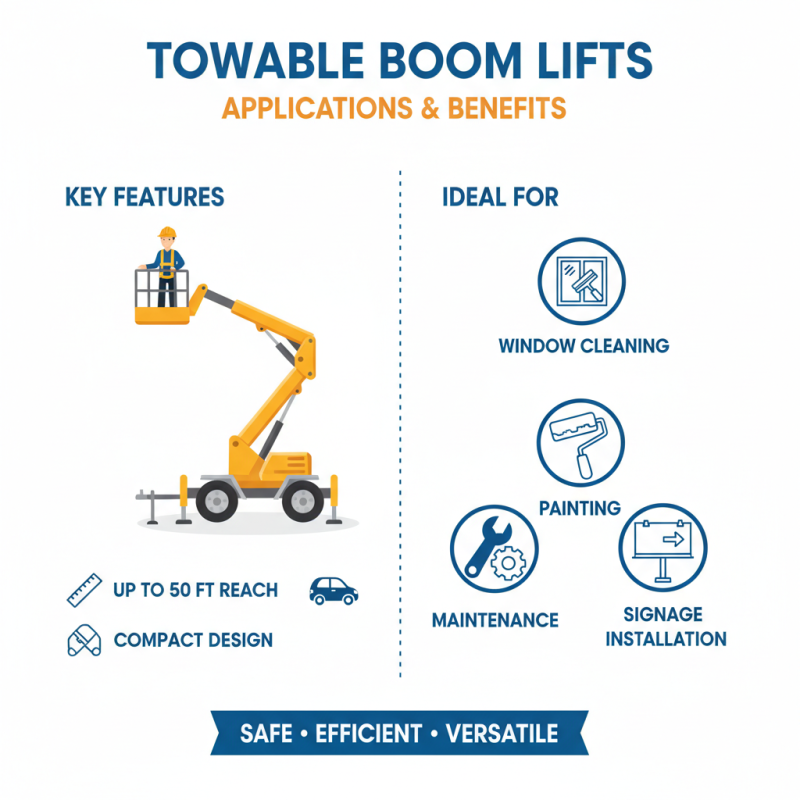
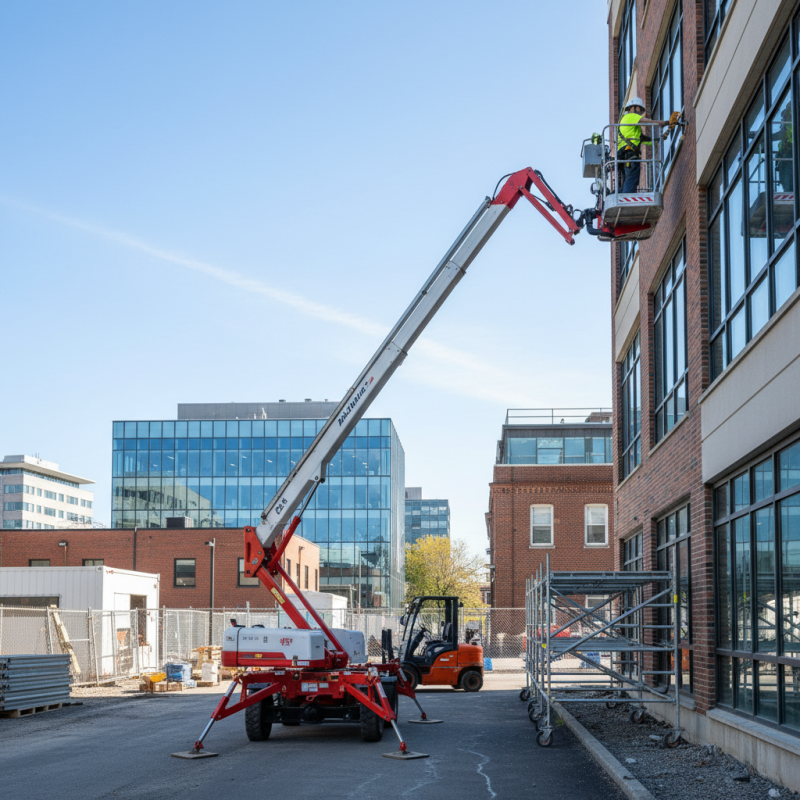
Towable boom lifts are versatile machines crucial for various construction and maintenance projects. They allow workers to access high places safely and effectively. According to industry reports, these lifts can reach heights of up to 50 feet, making them ideal for tasks like window cleaning, painting, and installing signage. Their compact design enables them to navigate narrow spaces, which is beneficial for urban environments.
Understanding the specific applications of towable boom lifts is important for choosing the right one. For instance, electric models are suitable for indoor work, as they produce no emissions. In contrast, gas-powered lifts are better suited for outdoor tasks. It's crucial to assess the weight capacity as well; many models can handle loads from 300 to 500 pounds. This ensures that tools and personnel can operate safely.
While towable boom lifts offer many benefits, there are challenges. Incorrect usage can lead to accidents or equipment damage. Operators must undergo proper training to avoid mishaps. Additionally, factors such as terrain and weather conditions can affect lift performance. Projects may delay if the wrong type of lift is selected, causing frustration and increased costs. Awareness of these factors can lead to a more effective equipment rental decision.
Key Factors to Consider When Renting a Towable Boom Lift
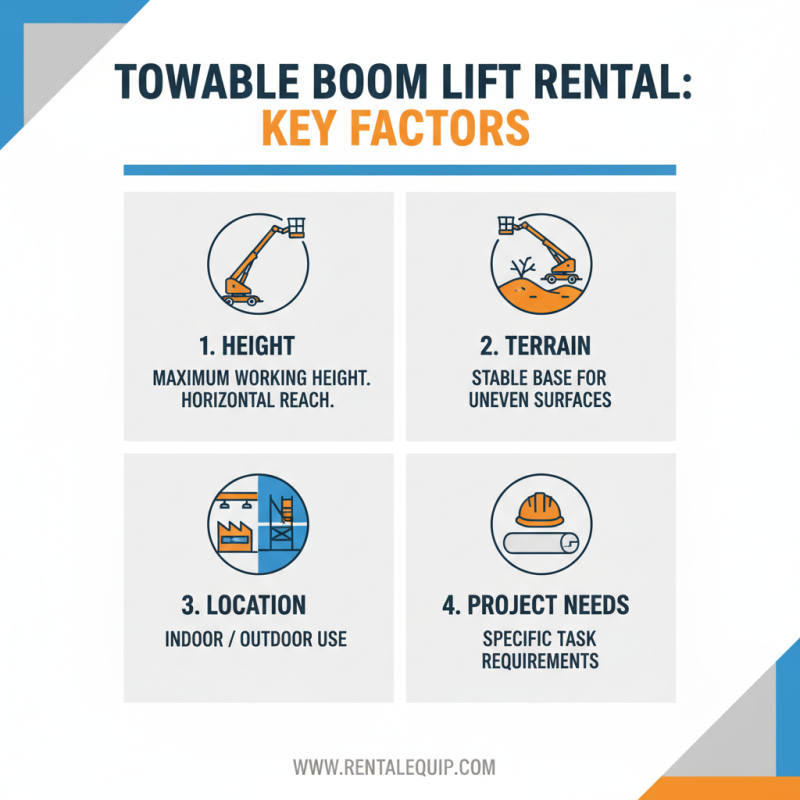
When selecting a towable boom lift, it's essential to consider your project’s specific needs. Assess the height required for your tasks. Different models offer varying maximum heights. Consider both your working height and the lift's reach. Also, think about terrain conditions. A model with a stable base is crucial for uneven surfaces. Will you be using it indoors or outdoors? That matters too.
Weight capacity is another critical factor. Ensure the lift can handle both personnel and tools. It’s wise to check the weight of equipment you plan to use. Some may underestimate this. Safety features are paramount, so look for models equipped with guardrails and emergency descent systems. Operating ease matters as well. Can the lift be towed easily? Is it user-friendly for your crew? Sometimes, lifts that seem simple may have hidden complexities.
Budget considerations can lead to tough choices. Rental costs vary significantly. Always compare options in your area. Remember to think about rental duration. Will you need it for a short task or an extended project? Additionally, maintenance history can affect reliability. Inspect the condition of the lift before renting. Small details, like tire wear or rust, can indicate potential issues.
Evaluating the Weight Capacity and Working Height Needed
When selecting a towable boom lift, two critical factors come into play: weight capacity and working height. Different projects require different specifications. For example, tasks involving heavy materials need lifts with higher weight limits. A lift with a lower capacity cannot safely handle heavy loads. Understanding your project’s requirements is essential.
Next, consider the working height required. Will you be reaching for high ceilings or outdoor installations? If so, ensure the lift can extend to the necessary height. Many rentals may list maximum heights, but real-world situations can differ. Sometimes, the advertised height may not reflect actual working conditions. Always double-check your measurements before making a choice.
Additionally, think about the terrain. Some lifts may handle uneven ground better than others. Your setup location can affect the lift's stability and safety. If you’re working on a slope, it’s crucial to recognize how this impacts the lift's performance. Adjust your selections according to these factors, and you may find your ideal match.
Assessing Rental Costs and Budget Constraints
When renting a towable boom lift, understanding costs is essential. Rental prices can vary widely based on location and project duration. Basic rentals may seem affordable upfront, but hidden fees can quickly inflate your budget. Consider transportation costs. These can add to your overall spending. Always ask about delivery and pickup fees before finalizing any agreement.
Budget constraints may limit your options, but creative solutions exist. Look for discount rental periods, often during off-peak seasons. Sometimes, negotiating rental terms works. Don't hesitate to ask if they can match a competitor's rate. However, cheap options may lead to subpar equipment, which could affect safety and performance.
Understand your project requirements clearly. Determine the height you need to reach and the weight the lift must support. Overspending due to overestimating these needs is common. Planning can help avoid this mistake. Reflect on past project costs. Did you go over budget? Adjusting your strategy can lead to better financial outcomes on your next job.
Cost Comparison of Towable Boom Lift Rentals
This chart illustrates the average rental costs for various types of towable boom lifts commonly used in projects. The data reflects typical weekly rental prices.
Ensuring Safety Features and Operating Instructions Are Clear
When selecting a towable boom lift, safety features should be a top priority. According to a report from the Occupational Safety and Health Administration (OSHA), falls from heights account for a significant portion of workplace injuries. Ensuring that the boom lift has robust safety features is crucial. Look for equipment with secure harness points, stable outriggers, and reliable emergency stop functions. These elements can help prevent accidents and protect the workforce.
Clear operating instructions are equally vital. Many users misunderstand or overlook the operational guidelines, leading to potential hazards. A survey from the Equipment Leasing and Rental Association (ELRA) revealed that 40% of operators reported confusion around equipment functionality. This confusion can result in improper use. Providing straightforward, clear instructions can mitigate such risks. Visual aids, like instructional decals on the lift, can enhance understanding.
Moreover, proper training is essential. Operators must know how to check safety features before use. They should regularly review user manuals and safety protocols. Neglecting this can lead to serious accidents. Sometimes, even well-designed equipment fails due to operator error. Continuous education on safety practices can save lives and ensure efficient project execution.
Related Posts
-
2025 Top Cherry Picker Rental Services: Elevate Your Project with the Best Equipment
-
Top 5 Reasons Towable Boom Lift Rentals Increase Job Site Efficiency by 30%
-
10 Essential Tips for Choosing the Right Boom Truck Rental for Your Project
-
How to Choose the Right Construction Lift Rental for Your Project Needs
-

Understanding the Benefits and Trends of Lift Rental in 2025
-
How to Choose the Best Bucket Truck Rental for Your Needs?
