skip to Main Content

How to Choose the Right Machinery Movers for Your Business Needs?

Choosing the right machinery movers is crucial for businesses in diverse industries, from manufacturing to logistics. A report from the Machinery Handling Association states that improper equipment handling can lead to a 30% increase in operational downtime. This statistic highlights the importance of selecting experienced professionals who understand the nuances of machinery transport.

Expert Larry Hodge, a senior consultant in industrial logistics, emphasizes, “Efficient machinery movers are key to minimizing risks.” His insights reflect the need for companies to thoroughly assess potential movers. Factors like experience, equipment quality, and safety records should weigh heavily in the decision-making process.

Moreover, many businesses overlook the specific requirements of their machinery. Each piece may require unique handling techniques. Failing to recognize this can prove costly. Therefore, businesses must reflect on their equipment's needs before choosing machinery movers. A tailored approach could save time and resources down the line.
How to Choose the Right Machinery Movers for Your Business Needs?

Understanding Your Business Machinery Moving Needs

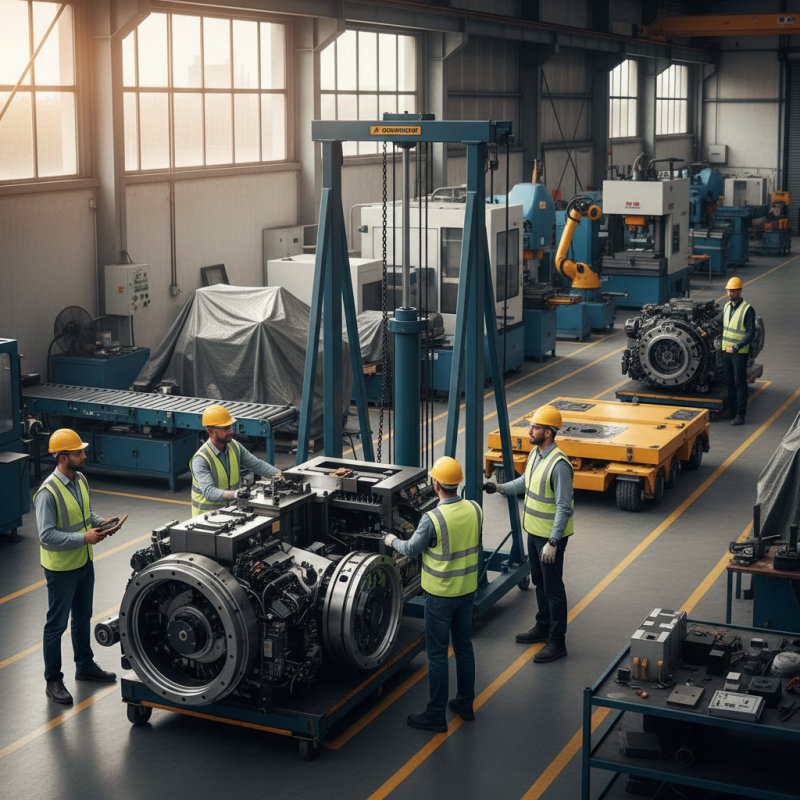
Understanding your business machinery moving needs is crucial for a successful relocation. Assess the type of machinery you have. Different equipment requires different handling methods. Heavy machinery needs skilled movers. Smaller tools can be packed more easily.

Tip: Create an inventory of your machines. Document dimensions, weight, and condition. This will help in choosing the right movers. Don’t underestimate the complexity of moving. Each piece can require special attention.

Evaluate your timeline. Are you facing tight deadlines? You might need a team that can work quickly. If your machines are not very large, timing can be flexible.

Tip: Discuss your moving schedule upfront. Ensure the movers understand your urgency. Also, inquire about their experience with similar machines. It’s essential. Relying on inexperienced movers can lead to damage or delays.
Evaluating Different Types of Machinery Movers

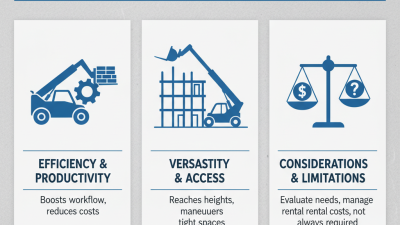
When evaluating different types of machinery movers, it’s essential to consider your specific business needs. Different machinery may require unique handling techniques, and this can greatly affect the choice of movers. For instance, some machines are delicate and need careful handling. Others are heavy and require robust support. Dimensional constraints can also play a role. A mover that specializes in compact spaces might be necessary if your facility has tight corners.

Cost is another crucial aspect. Specialized machinery movers might come at a premium. Balancing cost with safety and efficiency is vital. You may find that a less experienced mover offers lower rates but lacks the expertise to avoid damages. This could lead to higher costs in the long run. Additionally, some companies may not provide insurance, putting your investment at risk. Always inquire about liability coverage to ensure you’re protected during the move.

Experience matters too. Movers with a solid track record often have better methods and equipment. Check for reviews or testimonials from other businesses. Sometimes, a less-known mover may offer personalized service that large companies can’t match. It’s wise to reflect on these aspects carefully, as the right choice will streamline your operations in the long term.

Evaluation of Different Types of Machinery Movers

Factors to Consider When Choosing Machinery Movers

How to Choose the Right Machinery Movers for Your Business Needs?

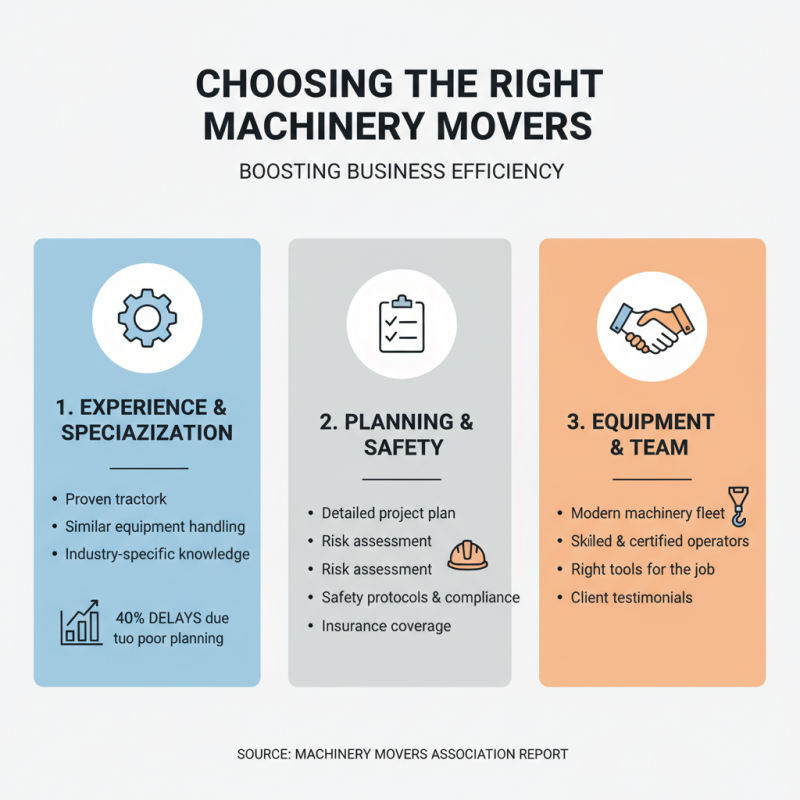
Choosing the right machinery movers is crucial for business efficiency. When selecting a machinery moving service, there are several factors to consider. According to a report by the Machinery Movers Association, over 40% of machinery relocation projects face delays due to poor planning. This highlights the importance of evaluating the mover's experience with similar equipment.

Another essential factor is insurance coverage. A reliable machinery mover should provide comprehensive insurance. Having coverage can protect your investment during transport. Statistics show that companies without adequate insurance lose an average of $5,000 on equipment damage. This loss can severely impact your business.

Additionally, consider the mover’s safety record. A mover with a lower accident rate fosters a safer working environment. It is reported that 30% of workplace accidents involve transportation of heavy machinery. A proven safety track record indicates diligence and responsibility. Choosing a mover with a focus on safety can reduce risks significantly.

Checking Credentials and Experience of Movers

When selecting machinery movers, checking their credentials and experience is crucial. A reliable mover should have a solid track record. Look for companies with years of industry presence. New players might lack the necessary skills. Experience often translates to efficient handling of equipment.

Verify licenses and insurance coverage. Movers should comply with local regulations. This guarantees your equipment is in safe hands. Request documentation upfront. If they hesitate, consider this a red flag. Both liability and worker’s compensation insurance are important. Without them, you may be liable for accidents.

Ask for references to gauge their reliability. A good mover will gladly share past client experiences. Look for reviews and ratings online. While some negative feedback is normal, be wary of patterns. If many complain about delays or damages, think twice. In this industry, reputation matters. Make your choice based on thorough research and verification.

Assessing Costs and Budget for Machinery Moving Services

When assessing costs for machinery moving services, start by gathering quotes from various companies. Reach out to local movers with expertise in industrial equipment. Ensure they understand the specific needs of your machinery. Consider the distance between locations and any challenges presented by the route, such as narrow doorways or tight corners.

It's essential to clarify what the estimated costs cover. Does the quote include all labor, equipment, and transportation fees? Sometimes, hidden charges appear later. So, ask questions upfront. Evaluate each company's insurance options too. Accidents can lead to costly damages. Ask for proof of coverage to avoid future liabilities.

Finally, think about your budget. Set realistic limits based on your business's financial situation. Sometimes, attempting to cut costs leads to subpar service. Balance price with quality. Investing a bit more may bring peace of mind and better overall results. Make a thoughtful decision based on thorough research and careful consideration.

How to Choose the Right Machinery Movers for Your Business Needs? - Assessing Costs and Budget for Machinery Moving Services

Criteria Details Estimated Cost ($)
Experience Years in business and expertise in machinery moving 500 - 1500
Type of Machinery Heavy machinery, industrial equipment, etc. 300 - 2000
Distance Local vs. long-distance moves 100 - 3000
Insurance Coverage for damages during transit 50 - 600
Additional Services Crating, unpacking, installation 200 - 800
Total Estimated Cost Total costs will vary based on selected criteria
Back To Top