
How to Choose Oil Drilling Equipment in 2026
Choosing Oil Drilling equipment in 2026 is less about buying the largest rig and more about matching tools to the well. A rig planned for a shallow, low-pressure well may be a poor fit for deep, high-temperature work. Begin with the well program: target depth, formation conditions, pressure range, drilling fluid, and expected operating hours. Then compare hoisting capacity, top-drive performance, pumps, tubular handling, controls, and spare-parts support. Small mismatches matter. A pump that cannot sustain the required flow can slow the whole operation.
Industry data adds context, not a shopping list. The International Energy Agency’s Oil 2025 report examines shifting supply and demand trends, while Baker Hughes’ monthly rig-count reports track drilling activity by region. These sources can help buyers assess market direction and local activity. They cannot determine whether a specific package suits a particular well. That decision needs engineering review, verified manufacturer specifications, and input from experienced drilling personnel. Confirm that equipment documentation and applicable API requirements match the project and operating conditions.
Look beyond the purchase price. Check maintenance intervals, lead times for critical components, crew training, remote-monitoring capabilities, and energy use. Ask who can service the equipment near the site. A polished control screen is no substitute for dependable field support. Nor is a low quote proof of long-term value.
The comparison can still feel messy. Conditions change, and forecasts miss things. Build in realistic contingencies, document assumptions, and reassess them before procurement. In 2026, the strongest equipment choice is the one that meets the well’s technical needs, can be maintained reliably, and has evidence behind its performance claims.
Define the Well Plan, Site Conditions, and Operating Requirements
How to Choose Oil Drilling Equipment in 2026
Define the Well Plan, Site Conditions, and Operating Requirements
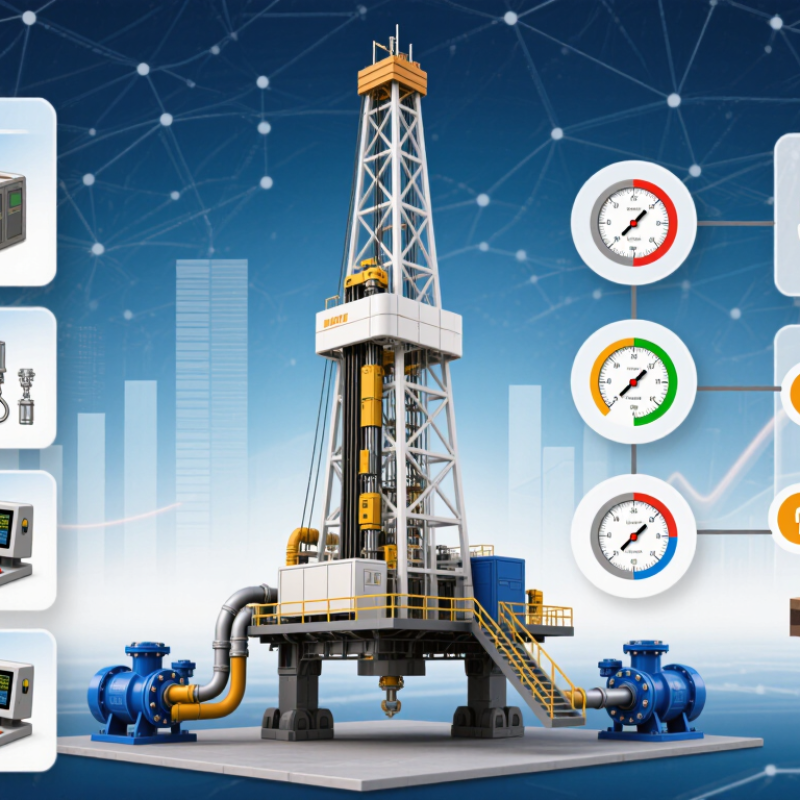
Start with the well plan, not a catalog. Record target depth, hole diameter, trajectory, expected formation, and pressure and temperature ranges. These values shape required rig capacity, hoisting equipment, pumps, and well-control systems. Check that components can handle planned loads with an appropriate operating margin. A mismatch may slow work or create avoidable hazards.
Tips: Map access roads, ground bearing capacity, available power, water supply, and weather limits before selecting equipment. A narrow site may need a smaller footprint; remote locations make spare parts and routine maintenance more important. Confirm that the crew can inspect and service the proposed systems. Keep the layout practical.
One detail is easy to underestimate: operating conditions can change as drilling progresses. Compare equipment specifications with the well program, then review assumptions with qualified drilling and maintenance personnel. Include solids-control capacity, backup power, lifting limits, and space for safe equipment movement. I would revisit the plan after each site review; early estimates are not always right. Keep a record of constraints and unresolved questions, rather than treating them as minor details.
Identify the Drilling Equipment Types and Capacity Needed
Choose equipment from the well design, not a quoted maximum depth. A shallow vertical land well may need a compact rig with modest hoisting and pump capacity. Long horizontal wells demand stronger hoisting systems, higher torque, and pumps that can sustain the planned flow rate. Offshore work adds water depth, weather exposure, and space constraints. EIA data show tight-oil production supplies roughly two-thirds of U.S. crude output, underscoring the need to assess horizontal-drilling requirements. The figure is a guide, not a specification.
Size the hoisting system for the heaviest planned drillstring or casing load, including fluid effects and operational margin. Match pump pressure and flow to the mud program, hole size, and circulation plan. Check top-drive torque, generator capacity, and pressure-control equipment against the well’s design limits. Capacity is not depth. IEA’s Oil 2025 report projects global supply capacity will grow by 5.1 million barrels per day by 2030, while demand grows by 2.5 million. That outlook may shape equipment availability, but it cannot replace a well-specific review. Ask engineers to test the calculations against stuck-pipe scenarios and changing formation pressure. That review can expose gaps. Estimates still miss things.
Assess Safety Features, Automation, and 2026 Compliance Needs
Choosing oil drilling equipment in 2026 means examining how safety systems work under real operating conditions, not just comparing specification sheets. Check that emergency shutdowns, pressure monitoring, gas detection, and alarms are accessible, tested, and suited to the rig layout. Ask for maintenance intervals, inspection records, and clear procedures for isolating energy before service. Small details matter. An alarm that is hard to hear beside a pump is technically present, but not useful enough.
Automation can reduce repetitive manual tasks, yet it adds sensors, software, and failure points that crews must understand. Evaluate remote controls, interlocks, and data displays during a realistic operating scenario. Can operators identify a faulty sensor quickly? Can they safely switch to manual control? Training should cover normal operation and degraded modes, including power loss or communications failure. Convenience is not resilience. Request evidence of software updates, cybersecurity safeguards, and support arrangements, then confirm they fit site conditions.
Compliance needs vary by location, well type, and contract, so do not rely on a generic 2026 checklist. Before purchase, map equipment specifications to current local requirements for pressure control, emissions, electrical classification, lifting, and worker protection. Ask for certificates, test reports, manuals, and traceable component records; have a qualified safety or compliance professional review any gaps. Keep records current. Rules and site risks evolve, and a tidy spreadsheet can still miss an awkward field reality.
Compare Equipment Performance, Total Cost, and Support
How to Choose Oil Drilling Equipment in 2026
Compare performance under working conditions, not just headline ratings. A pump rated for 1,200 gallons per minute may perform differently with abrasive fluids, high temperatures, or frequent starts. Request test data, recommended maintenance intervals, and results from comparable well conditions. Small details matter. Check how quickly components can be inspected and replaced in the field.
Estimate total cost across the equipment’s expected service life. Include energy use, consumables, scheduled maintenance, transport, installation, and likely downtime. A lower purchase price can lose its appeal if seals need frequent replacement or parts are difficult to source. Ask suppliers to show their assumptions in writing. Then adjust the estimate for your operating hours and site conditions. No forecast is perfect.
Support can affect uptime as much as equipment design. Compare technician response times, spare-parts availability, operator training, and the clarity of service documentation. Ask who handles troubleshooting after installation and whether support is available during your operating shifts. Downtime gets expensive. A detailed service plan is useful, but it cannot guarantee fast repairs in every location. Consider that limitation before choosing.
How to Choose Oil Drilling Equipment in 2026 - Compare Equipment Performance, Total Cost, and Support
| Equipment Configuration | Typical Operating Context | Performance Considerations | Total Cost of Ownership | Support and Maintenance Needs | Best-Fit Selection Criteria |
|---|---|---|---|---|---|
| AC electric-drive land rig | Land drilling programs with frequent changes in drilling conditions or a need for precise control. | Variable-speed electric drives provide controllable drawworks, rotary, and pump operation. Suitability depends on the rig’s rated loads, power system, and well program. | Compare the purchase or lease price with power-generation or grid costs, fuel use, electrical-system maintenance, and expected drilling time. Higher initial complexity may be offset by operational flexibility. | Requires qualified electrical technicians, compatible spares, drive-system diagnostics, and dependable power-system support. | Choose when operational control, automation readiness, and access to electrical expertise are priorities. |
| SCR/DC electric-drive land rig | Established land operations where an SCR (silicon-controlled rectifier) power system is already supported and familiar to the crew. | DC motors powered through an SCR system can provide controllable speed. Performance depends on system condition, motor ratings, and maintenance history. | Evaluate the condition and remaining service life of generators, SCR equipment, motors, and cabling. Existing infrastructure may reduce upgrade costs, while aging components can increase repair and downtime costs. | Check local availability of DC motor and SCR expertise, replacement components, and repair facilities before mobilization. | Consider when the existing fleet and local support base are built around SCR/DC equipment. |
| Mobile or compact land rig | Shallower or shorter-duration wells, limited-access locations, and programs where repeated moves are expected. | Integrated transport features can shorten rig-up and rig-down work. Confirm that the mast, substructure, hoisting system, and handling equipment meet the planned well requirements. | Account for transport, permits, road access, crane requirements, setup labor, and the number of moves. A compact package may reduce move costs but may not suit every well design. | Check whether transport, assembly, inspection, and maintenance crews are available near the operating area. | Choose when mobility and rapid deployment matter more than the capacity or customization of a larger fixed configuration. |
| Modular land rig | Remote locations, restricted sites, or projects where equipment must be transported in separate modules. | Modular sections can support staged transport and site-specific layouts. Performance depends on module ratings, connection design, and the engineering of the assembled rig. | Include module transport, lifting equipment, assembly labor, connection inspections, and site preparation. Savings from transport flexibility should be compared with assembly time and logistics costs. | Requires a documented assembly procedure, trained rig-up personnel, inspection records, and access to module-specific parts. | Consider when access, transport limits, or site layout make a conventional one-piece configuration impractical. |
| Rig with a top drive | Programs that benefit from rotating the drill string from the top drive and making connections while tripping, subject to the rig design and operating procedure. | Can support continuous drill-string rotation during certain operations and may reduce reliance on some rotary-table handling steps. Confirm torque, speed, travel, and pipe-handling compatibility. | Compare acquisition or rental cost, service contract terms, consumables, inspection intervals, and the cost of top-drive-related downtime against the planned utilization rate. | Verify access to trained service technicians, compatible spares, scheduled inspections, and emergency repair coverage. | Choose when the expected operational use justifies the added system, service, and maintenance requirements. |
| Rig with rotary table and kelly drive | Operations using a conventional rotary-table arrangement and crews with established procedures and equipment support for that setup. | A familiar configuration can meet suitable well-program requirements. Operating performance depends on the rotary table, kelly, drive components, rig ratings, and handling practices. | Consider equipment condition, maintenance labor, connection time, handling equipment, and the availability of replacement components. Compare the full operating cycle with alternatives. | Check local repair capability for the rotary table, kelly, drive system, and associated handling equipment. | Consider when the equipment is in good condition and the operating team and support network are experienced with the configuration. |
Selection note: These are general configuration comparisons, not equipment ratings or guaranteed cost estimates. Verify rated hook load, depth capability, pressure and torque limits, well-control requirements, applicable regulations, site conditions, and service availability against the specific well program. Total cost should include acquisition or lease, mobilization, energy, labor, maintenance, downtime, consumables, and end-of-project demobilization.
Verify System Compatibility Before Selecting a Supplier
How to Choose Oil Drilling Equipment in 2026
Verify system compatibility before comparing supplier prices. A pump may meet the required flow rate yet fail at the planned pressure, temperature, or fluid conditions. Check flange and thread connections, metallurgy, power supply, control signals, and available space. Ask for interface drawings, operating limits, and maintenance clearances—not just a product sheet. Small mismatch. Big delay.
Compatibility also includes the equipment already on site. Confirm that sensors communicate with the control system, that cable ratings suit the installation, and that replacement parts fit existing assemblies. For fluid-handling equipment, review expected solids, corrosion risks, and seal materials with a qualified engineer. Then compare the supplier’s stated limits against the actual operating envelope. A number without its test conditions can mislead.
Investment figures show why careful procurement matters, but they do not prove one equipment choice is right. The International Energy Agency’s World Energy Investment 2024 estimated upstream oil and gas investment at about USD 570 billion that year. That scale makes lifecycle fit worth examining alongside upfront cost. Request documented test results and a clear list of assumptions. One awkward truth: site measurements can be incomplete. Record what remains uncertain, verify critical dimensions before ordering, and have the installation team review the proposed interfaces.
