
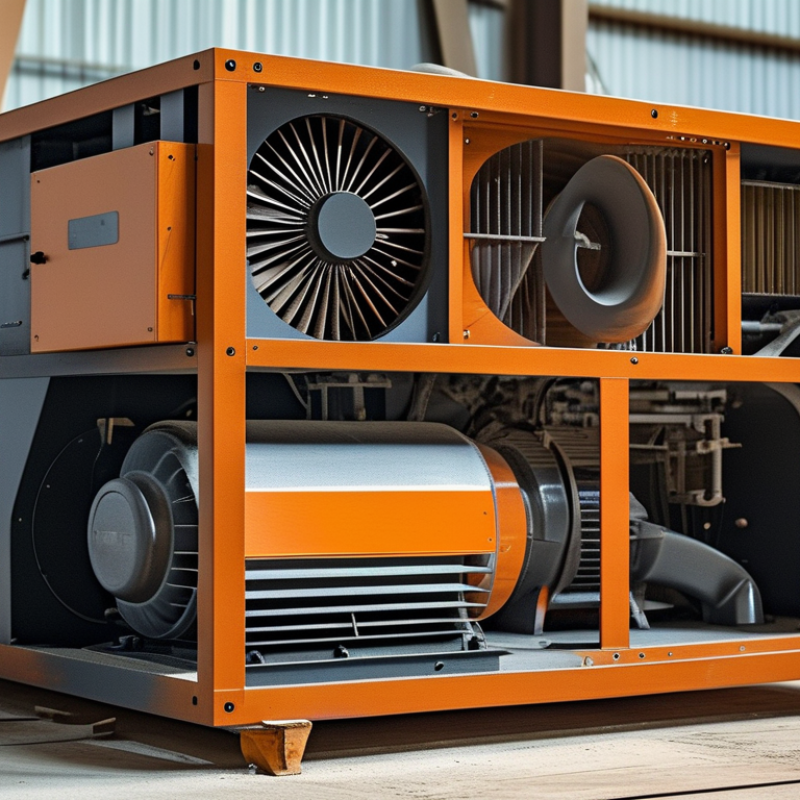
The seven strongest centrifugal fan choices are backward-curved airfoil, backward-curved plate, backward-inclined, forward-curved, radial-blade, radial-tip, and high-pressure radial designs. “Best” depends on duty point, dust loading, temperature, and available space. Backward-curved models usually deliver strong efficiency and stable operation. Forward-curved fans suit compact, lower-pressure systems. Radial-blade designs handle abrasive particles better, though they often consume more power.
Performance must be checked at the actual airflow and static pressure. A catalog peak can mislead. The U.S. Department of Energy reports that fan systems may consume up to 20% of industrial motor electricity. Small efficiency losses therefore become expensive over long operating hours. AMCA 208 introduces the Fan Energy Index, which compares total electrical input at a defined duty point. This is more useful than comparing motor efficiency alone. Noise, control range, surge behavior, and maintenance access also deserve measurement.
Durability depends on more than thick steel. Look for balanced impellers, sealed bearings, replaceable wear components, and corrosion-resistant surfaces. ISO 14694 provides industrial fan balance and vibration guidance, supporting consistent mechanical reliability. In dusty plants, radial and radial-tip designs can outperform smoother airfoil blades. But they may lose efficiency. That trade-off is easy to underestimate. Field inspections should record vibration, bearing temperature, belt condition, and airflow every few months. One imperfect assumption remains: laboratory results rarely reproduce site turbulence, fouling, or operator habits.