skip to Main Content

Understanding the Benefits and Trends of Lift Rental in 2025

In 2025, the lift rental industry is poised for significant growth. According to industry expert Dr. Emily Turner, "Understanding the evolving needs of customers is crucial for success in lift rental." This dynamic sector offers a range of advantages, from cost efficiency to flexibility in project management. The ability to access high-quality equipment without the burdens of ownership allows businesses to allocate resources more effectively.

However, this growth comes with challenges. Companies must navigate fluctuating demand and maintain equipment standards. The rise of technology in the lift rental market introduces both opportunities and complexities. For instance, smart lift systems can improve safety and efficiency but require investment and training. As trends evolve, businesses in the lift rental industry must adapt and reflect on how they can meet customer expectations.

A keen focus on sustainability and innovative solutions will be essential. The lift rental industry must consider these factors while remaining competitive. Balancing growth with responsibility is an ongoing journey, one that will define the future of lift rental.

Understanding the Benefits and Trends of Lift Rental in 2025

The Growing Demand for Lift Rentals in 2025
Understanding the Benefits and Trends of Lift Rental in 2025

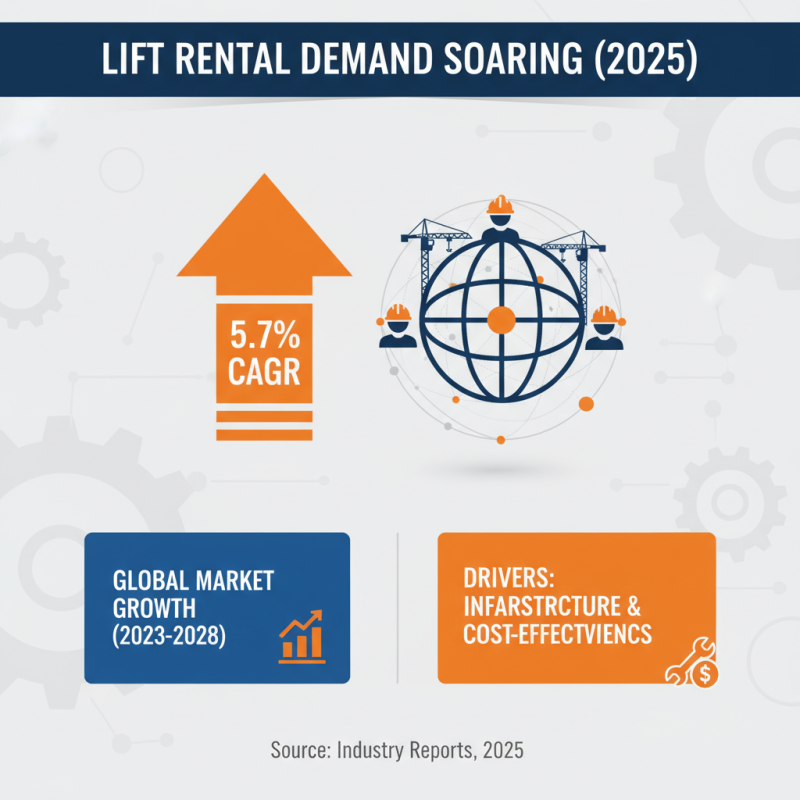
The demand for lift rentals is surging in 2025. Several industry reports indicate that the global lift rental market is expected to grow at a compound annual growth rate (CAGR) of 5.7% from 2023 to 2028. This growth is driven by ongoing infrastructural projects worldwide. Construction companies seek flexibility and cost-effective solutions to meet their needs.

Many construction sites require various lifts, from aerial work platforms to forklifts. The ability to rent instead of purchasing can save significant capital. A recent report highlighted that 70% of contractors prefer renting to owning equipment. This shift allows them to allocate funds to other critical areas. However, the industry faces challenges. Availability can fluctuate, leading to project delays. Proper management of rental fleets is essential.

Furthermore, sustainability is becoming a crucial consideration. Renting equipment can reduce waste and lower carbon footprints. Still, it often lacks transparency in usage and emissions tracking. Companies need improved metrics to understand the environmental impact fully. Balancing demand with responsible practices will define the industry's future.

Key Benefits of Renting Lifts for Construction Projects

Renting lifts for construction projects is increasingly popular. It offers flexibility and cost savings. According to recent industry reports, around 70% of construction companies now choose to rent over buying. This trend is driven by the need to manage budgets effectively. Renting allows firms to allocate resources where they are most needed.

Quality is another crucial factor in lift rental. Many contractors report that rented lifts come with the latest technology and maintenance support. This ensures safety and efficiency on site. However, it is essential to conduct thorough checks on rental equipment. Some reports indicate that nearly 15% of rental lifts may have hidden issues.

Additionally, renting lifts can improve project timelines. When a lift is required, it can be delivered quickly. As per a recent survey, 63% of managers find that rental services provide timely access to equipment. Nonetheless, relying solely on rental services may lead to unexpected delays due to availability. Balancing rental and owned tools might enhance overall productivity.

Technological Advancements Impacting Lift Rental Services

The lift rental industry is undergoing significant transformation in 2025. Technological advancements play a crucial role. Emerging technologies such as IoT and AI enhance operational efficiency. According to a recent industry report, 70% of lift rental companies are adopting smart technologies to improve logistics.

Automation is another key trend. Drones and robotic systems are used for inspections and inventory management. This reduces human error. Companies that embrace automation report 25% increased productivity. However, reliance on technology may create vulnerabilities. Cybersecurity is becoming a critical concern. For instance, 40% of firms admitted to facing cyber threats in the past year.

Data analytics also drives decision-making. It allows companies to forecast demand better. Firms can optimize fleet management and reduce costs. Recent studies indicate that data-driven strategies can save up to 15% annually on operational expenses. Nonetheless, not all companies are equipped to harness these tools effectively. A gap remains in the training and adaptation of staff to these technologies.

Sustainability Trends in the Lift Rental Industry

The lift rental industry is evolving, especially in terms of sustainability. Reports indicate that by 2025, over 30% of lift rental companies will invest in eco-friendly equipment. Many firms are switching to electric lifts. These models reduce carbon emissions by approximately 50%.

Companies are also focusing on sustainable practices. For example, 70% are adopting green maintenance protocols. This includes using biodegradable lubricants and recycled materials. However, some companies are still lagging behind. They struggle to implement these changes due to costs and lack of knowledge.

Moreover, energy management is becoming crucial. Data shows that rental companies can cut energy consumption by 20% through solar-powered lifts. This shift is challenging for older models, which need upgrades. While the move toward sustainability is clear, the path is not easy for everyone. It's a journey that requires continual effort and reflection.

Future Challenges and Opportunities for Lift Rental Companies

The lift rental industry faces a dynamic landscape in 2025. As demand increases, so do challenges. Companies must adapt to evolving customer needs. A shift towards sustainable practices is evident. Investing in green technologies could attract eco-conscious clients. This trend might seem promising, but not all companies will make the transition smoothly.

Moreover, the competition intensifies. New players enter the market, offering innovative solutions. Established companies need to rethink their strategies. They may struggle to maintain their market share. Some may rely too heavily on past successes. This self-doubt can lead to missed opportunities. A focus on collaboration could open new avenues for growth. Partnerships might enhance service offerings and improve customer experiences.

Economic fluctuations present additional hurdles. Rising inflation could impact operational costs. Companies may need to adjust pricing strategies. Balancing affordability with quality is a delicate task. Others might find themselves cutting corners, impacting service standards. Anticipating these challenges is essential for long-term success. Embracing change can transform potential risks into opportunities for growth.

Trends in Lift Rental Market - 2025

Back To Top