
skip to Main Content

7 Fireproof Insulation Tips for Global Buyers

Fireproof Insulation is no longer a niche specification for industrial projects. It now influences warehouses, apartments, data centers, and public buildings worldwide. Buyers face more than a product choice. They must assess fire performance, thermal efficiency, moisture exposure, installation quality, and local certification.

The scale is serious. The NFPA report Fire Loss in the United States During 2022 recorded 1,504,500 reported fires and 3,790 civilian deaths. The 2023 Global Status Report for Buildings and Construction, published by UNEP and the Global Alliance for Buildings and Construction, reported that buildings consumed about 30% of global final energy. Better insulation can reduce energy demand, but poor fire decisions can create unacceptable risks. These facts belong in every purchasing conversation.

UL Fire Safety Research Institute director Stephen Kerber has repeatedly warned, “Modern homes burn faster than ever before.” His statement matters for global buyers because lightweight assemblies, combustible facings, and concealed cavities can intensify fire spread. Mineral wool, calcium silicate, cellular glass, and other systems may perform differently under EN 13501-1, ASTM E84, or project-specific fire tests. Labels alone are not enough.

This guide examines seven practical Fireproof Insulation tips for international procurement. It considers factory documentation, tested assemblies, density, moisture control, transport damage, installer competence, and maintenance. Small details matter. A crushed board matters. An unsealed joint matters.

There is no perfectly fireproof building product. That wording can mislead. Performance depends on the complete assembly, not insulation alone. Buyers should question attractive claims, verify independent test evidence, and compare real installation conditions. Mistakes remain possible, even with careful planning. That is why disciplined verification should come before price.
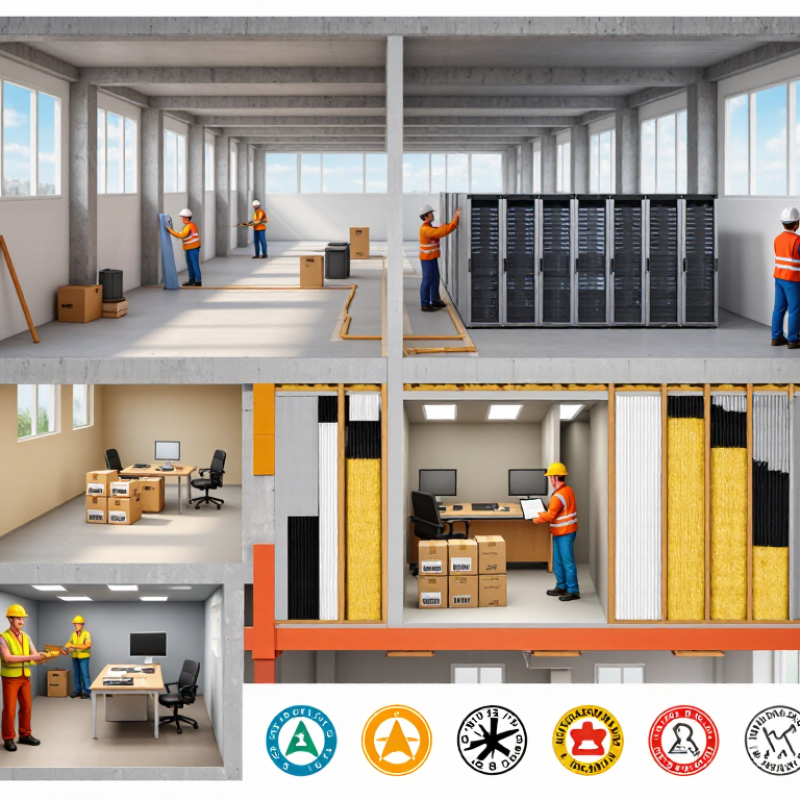
7 Fireproof Insulation Tips for Global Buyers

Define Fire Ratings: ASTM E84 Class A Means Flame Spread 0–25

7 Fireproof Insulation Tips for Global Buyers

Define Fire Ratings: ASTM E84 Class A Means Flame Spread 0–25

For global buyers, ASTM E84 Class A is an important screening point. It means the tested material has a flame spread index from 0 to 25. Lower values generally indicate slower flame movement across the test surface. However, Class A does not mean the insulation is fireproof. It also does not guarantee performance in every wall, roof, or ceiling assembly.

The test uses controlled conditions. Real fires involve wind, joints, fasteners, moisture, and nearby materials. A Class A result should therefore be reviewed with the smoke-developed index, listed test reports, and installation instructions. Ask for the exact product thickness and density tested. Small changes can affect results. Do not rely on a sales sheet alone.

Check whether the report comes from a qualified laboratory and matches the shipment. Confirm the production batch, facing material, and intended application. Site inspections often find exposed edges, compressed insulation, or unsealed penetrations. These details may weaken fire performance. Local building codes can also use different terms or require additional assembly tests. ASTM E84 is useful, but it is only one piece of evidence. I would treat any unexplained rating as a reason to pause and investigate.

Classify Noncombustibility: ISO 1182 Testing Uses a 750°C Furnace

For global buyers, noncombustibility starts with a controlled furnace, not a marketing claim. ISO 1182:2020 places test specimens in a furnace maintained near 750°C. The method measures temperature rise, flaming, and mass loss. Typically, five specimens are tested for consistency. A material generally qualifies when temperature rise stays within 30°C, flaming remains minimal, and mass loss meets the standard’s limit.

The test looks simple. It is not. Small cylinders face heat from every direction, while real walls include joints, coatings, anchors, and air gaps. ISO 1182 reports material behavior, not complete assembly performance. That distinction matters. NFPA’s Fire Loss in the United States 2023 report recorded about 1.39 million fires and approximately 22.1 billion dollars in direct property damage. Reliable classification can reduce uncertainty during specification, but it cannot replace installation review.

Ask for the full laboratory report. Check furnace temperature records, specimen dimensions, conditioning, and individual results. Do not accept only a pass statement. Some products perform differently after moisture exposure, cutting, or mechanical damage. That weakness deserves attention. Buyers should compare ISO 1182 results with smoke, reaction-to-fire, and system-level evidence where required. A 750°C furnace provides valuable evidence, but it is still one controlled snapshot.

7 Fireproof Insulation Tips for Global Buyers — Classify Noncombustibility: ISO 1182 Testing Uses a 750°C Furnace

ISO 1182 is used to assess non-combustibility under controlled furnace conditions. The chart summarizes key A1 screening thresholds referenced by EN 13501-1: temperature rise, mass loss, and sustained flaming duration.

For global sourcing, confirm the laboratory report, test standard edition, furnace calibration, specimen details, and classification certificate. The three limits use their native units and should not be compared directly by bar height.

Match Thermal Performance: Verify R-Values Under ASHRAE 90.1 Requirements

For global buyers, “R-value” is not a universal promise. ASHRAE Standard 90.1-2022 assigns envelope criteria by climate zone, assembly, and compliance path. Its tables may specify insulation R-values or maximum U-factors, depending on the construction. Verify the applicable climate zone before comparing quotes. Otherwise, a high number may still miss the project requirement.

Ask for tested values, not marketing estimates. Request ASTM C177 or C518 results, test temperature, thickness, density, and aging conditions. Convert imperial R-values to RSI carefully: RSI equals R multiplied by 0.1761. Then compare the declared value with the installed layer, including joints, fasteners, compression, and moisture. A warehouse sample can look perfect while a crushed edge creates a cold strip. Small details matter.

The International Energy Agency’s Buildings 2023 report states that buildings used about 30% of global final energy in 2022, while operations produced roughly 26% of energy-related emissions. Better envelope verification therefore has measurable relevance. Still, R-value alone is incomplete. Review thermal bridging, air leakage, and condensation risk with a qualified engineer. Field inspections often reveal insulation gaps hidden behind finished surfaces. That assumption can fail. Recheck calculations against ASHRAE 90.1-2022, local amendments, and the actual wall or roof drawing before shipment.

Check Smoke Safety: Compare ASTM E662 and EN 13501-1 Smoke Classes

Fire-resistant insulation is often compared by flame performance, but smoke deserves equal attention. ASTM E662 measures smoke density in a controlled chamber. It reports specific optical density during flaming and nonflaming exposure. Key values include Ds at selected times and the maximum specific optical density. Higher readings indicate denser smoke. However, ASTM E662 does not create smoke classes like EN 13501-1.

EN 13501-1 commonly assigns smoke classes s1, s2, or s3. In general, s1 indicates limited smoke production, s2 allows higher production, and s3 has no defined limit. The classification may depend on the product type, test method, mounting, and intended use. These systems are not direct equivalents. A low ASTM E662 value cannot automatically become an s1 rating. That assumption is easy to make, and often wrong.

Tip: Request the complete test report, not only a certificate summary. Check specimen thickness, facing, orientation, conditioning, and exposure mode. Ask whether the report covers flaming, nonflaming, or both conditions. Compare the result with the building code and installation design. In practice, one blank field can weaken an otherwise careful purchasing decision. Smoke can also obscure evacuation routes within minutes. Therefore, buyers should examine insulation joints, adhesives, facings, and surface finishes together. A core material may perform well, while the assembled system produces unexpected smoke. Recheck the evidence.

7 Fireproof Insulation Tips for Global Buyers — Check Smoke Safety: Compare ASTM E662 and EN 13501-1 Smoke Classes

No. Fire-Safety Check ASTM E662 Smoke Measurement EN 13501-1 Smoke Classification Buyer Evaluation Point Practical Action
1 Confirm the exact test method ASTM E662 measures smoke obscuration from a material specimen under specified flaming and non-flaming conditions. Results are commonly reported as specific optical density, including values at 1.5 and 4 minutes and the maximum value. EN 13501-1 assigns smoke classes using test data generated under the relevant European reaction-to-fire procedures, principally EN 13823 for construction products. Do not treat an ASTM E662 value as an automatic EN smoke class. The tests use different apparatus, specimen configurations, exposure conditions, and classification systems. Request the full test report, including the standard edition, specimen thickness, density, facing, adhesive, conditioning, and test orientation.
2 Check ASTM E662 smoke values Specific optical density is dimensionless and represents smoke obscuration normalized to the test chamber geometry. ASTM E662 itself is a measurement method and does not create one universal pass/fail limit for every application. EN smoke classes are expressed as s1, s2, or s3 rather than as ASTM specific optical density values. A lower ASTM E662 value generally indicates less optical smoke under that test condition, but it cannot by itself establish compliance with a project specification or building regulation. Compare results under both non-flaming and flaming modes where reported, and verify the acceptance limit stated by the governing code or purchaser specification.
3 Interpret EN smoke classes correctly ASTM E662 does not use the s1, s2, and s3 classification labels. s1: SMOGRA ≤ 30 m²/s² and TSP600s ≤ 50 m².
s2: SMOGRA ≤ 180 m²/s² and TSP600s ≤ 200 m².
s3: neither s1 nor s2.
The EN smoke class considers both the rate of smoke development and the total smoke production during the specified period. Prefer a documented s1 result when the project requires the lowest listed smoke production class, but confirm the complete fire classification, such as A1, A2, B, C, D, or another applicable class.
4 Evaluate the complete insulation system Smoke behavior can change with thickness, density, surface treatment, facing, coating, joints, and installation configuration. European classification may depend on the product end-use application and the tested construction assembly, including substrates, joints, fixings, and surface layers. A certificate for an un-faced board may not represent a foil-faced panel, laminated product, pipe section, sandwich assembly, or field-installed system. Match the tested build-up to the intended installation, including facing material, adhesive, air gaps, seams, protective layers, and maximum permitted thickness.
5 Check heat release and flame spread ASTM E662 focuses on smoke obscuration; it is not a complete assessment of flame spread, heat release, ignition, or structural fire resistance. EN 13501-1 reaction-to-fire classifications combine relevant fire parameters. Smoke class is reported separately as s1, s2, or s3, while burning droplets or particles may be reported as d0, d1, or d2 where applicable. Low smoke does not automatically mean low flame spread or low heat release. Request the full reaction-to-fire classification and any required heat-release, flame-spread, burning-droplet, or fire-resistance evidence instead of relying on smoke data alone.
6 Verify aging and environmental exposure Moisture, temperature, contamination, surface degradation, and prolonged storage may affect the material condition presented for testing. Classification evidence is tied to the tested product and its defined field of application. Changes in formulation or construction may require additional assessment. A newly manufactured sample may not reflect performance after transport, humidity exposure, ultraviolet exposure, or installation-site conditions. Ask for conditioning details, declared service limitations, production-change control, and retest requirements. Inspect packaging and storage conditions on arrival.
7 Use independent, traceable documentation The report should identify the laboratory, test date, standard edition, specimen description, conditioning procedure, exposure mode, and measured smoke results. A valid classification report or declaration should state the product identity, classification, field of application, test evidence, and any limitations or exclusions. Unverified summaries, partial screenshots, or results from a different thickness or facing are insufficient for reliable international comparison. Cross-check the report against production samples and obtain regulatory review for the destination market before purchase or large-scale installation.
Important comparison note: ASTM E662 specific optical density results and EN 13501-1 smoke classes are not directly interchangeable. Use the test method and classification required by the destination jurisdiction, project specification, and intended end-use application.

Validate Compliance: Confirm CE Marking, EN 13501-1, and Factory Test Reports

When sourcing fireproof insulation across borders, compliance checks should begin before price negotiations. I have seen projects delayed because a supplier sent a CE logo without supporting documents. A CE marking is not, by itself, proof of a specific fire rating. Confirm that it applies to the exact insulation product, intended use, and applicable European requirements.

Request the EN 13501-1 classification report and check its scope carefully. The document should identify the product name, thickness, density, test method, and classification, such as A1, A2, or B-s1,d0. Compare these details with the samples and technical datasheets. A small density change can affect performance. Do not assume.

Ask for recent factory test reports, not only laboratory certificates. Reliable reports should show the production date, batch number, tested dimensions, conditioning process, and measured results. Check whether an independent, competent laboratory performed the testing. Also confirm the report remains relevant to the current manufacturing site. A document from another facility may not support your purchase.

Keep a document trail. Store invoices, batch records, declarations, and inspection photos together. This helps when customs officers, contractors, or insurers request evidence. I would also arrange pre-shipment sampling for higher-risk projects. It costs more, and schedules may suffer. Still, paperwork alone can hide inconsistencies. Some suppliers respond slowly or provide incomplete files; that is a warning, not a minor inconvenience. Ask precise questions, record every answer, and have a qualified local professional review unclear compliance claims.

Back To Top