
skip to Main Content

2026 Top Bridge Crane Manufacturers and Suppliers Guide

Choosing a reliable Bridge Crane manufacturer requires more than comparing prices or polished product photos. This 2026 guide examines leading manufacturers and suppliers through practical, evidence-based criteria. It considers design capability, lifting performance, component quality, service coverage, and customer feedback.

A bridge crane must match the building, duty cycle, load path, and working environment. A 20-ton crane for a steel workshop needs different controls and protection than a lighter unit in a warehouse. We review runway systems, hoists, end trucks, electrical controls, safety features, installation support, and spare-parts availability. Factory experience matters here. So does technical documentation.

The guide also considers supplier reliability after delivery. Response time can matter when a crane stops during a busy production shift. We look for inspection records, commissioning procedures, maintenance guidance, and transparent warranty terms. Independent certifications and documented projects strengthen a supplier’s credibility, but they should not replace careful technical review.

No ranking can remain perfect.

Market conditions change. Product lines change. Regional service quality can vary. Therefore, readers should confirm current specifications, lead times, certifications, and support arrangements before making a purchase. The strongest supplier is not always the largest. It is the one that understands the application, communicates clearly, and supports the equipment throughout its working life. This guide offers a practical starting point for that decision.
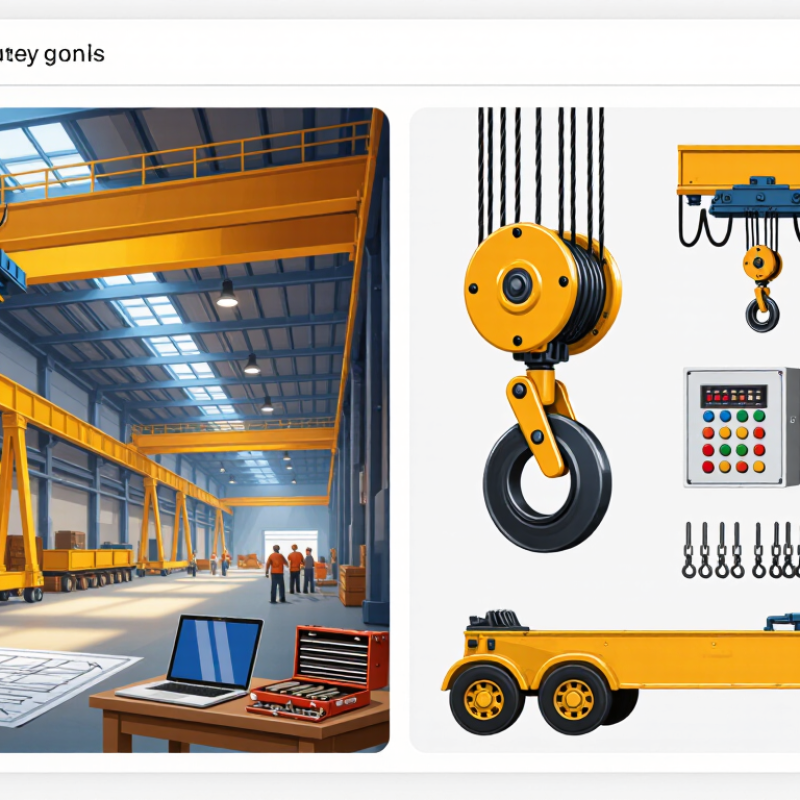
2026 Top Bridge Crane Manufacturers and Suppliers Guide

Bridge Crane Basics, Types, and Key Applications

A bridge crane moves loads across a fixed runway inside a building or work area.

Its bridge travels along parallel rails, while a trolley carries the hoist across the span. This layout keeps lifting controlled and leaves valuable floor space open. In daily operation, trained workers inspect hooks, wire ropes, brakes, wheels, and limit devices before lifting begins. Small defects can become serious under repeated loads.

Common types include single-girder, double-girder, top-running, and under-running cranes.

Single-girder models suit lighter duties and moderate spans. Double-girder designs provide greater lifting capacity, headroom, and durability. Top-running cranes usually handle demanding production schedules, while under-running systems fit buildings with limited structural height. The correct choice depends on load weight, span, lift height, duty cycle, and available runway strength.

Bridge cranes support steel fabrication, machinery assembly, warehouses, shipbuilding, power facilities, and maintenance workshops.

A practical assessment should review building columns, electrical supply, travel speed, control methods, and operator visibility. Remote controls may improve access, but they still require clear communication and disciplined procedures. No design is perfect. An oversized crane can waste energy and space, while an undersized unit may suffer early wear. Real site measurements matter more than a neat specification sheet. Regular records also help reveal vibration, unusual noise, and changing production demands.

How to Evaluate Bridge Crane Manufacturers in 2026

When evaluating bridge crane manufacturers in 2026, start with operating evidence, not polished brochures. Fortune Business Insights estimated the global overhead crane market at USD 4.85 billion in 2024. Its forecast reaches USD 6.85 billion by 2032, with a 4.4% compound annual growth rate. This expansion makes supplier quality more important, not less.

Ask for duty-class calculations aligned with ISO 4301-1. The supplier should explain lifting frequency, average load, travel distance, and expected service life. A credible manufacturer provides load charts, welding procedures, inspection records, and control-system documentation. Check twice. During a factory visit, inspect runway alignment, brake response, limit switches, cable routing, and pendant-control ergonomics. Small details often expose weak engineering.

Service capacity deserves equal attention. Request written response times, spare-parts availability, technician qualifications, and commissioning procedures. A 2024 industrial maintenance survey by Plant Engineering reported that unplanned downtime commonly costs manufacturers thousands of dollars per hour, depending on the facility. Therefore, a cheaper crane may become expensive after one failed brake or unavailable hoist motor. Ask for references from facilities with similar loads and duty cycles. Verify those references directly. I once focused too heavily on purchase price and overlooked installation training; that was a costly judgment. Suppliers should also explain how they test overload protection and document final acceptance. Claims without measurable records deserve skepticism.

Leading Global Bridge Crane Manufacturers and Suppliers

2026 Top Bridge Crane Manufacturers and Suppliers Guide

Leading global bridge crane manufacturers and suppliers now serve factories, ports, warehouses, and energy facilities worldwide. Their strongest solutions begin with accurate site information, not a generic catalogue. Buyers should provide the rated load, span, lifting height, duty class, travel distance, and operating temperature.

An experienced supplier will review runway alignment, building clearance, power supply, and floor conditions before proposing equipment. For example, a 10-ton crane with a 20-meter span may require different wheel loads than a compact warehouse model. Ask for load charts, inspection records, welding procedures, and documented testing. Details matter.

Reliable manufacturers also support installation, operator training, spare parts, and scheduled maintenance after delivery. Modern systems may include overload protection, variable-speed drives, remote diagnostics, and energy-saving controls. However, digital features should not replace practical service access. A failed sensor can stop production. Verified compliance with applicable national standards remains essential.

Supplier comparisons can expose uncomfortable gaps. Some quotations look cheaper because they omit runway work, commissioning, or future maintenance. Our first shortlist might also be too narrow if it ignores regional service capacity. Buyers should check references from similar facilities and speak with technicians, not only sales teams. Clear documentation, realistic delivery dates, and responsive technical communication often reveal more than polished promises.

Product Quality, Safety Standards, and Customization Options

Choosing a bridge crane in 2026 requires more than comparing lifting capacity and price. Product quality starts with accurate steel fabrication, stable welding, and properly aligned wheels. Inspectors should review material certificates, weld records, and load-test results before installation. Test the details.

Safety depends on more than an emergency stop. A dependable crane should include overload protection, upper and lower limit switches, travel alarms, braking controls, and clearly marked rated capacity. Electrical cabinets need suitable protection against dust, moisture, and heat. Operators also need practical training, inspection checklists, and readable maintenance records. A strong safety design can still fail when daily inspections become rushed or unclear.

Customization should match the working environment, not only the building drawing. Buyers may require different spans, lifting heights, duty classifications, control methods, or variable-speed drives. Outdoor cranes may need weather-resistant coatings, sealed electrical components, and wind protection. Corrosive facilities demand careful material selection and coating checks. A useful supplier asks about load cycles, temperature, floor conditions, and future expansion. One overlooked detail can create expensive changes later. Specifications are often imperfect, so technical teams should challenge assumptions before production. Clearance measurements should be verified on site, because a few centimeters can affect access, maintenance, and safe hook movement.

2026 Top Bridge Crane Manufacturers and Suppliers Guide - Product Quality, Safety Standards, and Customization Options
This supplier-neutral guide is designed for comparing bridge-crane proposals. Applicable requirements depend on the installation country, duty cycle, building structure, environment, and local legal code. Standards should be confirmed in their current editions before procurement.
Crane Configuration Typical Application Product Quality Evidence to Request Relevant Safety and Design References Common Customization Options Acceptance and Supplier-Qualification Checks
Top-Running Single-Girder Bridge Crane General manufacturing, maintenance bays, warehouses, and material-handling areas where moderate lifting capacity and economical installation are priorities.
  • Load and deflection calculations
  • Weld procedures and inspection records
  • Hoist test certificates
  • Traceable material and component documentation
  • ASME B30.2 where applicable
  • OSHA 29 CFR 1910.179 in the United States
  • EN 15011 for applicable European installations
Span and lift height, pendant or radio control, variable-speed travel, low-headroom hoist, galvanized components, and indoor or outdoor protection. Verify rated capacity, runway alignment, end-stop design, overload protection, emergency stop function, travel limits, and operational testing under the approved load plan.
Top-Running Double-Girder Bridge Crane Heavy-duty production, steel processing, foundries, power facilities, and applications requiring greater hook height, span, or auxiliary lifting equipment.
  • Girder stress and fatigue assessment
  • Wheel-load calculations
  • Brake and gearbox specifications
  • Documented factory acceptance testing
  • ASME B30.2 where applicable
  • EN 15011 where applicable
  • ISO 4301-1 for crane classification principles
Main and auxiliary hoists, independent or synchronized lifting, operator cabin, grab or magnet interface, service platforms, and tandem controls. Check wheel loads against runway design, verify independent brake performance, confirm load-test procedures, review fatigue classification, and inspect access and guarding provisions.
Underhung or Under-Running Bridge Crane Facilities with limited headroom, lighter-duty production lines, and buildings where the crane runway is supported from the roof structure.
  • Building-support and hanger calculations
  • Runway connection details
  • Hoist and trolley compatibility data
  • Inspection and maintenance instructions
  • Applicable ASME B30 series requirements
  • EN 15011 where applicable
  • Local structural and electrical codes
Low-headroom hoist, curved runway sections where permitted, multiple crane systems, festoon or conductor-bar power, and restricted-height controls. Obtain a structural engineer’s confirmation of roof and hanger capacity, verify clearances, inspect runway joints, and test anti-drop and end-stop provisions.
Outdoor Bridge Crane Outdoor yards, shipyards, precast concrete plants, ports, storage areas, and process facilities exposed to weather.
  • Wind-load and storm-parking calculations
  • Corrosion-protection system specification
  • Outdoor electrical enclosure ratings
  • Drainage and water-ingress provisions
  • EN 15011 or ASME B30.2 as applicable
  • Local wind, seismic, and environmental codes
  • IEC 60204-32 for applicable lifting-machine electrical equipment
Storm locks, rail clamps, anemometer, heating or anti-condensation devices, UV-resistant controls, stainless or coated components, and remote monitoring. Verify wind-service and out-of-service loads, storm-warning logic, parking arrangements, coating thickness, enclosure protection, drainage, and emergency recovery procedures.
Explosion-Risk or Hazardous-Environment Crane Selected chemical, pharmaceutical, petroleum, gas, and dust-risk areas where ignition-control requirements apply.
  • Area-classification compatibility statement
  • Electrical and mechanical equipment certificates
  • Temperature-class and protection-method documentation
  • Hazardous-area installation instructions
  • Applicable ATEX or IECEx requirements
  • Local hazardous-location electrical codes
  • IEC 60079 series where applicable
Non-sparking design features, certified motors and controls, grounding and bonding, sealed enclosures, special brakes, and corrosion-resistant finishes. Match every component to the site zone or division, confirm certificate scope, review bonding continuity, verify temperature limits, and require installation by qualified personnel.
Process or Continuous-Duty Bridge Crane Steel mills, foundries, paper plants, waste-processing facilities, and production environments requiring frequent or near-continuous crane operation.
  • Duty-cycle and classification calculations
  • Thermal ratings for motors and brakes
  • Fatigue-life assessment
  • Preventive-maintenance and spare-parts plan
  • ISO 4301-1 classification principles
  • EN 15011 where applicable
  • ASME B30.2 where applicable
High-cycle hoists, regenerative drives, redundant braking, heat shielding, automatic positioning, load weighing, and condition monitoring. Compare expected starts per hour and operating time with rated duty, verify brake and motor thermal margins, review fatigue design, and establish inspection intervals.
Cleanroom or Hygienic Bridge Crane Controlled manufacturing, electronics, pharmaceutical, food, and laboratory environments where contamination control is important.
  • Surface-finish and cleanability specification
  • Particle-shedding and lubricant-control information
  • Sealed-component details
  • Cleaning and maintenance procedures
  • Applicable cleanroom and facility standards
  • EN 15011 or ASME B30.2 as applicable
  • Local hygiene, electrical, and fire requirements
Stainless or coated surfaces, sealed bearings, low-particle cable systems, cleanroom-compatible lubricants, and remote controls. Confirm compatibility with the room classification and cleaning agents, inspect exposed surfaces, verify ingress protection, and approve materials before installation.
Smart or Automated Bridge Crane High-throughput warehouses, steel storage, repetitive production, and facilities seeking position control, usage data, or reduced manual handling.
  • Functional safety and control-system documentation
  • Software version and change-control records
  • Cybersecurity and network architecture information
  • Sensor calibration and backup procedures
  • IEC 60204-32 where applicable
  • ISO 13849-1 or IEC 62061 for relevant safety functions
  • Applicable local machinery and workplace-safety rules
Automatic positioning, anti-sway control, collision avoidance, load identification, warehouse-management integration, geofencing, and remote diagnostics. Test normal, fault, recovery, and loss-of-communication scenarios; verify safe states, access control, manual override, event logging, and operator training.
Low-Headroom or Restricted-Clearance Crane Existing buildings, retrofit projects, production lines, and facilities where ceiling height or side clearances limit conventional crane arrangements.
  • Building survey and clearance drawings
  • Hook-approach and lifting-height calculations
  • Runway and support-interface details
  • Installation method statement
  • Applicable ASME B30.2 or EN 15011 requirements
  • Local structural and electrical codes
  • Manufacturer’s documented safe-use instructions
Compact hoists, side-mounted drives, special end trucks, recessed electrification, custom hook approaches, and split installation packages. Perform a three-dimensional clearance review, confirm maintenance access, verify hook travel, inspect structural interfaces, and document installation tolerances.
Supplier Documentation and Service Package Applicable to every bridge-crane procurement, regardless of crane configuration or lifting capacity.
  • General arrangement and load data
  • Electrical schematics and control manuals
  • Inspection, test, and conformity records
  • Spare-parts and recommended-maintenance list
  • ISO 9927 inspection principles
  • ISO 12480-1 safe-use principles
  • Applicable national workplace-safety regulations
Operator training, preventive-maintenance contracts, periodic inspection support, remote diagnostics, critical-spares stock, and response-time commitments. Use a documented pre-award checklist, verify references for comparable duty, confirm technician qualifications, define warranty exclusions, and establish post-installation support obligations.

Pricing, Service Support, and Supplier Selection Criteria

2026 bridge-crane purchasing should begin with total cost, not the lowest quotation. A standard indoor unit may cost roughly USD 15,000–60,000, while heavy-duty systems can exceed USD 150,000. Capacity, span, lifting height, duty class, controls, installation, and building reinforcement change the figure quickly. MarketsandMarkets identifies automation and connected maintenance as major overhead-crane market drivers through 2028. That suggests a higher upfront price may reduce downtime, but the claim needs site-specific proof.

Service support deserves equal attention. MHI’s 2024 Annual Industry Report found that 83% of material-handling professionals expected to maintain or increase technology investment. Suppliers should offer documented inspections, spare-parts availability, emergency response times, and technician qualifications.

Ask for a written preventive-maintenance schedule. Request two customer references with similar loads and operating hours. A five-year service cost comparison is more useful than a glossy brochure. My practical mistake was once treating response time as a promise; only a contract makes it measurable.

Tips:

  • Compare at least three technically equivalent bids.
  • Separate equipment, freight, installation, training, and taxes.
  • Check whether load testing is included.
  • Confirm parts lead times in writing.
  • Review warranty exclusions carefully.
  • Do not accept “smart” monitoring without explaining its sensor data, alerts, and recurring fees.
  • A cheap crane can become expensive after one unavailable component.
  • Also, supplier selection should consider local safety requirements and independent inspection practices, because compliance language differs between regions.
Back To Top