
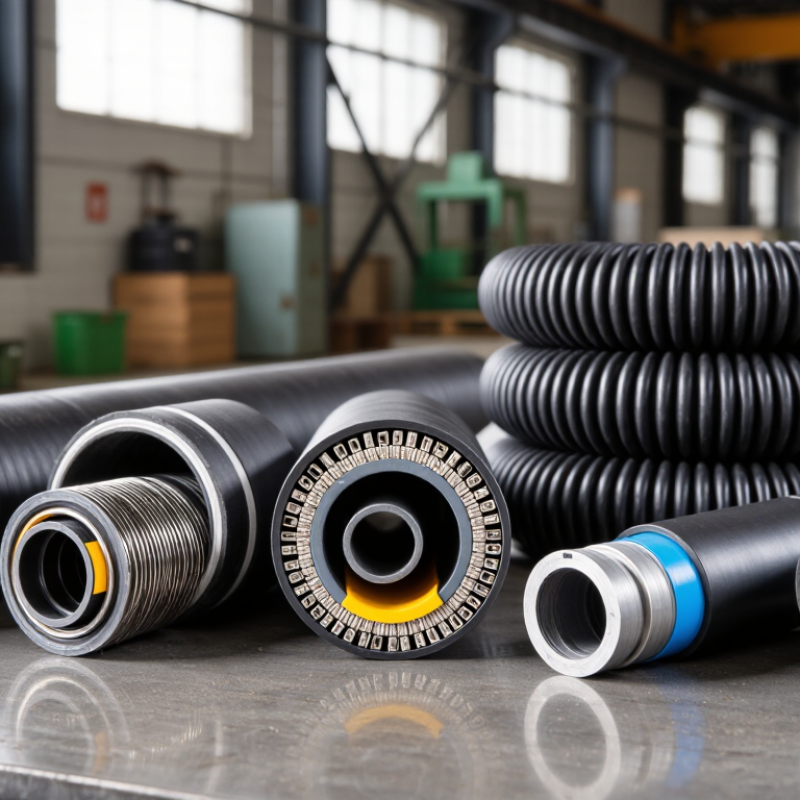
2026 Top Oil Rubber Hose Types for Global Buyers
Global oil demand is still expanding. The International Energy Agency’s Oil 2024 report forecasts a 3.2 million barrel-per-day increase from 2023 to 2030. That growth raises the need for transfer, suction, discharge, and hydraulic hoses with verified performance.
Pressure is not everything. Compare working pressure, surge pressure, and impulse resistance separately. ISO 18752 classifies hydraulic hose performance by pressure capability and application conditions. A hose rated at 20 MPa may still fail under repeated pressure spikes. I check the assembly rating, coupling design, bend radius, and safety factor together. Field inspection matters. Small cover cuts near a coupling often reveal installation stress, not poor rubber.
Temperature changes chemical behavior. A hose rated for 100°C may tolerate oil differently at 40°C and 90°C. ASTM D471 testing measures rubber volume, hardness, and tensile changes after fluid exposure. Ask for test-fluid details, exposure time, and concentration. Petroleum oils commonly suit nitrile-based compounds, while oxygenated fuels may require different formulations. Ethylene-propylene rubber can resist some polar fluids, but it is generally unsuitable for petroleum oil service. Fluorinated compounds offer broader resistance, though cost and flexibility can become concerns. I would not trust a generic “oil resistant” claim alone. It sounds useful, but it is incomplete. Test it.